

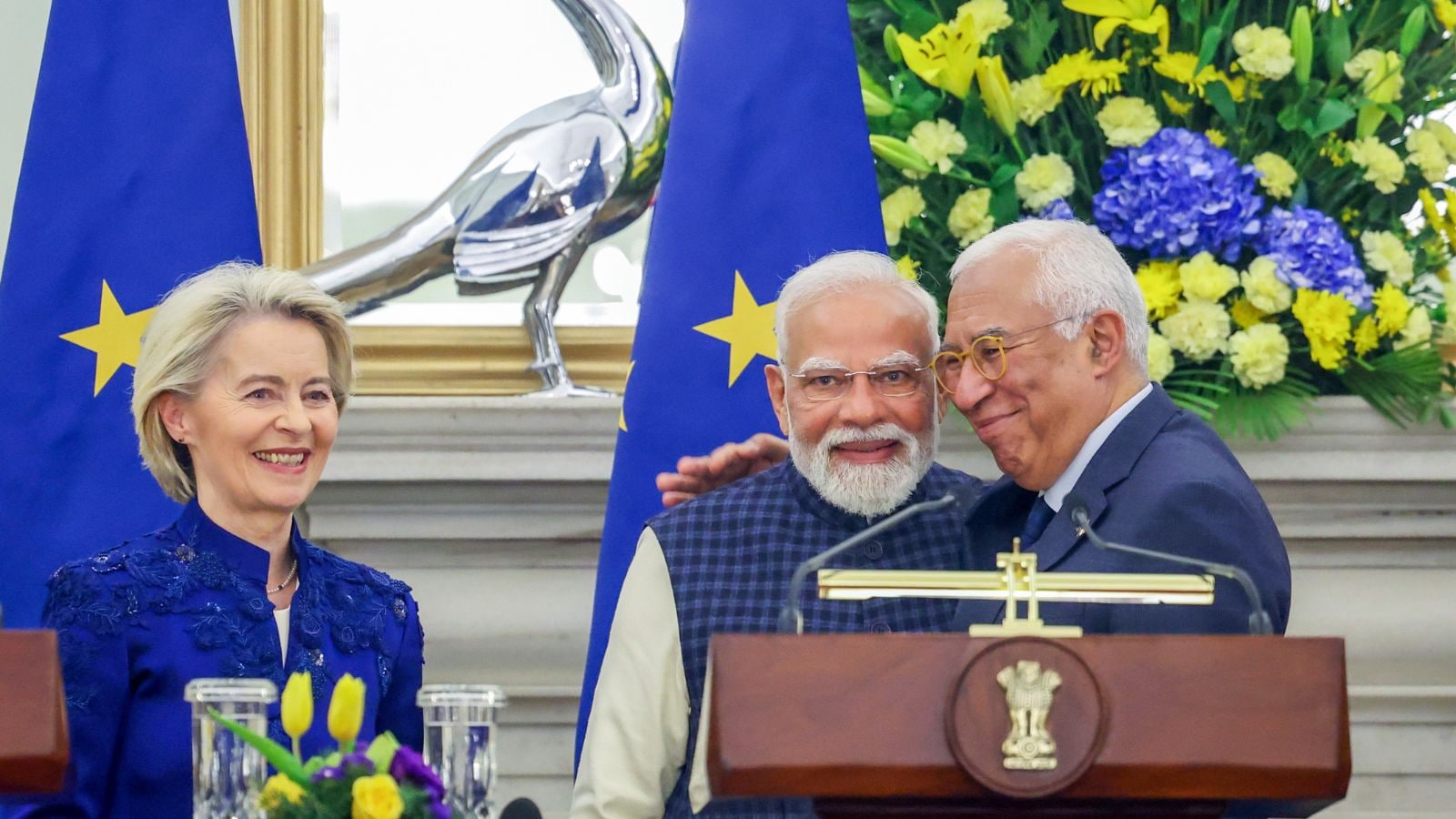
The India-EU Free Trade Agreement (FTA) aims to significantly boost trade by reducing tariffs on pharmaceuticals while increasing EU access to India’s medical devices and technology market. It seeks to restore export competitiveness for Indian generics and medtech, though with pressure from the EU regarding intellectual property (IP) rules.
“Given that Indian healthcare delivery is significantly dependent on high-end medical, surgical, and diagnostic equipment imported from Europe, the elimination of tariffs under the India-EU trade agreement will meaningfully reduce input costs for hospitals, enable wider adoption of advanced technologies, improve clinical outcomes, and ultimately translate into more affordable and higher-quality care for patients,” says Dr Dharminder Nagar of Paras Health and Co-Chair, FICCI Healthcare Committee.

What the FTA means for India
The FTA grants European companies easier access to India’s growing market for high-end medical devices and technologies. It eliminates tariffs on nearly all EU pharmaceutical products and over 90% of optical, medical, and surgical equipment, aiming to reduce healthcare costs and boost trade. Duties of up to 11% on EU pharmaceutical products will be almost completely removed. Around 90% of European optical, medical, and surgical equipment will become duty-free in India. The removal of tariffs is expected to lower the costs of advanced medical equipment.
The deal is expected to encourage investment by European companies in India’s research-based pharmaceutical sector. The agreement depends on the EU’s push for greater market access and IP protection with India’s focus on keeping medicines affordable, including for its extensive generic market.
Why there is need for caution
However, Dr Vinay Aggarwal, former national president of the Indian Medical Association (IMA) urges caution. “We have to evaluate the deal from an Indian perspective. Opening the medical devices imports might be helpful in a few cases. However, flooding of the market by second hand pre-used devices is a reality. India imports between 70 and 90 per cent of its medical devices. And while these products may have regulatory certifications in European countries, the reality is that a considerable number of them are not covered by domestic regulation. For the over Rs 30,000-crore imports of medical devices there exists no local regulation or quality checks, save some products that are governed by the AERB (Atomic Energy Regulatory Board) for radiation safety,” he says.
According to him, only 23 devices are regulated by the Ministry of Health through its Central Licensing Authority and the State Licensing Authorities under the Drugs and Cosmetics Act (DCA). Devices are engineering products, not drugs or medicines. As a result, patient safety concerns have compounded in the absence of a regulatory framework that is clearly defined for medical devices. “In India, most implantable devices are unregulated, including pacemakers, defibrillators, continuous monitoring glucose monitors. A stand-alone legislation for regulation of medical devices is the need of the hour. The present regulation is by an amendment to the Drugs and Cosmetics Act in 2019, delinking devices from drugs. Since 80% of the devices are imported, standalone legislation has an important role to play in creating a level playing field for domestic and foreign manufacturers,” he says.
The EU deal, he fears, may actually slow down the growth of indigenous production. “The opening up of the Indian market for EU pharma products is favourable to the EU. This will certainly impact the Indian pharma industry. The patent laws in India where process-specific patents are given are different from the product-specific patents in Europe. We should stick to the Indian patent law,” he says.
Story continues below this ad
What about India’s generics?
India has resisted EU demands for stricter intellectual property (IP) rights and data exclusivity, aiming to protect its large generic medicine sector. “The impact on pharmaceuticals is not significant under the deal, considering that the tariff was practically zero for the generic drugs that we exported previously as well. There is a value added tax of 18%, but it can be claimed back. Reducing tariffs for products imported from the EU from 11% to 0% is also unlikely to affect the Indian industry as most of the products imported are proprietary drugs,” said an industry expert, on condition of anonymity.
What the FTA means for medical devices
“The India-EU trade deal augurs well for healthcare service providers in India as this will lower costs of imported medical equipment and pharmaceutical products, ultimately benefiting patients in India. A lot of imaging machines like CT, MRI, ultrasound and PET CT scanners are imported into India from European countries. Reduction in bilateral duties would make these machines cheaper to import into India and, at the same time, give a fillip to exports of medical devices and equipment from India to Europe,” says Dr Harsh Mahajan, founder and chairman, Mahajan Imaging and Labs as well as mentor, FICCI health sector.
He also raised the issue of safeguards from both sides. “It is also important as part of this agreement to mutually recognise the certificates issued by regulatory authorities on both sides for med tech devices and equipment, to avoid prolonged delays involved in getting CE (Conformité Européenne) mark in Europe and CDSCO (Central Drugs Standard Control Organisation) certification in India. This would encourage manufacturing in India, especially of high-tech expensive equipment at significantly cheaper costs than possible in Europe. It is necessary to have safeguards in the deal to protect the Indian SME sector from imports of cheaper med-tech devices and equipment which may hamper the growth of Indian med-tech industry,” adds Dr Mahajan.
Similar concerns were raised by Rajiv Nath, forum coordinator, AiMeD (Association of Indian Medical Device Industry). “The India-EU FTA must ensure a level-playing field for India’s medical device manufacturers. With fair regulatory alignment and safeguards against predatory imports, (especially from third countries) this agreement can unlock high-value collaboration, boost domestic manufacturing, and support India’s ambition to become a top-five global MedTech hub. The goal should be mutual growth anchored in quality, transparency, and patient safety under a MRA (mutual recognition agreement) based on common ISO standards. We look forward to reviewing the fine print and the follow-on cooperation discussions,” he says.
Story continues below this ad
Can this help smaller hospitals?
Pune-based cardiac surgeon Dr Vijay Natarajan says that this deal will significantly reduce the capital expenditure of newer and existing hospitals and healthcare facilities. “This will help smaller set-ups survive and compete with larger corporations. By avoiding stricter regulations on IP rights and data exclusivity, our generic drug market will be protected and consequently, facilitate the government schemes like JanAushadi and Ayushman Bharat. Our drug companies would also benefit from higher exports to the EU, in addition to the existing markets in Asia and Africa. The US monopoly in the healthcare industry will be blunted,” he explains.
s.

