
Close Menu
  • Home
  • Education
  • Health
  • National News
  • Politics
  • Relationship & Wellness
  • World News
What's Hot

‘Ten-year-old Shah Rukh Khan would supply samosas to us at NSD’: Pankaj Kapur

June 24, 2026

Stampede-like situation at Ranchi stadium during Jharkhand T20 League final; several injured

June 24, 2026

SSC CGL 2026: Last date to register for Tier I exam; apply for 12,256 vacancies

June 24, 2026
Facebook X (Twitter) Instagram
Facebook X (Twitter) Instagram YouTube
Global News Bulletin
SUBSCRIBE
  • Home
  • Education
  • Health
  • National News
  • Politics
  • Relationship & Wellness
  • World News
Global News Bulletin
Home»National News»Radio telescope detects a monster star eruption strong enough to rip the atmosphere from nearby planets 
National News

Radio telescope detects a monster star eruption strong enough to rip the atmosphere from nearby planets 

editorialBy editorialNovember 14, 2025No Comments4 Mins Read
Facebook Twitter Pinterest LinkedIn Tumblr Email Telegram Copy Link
Radio telescope detects a monster star eruption strong enough to rip the atmosphere from nearby planets 
Share
Facebook Twitter LinkedIn Pinterest Email Copy Link

According to a new study, a tremendous blast observed from a dwarf star was strong enough to remove the atmosphere of any nearby planets that might have resembled Earth. The study published in Nature on November 12 marks the first confirmation of a coronal mass ejection (CME) from a star other than the Sun.

A type II radio burst, caused by the shock wave of a CME as it escapes a star’s atmosphere into interplanetary space, was detected from a star located 40 lightyears away, significantly farther than Alpha Centauri. This finding is particularly noteworthy as it represents the first conclusive detection of a type II radio burst from an extrasolar star, providing strong evidence for the existence of CMEs beyond our solar system.

The star StKM 1-1262 is categorised as an M dwarf, a type of star that is typically smaller and significantly more active than the Sun. M dwarfs frequently emit coronal mass ejections (CMEs) and solar flares, making them key targets for searches for extraterrestrial life.

Story continues below this ad

Their smaller size results in planets forming at closer orbits, facilitating their detection compared to planets around larger, sun-like stars. However, this proximity comes with challenges due to the heightened stellar activity associated with M dwarfs. The “Goldilocks zone,” where conditions could support liquid water on a rocky planet, is situated closer to these stars.

Consequently, potential Earth-like planets would be more susceptible to the frequent and intense CMEs, which could erode their atmospheres and diminish the life chances. Joe Callingham, a lead researcher at the Netherlands Institute for Radio Astronomy, highlights that while these planets may lie within the habitable zone, the destructive effect of ongoing stellar activity poses significant obstacles to sustaining life.

Festive offer

An atmosphere-shredding storm

The detection of an initial burst of radio waves was achieved using the Low Frequency Array (LOFAR) radio telescope, part of a European network primarily situated in the Netherlands. This telescope’s sensitivity, along with data processing support from the Paris Observatory, allowed researchers to identify a small light burst in the sky.

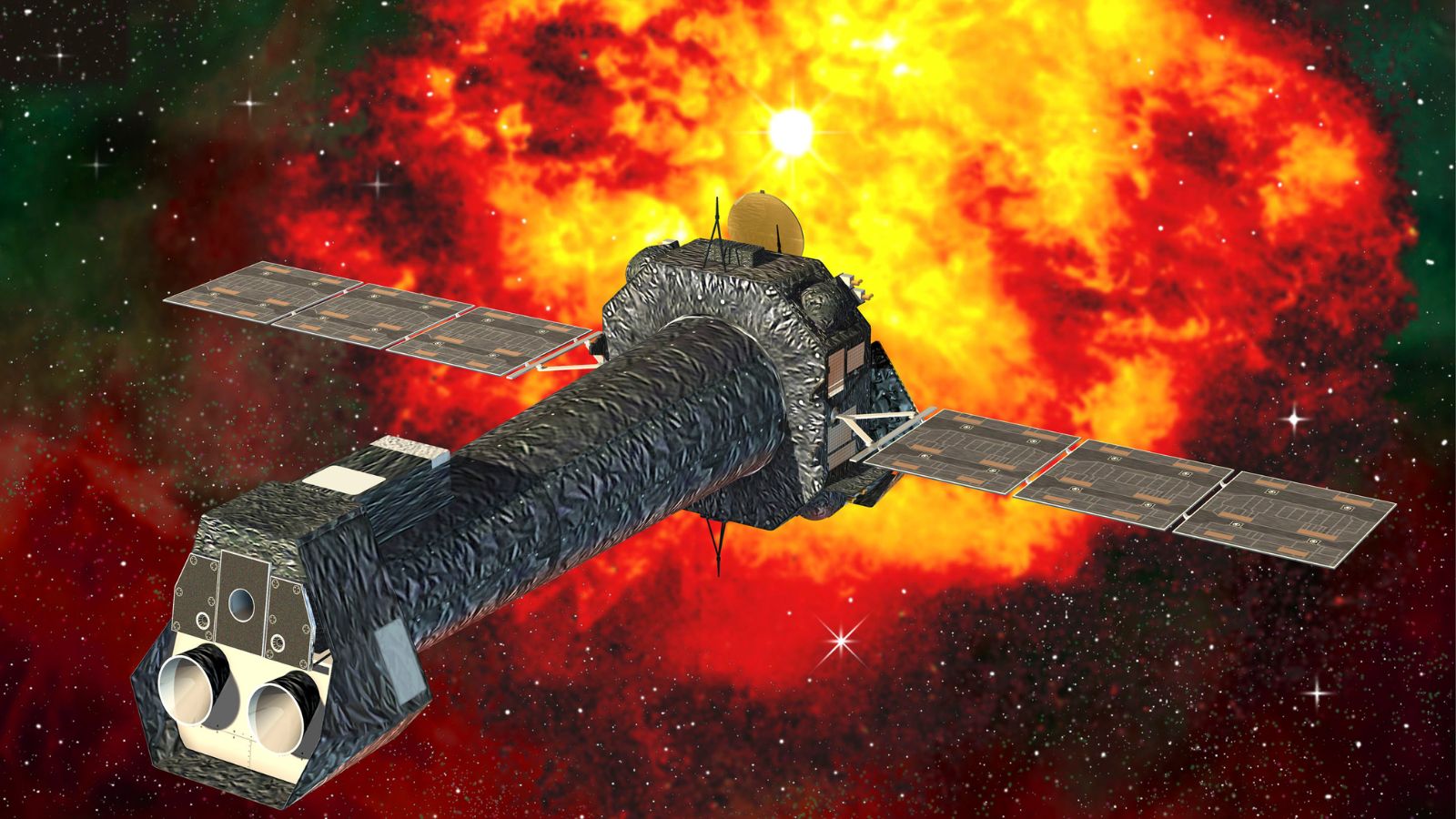
Subsequent observations using the European Space Agency’s XMM-Newton space telescope confirmed the nature of this object as an M dwarf star. Notably, this star rotates at a speed 20 times that of the sun and exhibits significant X-ray brightness.

Story continues below this ad

The investigation unveiled that the coronal mass ejection (CME) associated with this M dwarf star travels at an impressive speed of nearly 1,500 miles per second (2,400 kilometres per second), which is a velocity characteristic of only 5% of similar solar events. Additionally, the CME is sufficiently fast and dense to potentially strip away the atmospheres of any proximal planets, bringing into question their habitability.

The findings also indicated that the team is approaching the resolution limits of LOFAR, which has spurred anticipation for the forthcoming Square Kilometre Array (SKA). This ambitious radio telescope project, scheduled to begin scientific operations in Australia and South Africa in the 2030s, is projected to enhance detection capabilities significantly.

Callingham, a member of the research team, conveyed optimism about the SKA’s potential to detect “tens to hundreds” of extrasolar CMEs in its inaugural year. This advancement would enable a more thorough understanding of the frequency and variety of atmospheric-stripping events across different types of stars.

Ultimately, the research aims to assist astronomers in their pursuit of identifying habitable planets, which Callingham considers one of the key objectives in astronomy for the next decade. Nonetheless, he acknowledges that the search for an Earth-like exoplanet, often dubbed “Earth 2.0,” could be a lengthy endeavour.

© IE Online Media Services Pvt Ltd

Follow on Google News Follow on Flipboard
Share. Facebook Twitter Pinterest LinkedIn Tumblr Email
Previous ArticleDr. Reddy’s, Divis’ units conclude U.S. FDA inspection sans observations
Next Article ​OnePlus 15 vs Apple iPhone 17: How price, camera and other specifications of the two flagship smartphones compare – The Times of India
editorial
  • Website

Related Posts

‘Ten-year-old Shah Rukh Khan would supply samosas to us at NSD’: Pankaj Kapur

June 24, 2026

SSC CGL 2026: Last date to register for Tier I exam; apply for 12,256 vacancies

June 24, 2026

‘We’re from the Crime Branch’: How ‘Irani gang’ pulled off jewellery thefts in Delhi

June 24, 2026

‘Defective’ cell phone screen costs repair store Rs 5,000, woman wins consumer case

June 24, 2026

Five questions may be all it takes to identify TB patients who need urgent care

June 24, 2026

NEET 2026 Bengaluru row: Priyank Kharge rejects BJP rally delay claim

June 23, 2026
Add A Comment
Leave A Reply Cancel Reply

Economy News

‘Ten-year-old Shah Rukh Khan would supply samosas to us at NSD’: Pankaj Kapur

By editorialJune 24, 2026

4 min readMumbaiJun 22, 2026 12:15 PM IST Shah Rukh Khan delivered one of the…

Stampede-like situation at Ranchi stadium during Jharkhand T20 League final; several injured

June 24, 2026

SSC CGL 2026: Last date to register for Tier I exam; apply for 12,256 vacancies

June 24, 2026
Top Trending

‘Ten-year-old Shah Rukh Khan would supply samosas to us at NSD’: Pankaj Kapur

By editorialJune 24, 2026

4 min readMumbaiJun 22, 2026 12:15 PM IST Shah Rukh Khan delivered…

Stampede-like situation at Ranchi stadium during Jharkhand T20 League final; several injured

By editorialJune 24, 2026

NEW DELHI: A stampede-like situation was reported at the JSCA Stadium in…

SSC CGL 2026: Last date to register for Tier I exam; apply for 12,256 vacancies

By editorialJune 24, 2026

3 min readNew DelhiUpdated: Jun 22, 2026 07:24 PM IST The Staff…

Subscribe to News

Get the latest sports news from NewsSite about world, sports and politics.

Facebook X (Twitter) Instagram YouTube

News

  • Education
  • Health
  • National News
  • Relationship & Wellness
  • World News
  • Politics

Company

  • Information
  • Advertising
  • Classified Ads
  • Contact Info
  • Do Not Sell Data
  • GDPR Policy
  • Media Kits

Services

  • Subscriptions
  • Customer Support
  • Bulk Packages
  • Newsletters
  • Sponsored News
  • Work With Us

Subscribe to Updates

Get the latest creative news from FooBar about art, design and business.

© Copyright Global News Bulletin.
  • Privacy Policy
  • Terms
  • Accessibility
  • Website Developed by Plenary Media Solution

Type above and press Enter to search. Press Esc to cancel.