

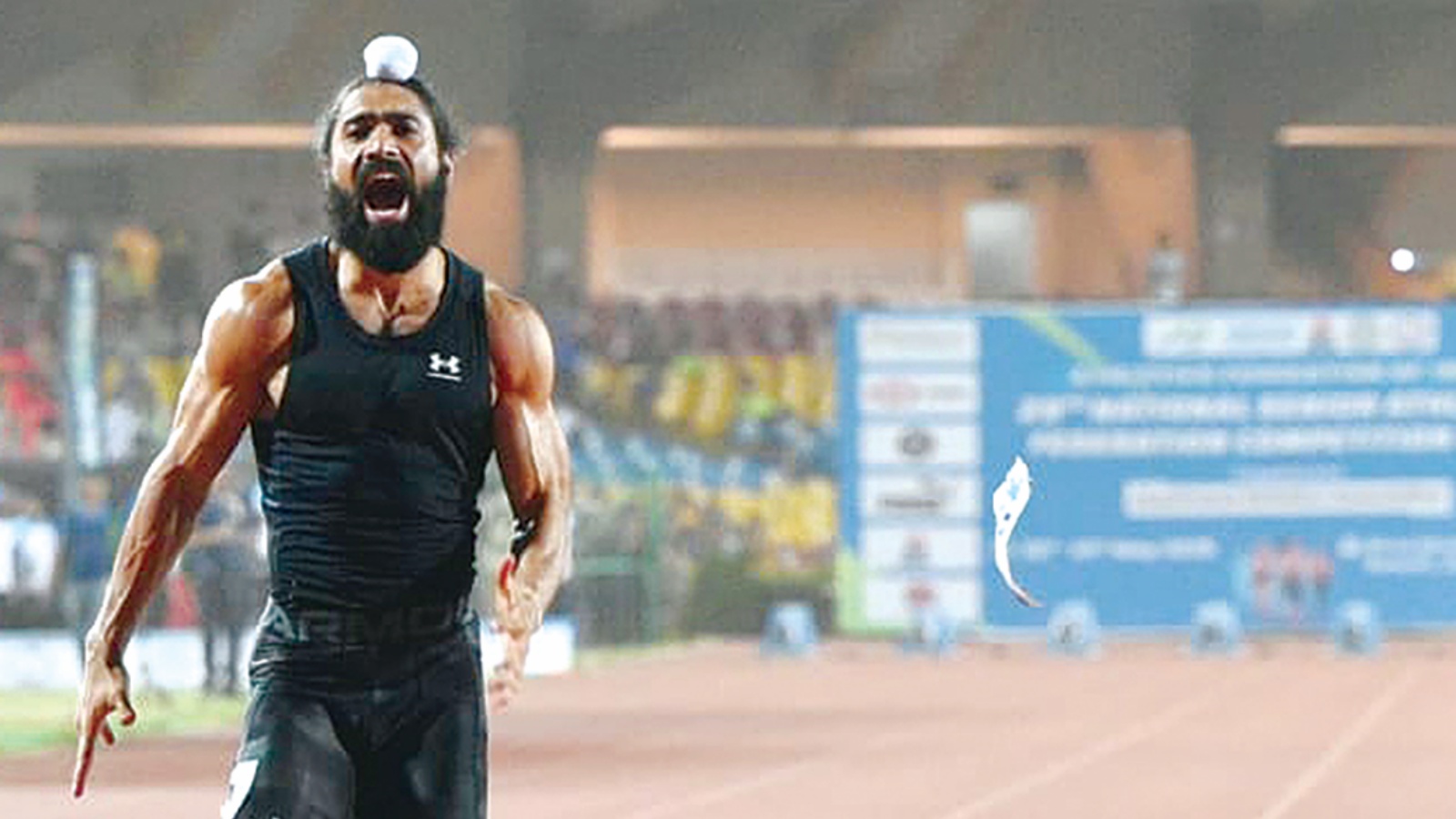
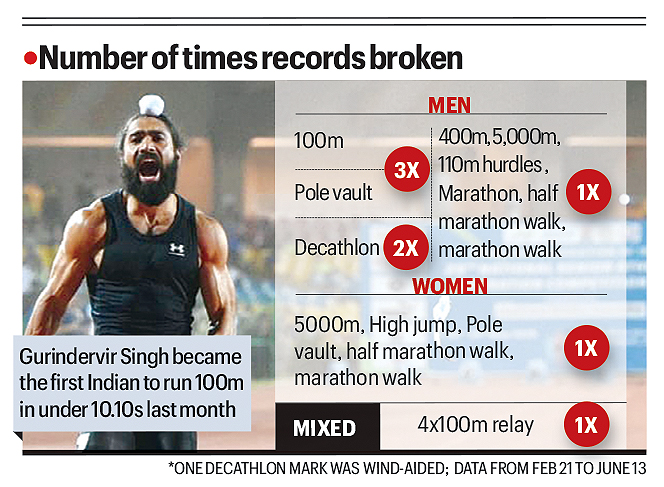
Three new men’s 100 metres records in two days; men’s 400 metres in sub-45 seconds; 8,000-point barrier crossed in decathlon; a five-decade-old marathon record down from 2 hours, 12 minutes to 2 hours, 11 minutes and 58 seconds. In just over three months, from the end of February until early June, Indian records in athletics were broken 20 times.
It’s happening across age groups, too. Nineteen-year-old Pooja Singh rewrote a 14-year-old women’s high jump record, 31-year-old Parul Chaudhary bettered her mark in the 5,000 metres. And half-a-dozen indoor marks have also been improved.
Athletics Federation of India (AFI) spokesperson Adille Sumariwalla predicts a good show at the upcoming Commonwealth Games and the Asiad. “We have found cracks in the dam, in time the dam will break. We moved to 29 medals at the Asian Games (in 2023). Now it is only a matter of time,” Sumariwalla said.
The records did not happen by accident.
The AFI’s decentralisation model, introduced after the 2024 Olympics, which gave athletes freedom to train outside the national camp, played a part in unlocking their potential, Sumariwalla, also a World Athletics vice president, said.
“Our athletes are free to train wherever. If they have a good foreign coach, or Reliance (Foundation) or JSW (Sport) has a coach, it is fine. Or they can train at a state centre. Private sponsors are helping, because they are bringing the expertise and training infrastructure,” Sumariwalla said.
Domestic competitions have seen a change, too. Private-sponsored teams like Reliance and JSW can participate.
The progress of the men sprinters shows the benefits of the decentralisation model. The men’s 100 metres record was lowered five times in just over a year — from 10.20 seconds to 10.09 seconds. All the new marks were set by athletes training at the Reliance Foundation with foreign coaches.
Story continues below this ad
“It (national record) will only go lower once that mental barrier is broken… once you go past a certain mark, others also follow, knowing that someone else has already done it,” James Hillier, the Athletics Director at Reliance Foundation, said when Gurindervir Singh became the first Indian to clock a sub-10.10 seconds last month.
Even at national camps, 400-metre runners have the freedom to choose a coach. Vishal KT, the first Indian to run sub-45 seconds, owes it to foreign coach Jason Dawson, known to be a hard taskmaster. But other top quarter-milers at the camp prefer the training method of coach Raj Mohan.
“It is no longer one-size-fits-all,” Manisha Malhotra, president of the JSW Sports-backed Inspire Institute of Sport (IIS), said. “Vishal is in the trajectory of a world time. Vishal bought into Jason’s plan, which is working for him,” Malhotra said.
Robert Bobby George, of the Anju Bobby High Performance Centre in Kengeri, Bengaluru, said trusting athletes to make a decision, combined with support from private parties, has opened new avenues. Pooja, the women’s high jump national record holder trains at George’s centre. “When Pooja wanted a coach, OGQ (Olympic Gold Quest) offered that. The foreign coach is working for her. Earlier, the only option was a national camp. New generation athletes don’t like being controlled. Private players complement the effort of the government and the federation,” George said.
Story continues below this ad
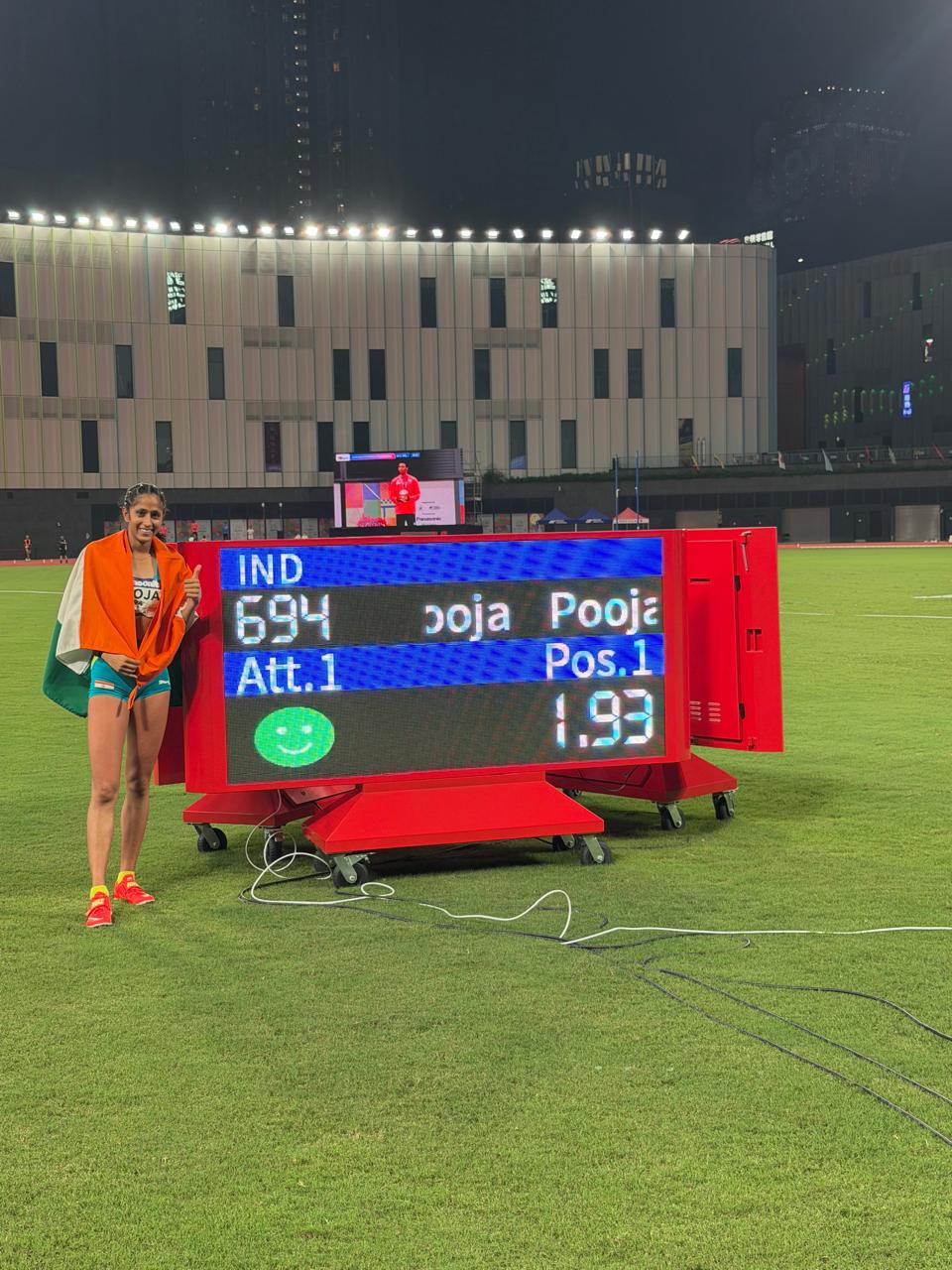 19-year-old Pooja broke 14 year old national record in high jump with 1.93m mark. (AFI)
IIS’s Malhotra said that private sponsors add value to the ecosystem if they bring in experts who can help with performance plans or the mental side of things. “It is not about providing a ticket to travel for the athlete. Abroad, you get a manager or an agent; here, we are trying to fill that role by finding coaches and specialists. Even if you are not at the national camp, you have a place to go and train at. There is somebody involved in your career… in good times and bad times,” Malhotra said.
The coach, nutritionist, physio played a big role in Tejaswin Shankar, an NCAA champion and Asiad and CWG medalist, becoming the first Indian to cross 8,000 points in the decathlon. He is also grateful to the logistics manager who got his poles transported — without having to foot the extra baggage airline charges.
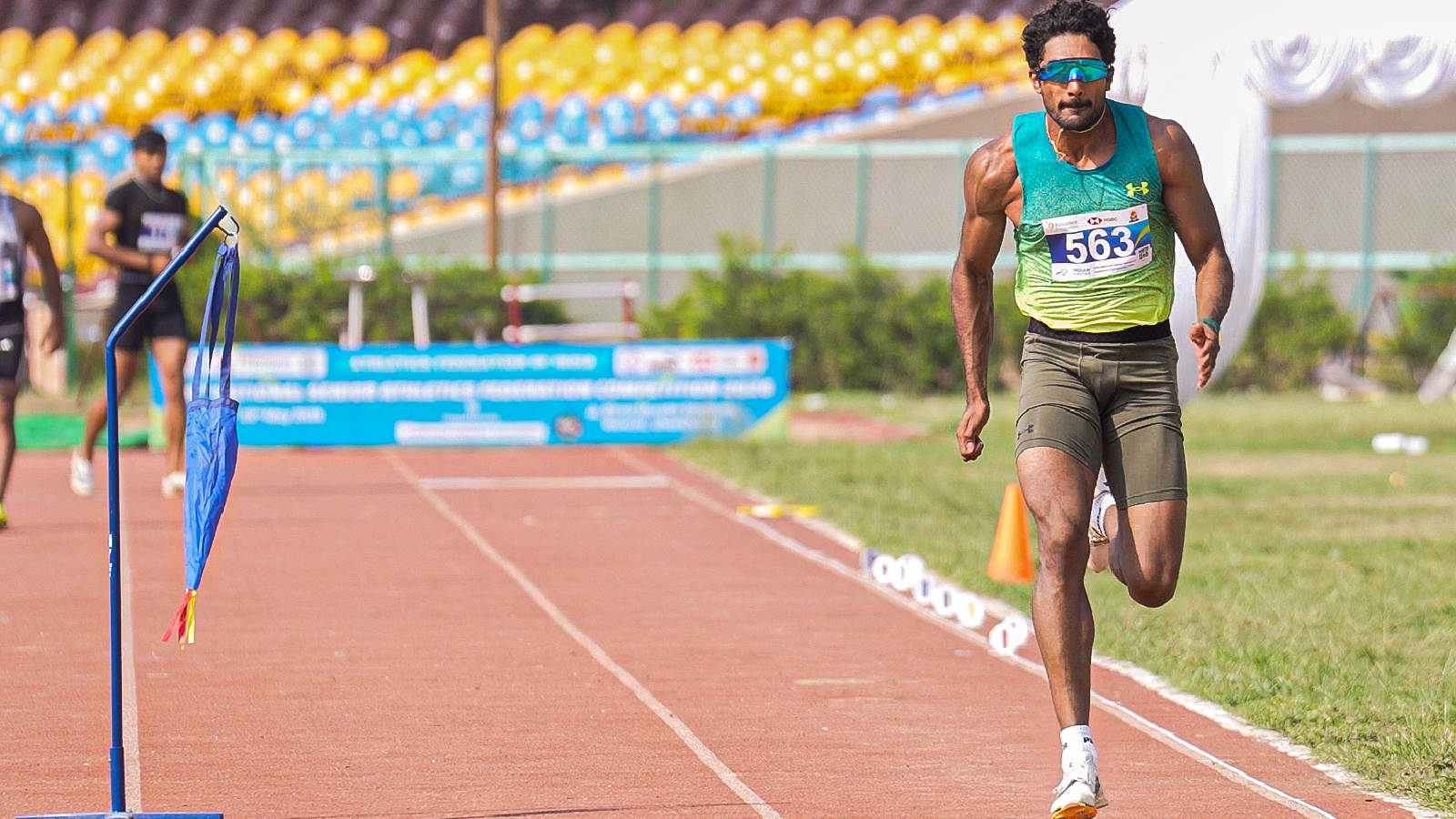 Tejaswin Shankar is the first Indian athlete to cross the 8000 points mark in Decathlon. (RFYS)
“My poles weigh about 15 kg, then two bags of 15 kg each; one for my shoes, recovery equipment, and the other for clothes. I pay $100-$200 for excess baggage if I am abroad. When I went to the Fed Cup (in Ranchi), there was a support staff who ensured my travel from the airport to the hotel to the competition venue with my poles was sorted. You are like a cricketer whose kit is delivered to him from city to city. The sponsor paid for extra baggage. A small shift, but it makes a big impact,” Shankar, a Reliance Foundation athlete, said.
Sumariwalla also credited the increase in number of domestic meets for keeping athletes sharp through the season. “There are now 40 competitions across India, about 200 days we are having events. Athletes must compete in two competitions if they want to participate in the final trials. In Europe, people compete every week. In India, people used to preserve themselves as they worried about injury. We have proved that competition is helpful. Records are breaking almost every time,” Sumariwalla said.
Story continues below this ad
Malhotra, however, sounded a cautionary note. “Records are good but we have a long way to go before becoming world standard. It does not matter if you get five national records and then you finish 18th in every big championship.”

