

Both China and India have thousands of years of experience on how to manage water to reduce the impacts of serious floods and droughts. Empires fell in both countries when kings failed to manage water properly.
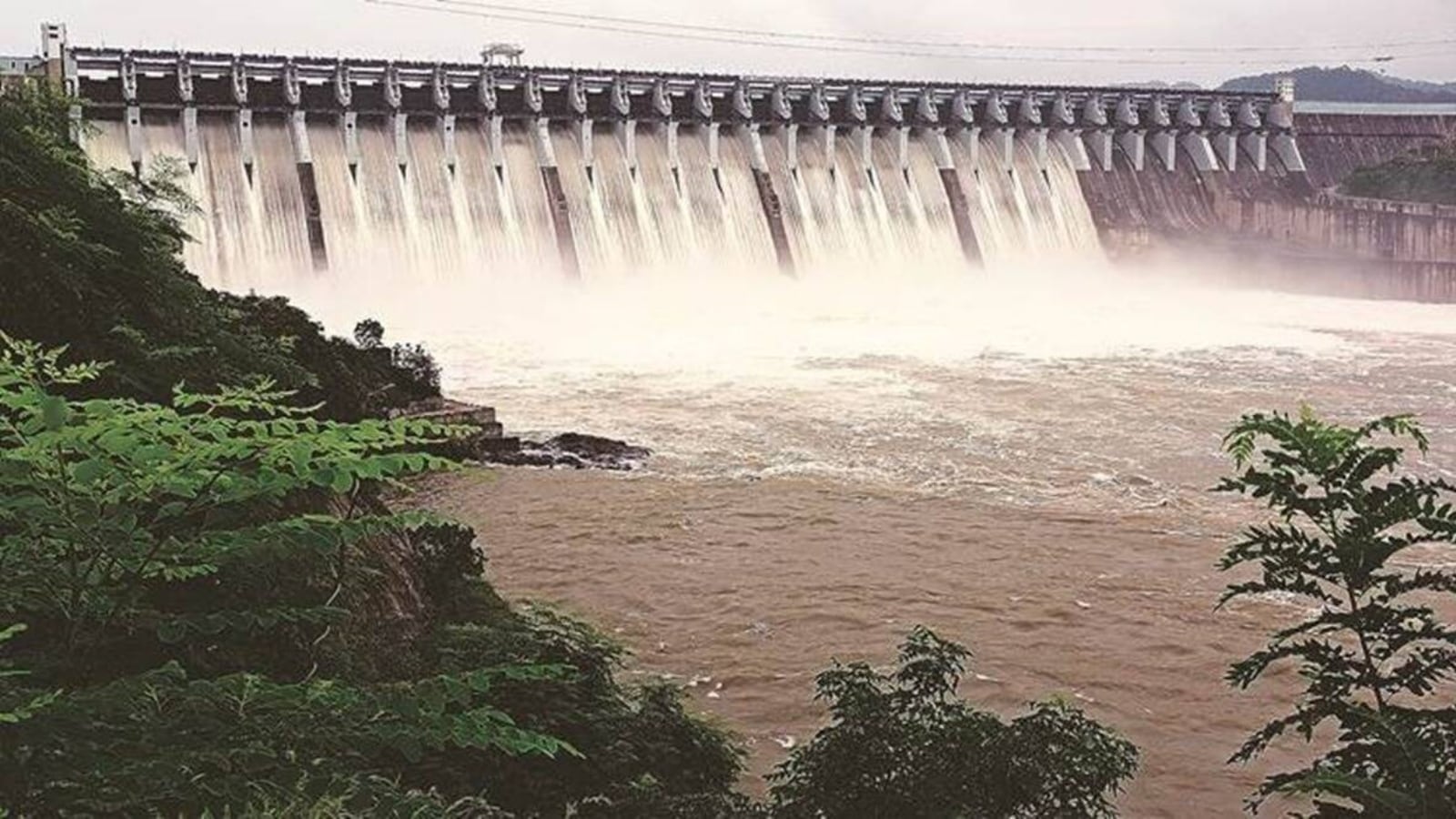
India became independent in 1947, and the People’s Republic of China was founded in 1949. In the 1950s, both countries started to construct large dams. India constructed its two major dams, Hirakud and Bhakra, in 1957 and 1963. Similarly, China constructed its major dam, Sanmenxia, in 1960.

The results of these constructions were very different. Hirakud and Bhakra were successful. India’s first Prime Minister, Jawaharlal Nehru, proudly proclaimed such large dams as the “temples of modern India”. In contrast, the record of Sanmenxia was not so good. The dam lost 17 per cent of its storage capacity during the first flood it faced due to excessive sedimentation. Over the next several decades, its design and operating procedures were changed several times for it to remain functional.
In 1980, the Chinese government invited the first author of this article to assess the feasibility of its largest infrastructure project, the South-North Water Transfer. At that time, the confidence of Chinese engineers in building dams was not high, compared to their counterparts in India. Sanmenxia had sapped much of their confidence.
Post-1990, the situation in the two countries changed dramatically. China got its dam-building mojo back and became the premier dam-building nation in the world. In the past three decades, it has made major advances in planning and construction of large dams, seriously outpacing India and all other major dam-building nations of the world.
The policies of China and India on the construction of large dams started to diverge in the late 1980s, primarily over resettlement issues. The 1990s were a mostly lost decade for dam construction in India. The country’s policymakers then believed small is beautiful and big is ugly. They promoted ideas like rainwater harvesting and the construction of check dams over large dams. India’s Supreme Court stopped the construction of the Sardar Sarovar Dam for six years when much of it was complete. During this period, the World Bank and Asian Development Bank stopped financing the construction of any large dams. In much of the rest of the world, too, dams had a very poor image.
China, in contrast, continued to build large dams for its economic development. It took a pragmatic approach. After the construction of major dams, it assessed what did not work well and modified national policies appropriately so that the new generations of dams did not face similar problems.
China also realised that the construction of large dams enhanced both water and energy security – the latter was especially important to it. By 2000, it realised that in less than a decade, it would become the largest oil importer in the world. Thus, it accelerated a programme to construct large dams which would provide flood management, a reliable water supply for all human use, and also be a major generator of renewable energy.
The comparison between the two countries in terms of hydropower development is stark. In 2000, India had 21.8 GW of installed capacity, compared to China’s 77.08 GW. By the end of 2024, the difference had become even starker. India’s installed capacity had more than doubled to 42.72 GW, but that of China had skyrocketed to 435.95 GW, more than 10 times that of India.
Globally, no country can currently compete with China’s advances in dam building. In 2024, China alone contributed to 14.4 GW of new hydro development, out of the total new global capacity of 24.6 GW.
China and India are monsoon countries — nearly all their annual rainfall occurs primarily during the monsoon months. Consider one of India’s rainiest cities, Cherrapunji, which receives an annual rainfall of 10,820 mm, mostly during June-August. Nearly 80 per cent of this annual rainfall occurs in about 120 hours – these are not consecutive. Similarly, in Delhi, nearly 80 per cent of annual rainfall occurs in about 80 non-consecutive hours. India experiences intense rainfall over very short time periods. This means a significant part of this rainfall has to be captured and stored by whatever means possible so that water is available throughout the year for human requirements. This means water must be stored by large, medium, and small dams, groundwater, and rainwater harvesting.
Unfortunately, India’s record of dam construction since 1980 has been poor. Consequently, the country has been facing serious water scarcity problems for several decades. Cherrapunji has been facing serious water scarcity problems in the non-rainy seasons because of lack of storage structures, even with its extraordinary rainfall.
India’s population is estimated to increase to 1.7 billion by 2050. India has targeted a multi-fold increase in GDP by 2047. All Indians expect a far better standard of living by 2050. Unless the country builds quickly all types of water storage structures, including large dams, its socioeconomic development would be in peril. Climate change is making intense rainfalls more intense and frequent, making the need for water storage even more important. The country knows how to plan and design all types of good and sustainable storage structures. Unless it completely restructures its water infrastructure and construction policies urgently, it is going to face serious water scarcity problems, which no other generation has had to face.
Biswas is director of Water Management International, Singapore, and distinguished visiting professor at the University of Glasgow, UK; and Tortajada is honorary professor at the University of Glasgow, UK. Both are visiting professors at Centre for Policy Research, New Delhi

