

Close Menu
  • Home
  • Education
  • Health
  • National News
  • Politics
  • Relationship & Wellness
  • World News
What's Hot

Oracle layoffs reach Abilene, the 'flagship' Stargate data center that Oracle keeps showing as proof the OpenAI deal is fine: Employee says he found out he was fired when…

September 21, 2026

‘Our generation was mentally strong’: Congress leader Shama Mohamed on IIT-B suicide case

September 21, 2026

Meet Rajarshi Mandal, the 16-year-old Lexington student whose malaria model showed the same mosquito-net supply could prevent twice as many infections; he won $50,000

September 21, 2026
Facebook X (Twitter) Instagram
Facebook X (Twitter) Instagram YouTube
Global News Bulletin
SUBSCRIBE
  • Home
  • Education
  • Health
  • National News
  • Politics
  • Relationship & Wellness
  • World News
Global News Bulletin
Home»Business»Meet Rajarshi Mandal, the 16-year-old Lexington student whose malaria model showed the same mosquito-net supply could prevent twice as many infections; he won $50,000
Business

Meet Rajarshi Mandal, the 16-year-old Lexington student whose malaria model showed the same mosquito-net supply could prevent twice as many infections; he won $50,000

editorialBy editorialSeptember 21, 2026No Comments4 Mins Read
Facebook Twitter Pinterest LinkedIn Tumblr Email Telegram Copy Link
Meet Rajarshi Mandal, the 16-year-old Lexington student whose malaria model showed the same mosquito-net supply could prevent twice as many infections; he won ,000
Share
Facebook Twitter LinkedIn Pinterest Email Copy Link
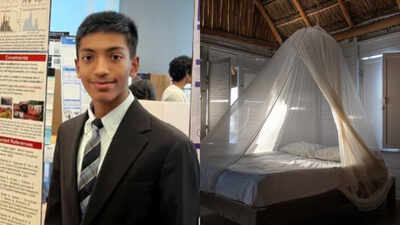
Meet Rajarshi Mandal, the 16-year-old Lexington student whose malaria model showed the same mosquito-net supply could prevent twice as many infections; he won $50,000
For Mandal, the idea began with footage showing fishermen using donated mosquito nets as fishing material because the mesh was available when conventional fishing equipment was not.

At 16, Rajarshi Mandal is already tackling a problem that has challenged public-health systems for decades: how to make limited malaria-prevention resources go further. The Lexington High School student built a mathematical model designed to determine where insecticide-treated mosquito nets could have the greatest impact, and his work earned him a $50,000 Davidson Fellows Scholarship, states an online report by the Davidson Institute. The report adds that Mandal, a rising junior from Lexington, Massachusetts, developed an ordinary differential equation model that simulates malaria transmission under conditions that more closely resemble the real world. His approach considers factors that standard population-based distribution can miss, including insecticide resistance, seasonal changes in transmission and the gradual deterioration of mosquito nets. Scroll down to read the details of his innovation.Rethinking where mosquito nets goInsecticide-treated nets are among the most affordable tools available for preventing malaria, but supplies are limited. According to the report, around 200 million nets are distributed globally each year, with allocations often based largely on population. Mandal wanted to know whether the same number of nets could prevent more infections if they were distributed differently. His simulation examined how malaria transmission changes across different settings and then evaluated where each available net could have the greatest effect. In his model, an optimized allocation prevented twice as many infections as a population-based approach using the same supply.Experts say that finding matters because it suggests that better allocation, rather than simply producing more nets, could potentially increase the impact of an existing public-health investment.From a newspaper image to a research projectFor Mandal, the idea began with footage showing fishermen using donated mosquito nets as fishing material because the mesh was available when conventional fishing equipment was not. The image prompted Mandal to look more closely at how mosquito nets are distributed and what happens when conditions on the ground do not match assumptions made in a distribution plan.His first attempt used a Deep Q Network, a type of machine-learning system. But the model struggled because allocation decisions produced noisy results and the benefits of those decisions could be delayed, making it difficult for the system to settle on reliable value estimates, states the report. Mandal eventually developed a different architecture that directly scored possible allocations, avoiding the instability he encountered with his original approach.Making the malaria model more realisticThe project also presented a problem that had little to do with machine learning. Early versions of Mandal’s malaria simulation repeatedly drove infection levels down to zero, which did not reflect conditions in endemic regions.Guidance from researchers led him to investigate backward bifurcation, a phenomenon that can allow disease transmission to persist under circumstances where simpler models might predict elimination, explains the online report.He derived the model’s reproduction number and confirmed that the simulation could sustain transmission at realistic mosquito-biting rates. The final framework incorporated seasonality, insecticide resistance, net degradation and the logistical challenges associated with reaching remote areas.Beyond the numbersMandal’s interest in the project extends beyond improving a statistic. He points to the everyday consequences of malaria infections, including missed school, lost work and disruptions to farming and family responsibilities. The project also exposed him to the realities of delivering public-health interventions. A photograph of a transport truck overturned in the Democratic Republic of Congo, with mosquito nets scattered around it, underscored how easily logistical problems can interfere with even carefully designed programs, adds the report. For Mandal, the lesson is that mathematical modeling cannot eliminate every obstacle. It can, however, help make better decisions with the resources that reach their intended destinations.Alongside his research, Mandal studies advanced mathematics and computing, plays piano and has performed at Carnegie Hall twice. He also enjoys volleyball, skiing, mountain biking and karate, where he holds a black belt. The Davidson Fellows recognition places his malaria research among a broader community of young researchers, giving the 16-year-old both a scholarship and a larger platform for work aimed at turning better decisions into measurable health benefits.

Follow on Google News Follow on Flipboard
Share. Facebook Twitter Pinterest LinkedIn Tumblr Email
Previous ArticleAn Austrian family bakery opened a New York shop selling a 3.3-pound rye loaf for $60; the bread uses organic rye flour, water and salt, ferments for up to 24 hours and is the store's only loaf
Next Article ‘Our generation was mentally strong’: Congress leader Shama Mohamed on IIT-B suicide case
editorial
  • Website

Related Posts

Oracle layoffs reach Abilene, the 'flagship' Stargate data center that Oracle keeps showing as proof the OpenAI deal is fine: Employee says he found out he was fired when…

September 21, 2026

‘Our generation was mentally strong’: Congress leader Shama Mohamed on IIT-B suicide case

September 21, 2026

An Austrian family bakery opened a New York shop selling a 3.3-pound rye loaf for $60; the bread uses organic rye flour, water and salt, ferments for up to 24 hours and is the store's only loaf

September 21, 2026

He moved to Canada and rented his Punjab house for Rs 20,000 a month, then sought eviction to use it during India visits; Punjab & Haryana HC rules against landlord, allows tenant to stay

September 21, 2026

India-Japan air exercise Veer Guardian signals growing strategic alignment in the Indo-Pacific | – The Times of India

September 21, 2026

Punjab drug menace: Congress shares video of man consuming poison outside DC office; sparks row

September 21, 2026
Add A Comment
Leave A Reply Cancel Reply

Economy News

Oracle layoffs reach Abilene, the 'flagship' Stargate data center that Oracle keeps showing as proof the OpenAI deal is fine: Employee says he found out he was fired when…

By editorialSeptember 21, 2026

Oracle’s layoffs on September 14 reached Abilene, Texas, the site the company has spent months…

‘Our generation was mentally strong’: Congress leader Shama Mohamed on IIT-B suicide case

September 21, 2026

Meet Rajarshi Mandal, the 16-year-old Lexington student whose malaria model showed the same mosquito-net supply could prevent twice as many infections; he won $50,000

September 21, 2026
Top Trending

Oracle layoffs reach Abilene, the 'flagship' Stargate data center that Oracle keeps showing as proof the OpenAI deal is fine: Employee says he found out he was fired when…

By editorialSeptember 21, 2026

Oracle’s layoffs on September 14 reached Abilene, Texas, the site the company…

‘Our generation was mentally strong’: Congress leader Shama Mohamed on IIT-B suicide case

By editorialSeptember 21, 2026

The Mumbai Police has transferred the case to the Crime Branch after…

Meet Rajarshi Mandal, the 16-year-old Lexington student whose malaria model showed the same mosquito-net supply could prevent twice as many infections; he won $50,000

By editorialSeptember 21, 2026

For Mandal, the idea began with footage showing fishermen using donated mosquito…

Subscribe to News

Get the latest sports news from NewsSite about world, sports and politics.

Facebook X (Twitter) Instagram YouTube

News

  • Education
  • Health
  • National News
  • Relationship & Wellness
  • World News
  • Politics

Company

  • Information
  • Advertising
  • Classified Ads
  • Contact Info
  • Do Not Sell Data
  • GDPR Policy
  • Media Kits

Services

  • Subscriptions
  • Customer Support
  • Bulk Packages
  • Newsletters
  • Sponsored News
  • Work With Us

Subscribe to Updates

Get the latest creative news from FooBar about art, design and business.

© Copyright Global News Bulletin.
  • Privacy Policy
  • Terms
  • Accessibility
  • Website Developed by Plenary Media Solution

Type above and press Enter to search. Press Esc to cancel.