

Close Menu
  • Home
  • Education
  • Health
  • National News
  • Politics
  • Relationship & Wellness
  • World News
What's Hot

India, Japan to conduct two-week air exercise Veer Guardian 2026 in Jodhpur from today – The Times of India

September 9, 2026

After losing about 140.5 billion tons of ice a year for two decades, Antarctica temporarily reversed course, gaining a record 695 billion tons in 2021-23 as tropical warmth drove heavy snowfall

September 8, 2026

Princeton put AI in charge of a fusion-plasma control loop running every 20 milliseconds; in one test it predicted a damaging instability 200 ms early and stopped it before it began

September 8, 2026
Facebook X (Twitter) Instagram
Facebook X (Twitter) Instagram YouTube
Global News Bulletin
SUBSCRIBE
  • Home
  • Education
  • Health
  • National News
  • Politics
  • Relationship & Wellness
  • World News
Global News Bulletin
Home»Business»After losing about 140.5 billion tons of ice a year for two decades, Antarctica temporarily reversed course, gaining a record 695 billion tons in 2021-23 as tropical warmth drove heavy snowfall
Business

After losing about 140.5 billion tons of ice a year for two decades, Antarctica temporarily reversed course, gaining a record 695 billion tons in 2021-23 as tropical warmth drove heavy snowfall

editorialBy editorialSeptember 8, 2026No Comments4 Mins Read
Facebook Twitter Pinterest LinkedIn Tumblr Email Telegram Copy Link
India, Japan to conduct two-week air exercise Veer Guardian 2026 in Jodhpur from today – The Times of India
Share
Facebook Twitter LinkedIn Pinterest Email Copy Link
After losing about 140.5 billion tons of ice a year for two decades, Antarctica temporarily reversed course, gaining a record 695 billion tons in 2021-23 as tropical warmth drove heavy snowfall
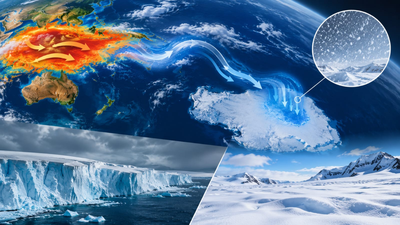
Representative Image (AI-generated)

Antarctica has been losing mass for years as glaciers shed ice into the ocean, contributing to rising sea levels. But between 2021 and 2023, the continent experienced an unusual and temporary reversal. Instead of continuing to lose mass at its recent rate, Antarctica gained about 695 billion tonnes over 22 months, marking its largest 22-month mass gain in the past two decades. A study published in Nature found that the unusual increase was largely driven by exceptional snowfall in parts of East Antarctica. The researchers found that the continent’s average mass loss was about 140.5 billion tonnes per year between 2003 and 2024, but the balance changed sharply between July 2021 and April 2023. The study linked the snowfall surge to persistent warming in a region of the tropical ocean known as the tropical warm pool.

Antarctica’s unusual ice gain

The biggest changes occurred in East Antarctica and the Antarctic Peninsula, while parts of West Antarctica continued to lose mass. The strongest accumulation was recorded across Queen Mary Land and Wilkes Land, where researchers estimated a gain of about 470 billion tonnes. The researchers compared satellite observations with precipitation and climate data, finding that unusually heavy snowfall explained much of the increase. In the Queen Mary and Wilkes Land region, precipitation contributed roughly 351 billion tonnes of additional mass during that period. This snowfall was enough to temporarily offset losses occurring elsewhere on the continent. As a result, Antarctica’s overall mass balance from 2021 to 2024 was close to zero.

Tropical warmth sends moisture south

The study found that the unusual Antarctic snowfall was connected to warmer-than-normal sea-surface temperatures in the tropical warm pool, a broad region stretching between the western Pacific and eastern Indian Ocean. Persistent warming in this area helped generate a chain of atmospheric disturbances known as Rossby waves. These waves travelled toward Antarctica and produced a high-pressure system over parts of East Antarctica.The altered circulation helped carry moisture toward the continent. Much of that moisture originated over the mid-latitude Indian Ocean and was transported southward through atmospheric rivers before falling as snow over East Antarctica. The researchers said this mechanism differs from the longer-term changes expected from global warming, which can influence Antarctic precipitation through shifting storm tracks.

A temporary reversal

Despite the dramatic increase, the researchers do not consider the event evidence that Antarctica has entered a long-term period of ice gain. West Antarctica continued to lose mass during the period, particularly in areas already experiencing long-term decline. The temporary increase was concentrated in specific regions and was strongly influenced by unusual atmospheric conditions. The study estimated that anthropogenic forcing accounted for about 9% of the observed precipitation anomaly in the Queen Mary Land and Wilkes Land region. This suggests that natural climate variability played a much larger role in the exceptional snowfall event. Similar episodes of persistent tropical warm-pool warming appear to occur roughly once every decade, meaning comparable Antarctic mass gains could happen again.

What it means for Antarctica

The findings highlight how events thousands of kilometres away can influence Antarctica’s ice sheet. Changes in tropical ocean temperatures can alter atmospheric circulation, redirect moisture and dramatically affect snowfall over the polar continent. However, the temporary gain does not erase Antarctica’s longer-term mass-loss trend. Ocean-driven melting and ice loss, particularly in West Antarctica, remain important contributors to future sea-level rise. According to the researchers, accurately representing these tropical-to-Antarctic connections in climate models will be important for improving projections of Antarctic mass balance and future sea levels. The recent snowfall-driven reversal therefore offers less a sign of recovery than a reminder of how strongly short-term climate variability can influence the continent’s ice sheet.

Follow on Google News Follow on Flipboard
Share. Facebook Twitter Pinterest LinkedIn Tumblr Email
Previous ArticlePrinceton put AI in charge of a fusion-plasma control loop running every 20 milliseconds; in one test it predicted a damaging instability 200 ms early and stopped it before it began
Next Article India, Japan to conduct two-week air exercise Veer Guardian 2026 in Jodhpur from today – The Times of India
editorial
  • Website

Related Posts

India, Japan to conduct two-week air exercise Veer Guardian 2026 in Jodhpur from today – The Times of India

September 9, 2026

Princeton put AI in charge of a fusion-plasma control loop running every 20 milliseconds; in one test it predicted a damaging instability 200 ms early and stopped it before it began

September 8, 2026

Ladakh's tourist footfall continues rising; August sees most foreign visitors

September 8, 2026

Over 600 flights cancelled as air traffic control glitch disrupts UK airports

September 8, 2026

Real estate firm told to pay Hyderabad customer Rs 60,000 a month over white sandalwood plantation deal

September 8, 2026

CCTV captures accused fleeing moments after Manipuri musician beaten to death in Delhi

September 8, 2026
Add A Comment
Leave A Reply Cancel Reply

Economy News

India, Japan to conduct two-week air exercise Veer Guardian 2026 in Jodhpur from today – The Times of India

By editorialSeptember 9, 2026

NEW DELHI: The Indian Air Force (IAF) and Japan Air Self Defence Force (JASDF) will…

After losing about 140.5 billion tons of ice a year for two decades, Antarctica temporarily reversed course, gaining a record 695 billion tons in 2021-23 as tropical warmth drove heavy snowfall

September 8, 2026

Princeton put AI in charge of a fusion-plasma control loop running every 20 milliseconds; in one test it predicted a damaging instability 200 ms early and stopped it before it began

September 8, 2026
Top Trending

India, Japan to conduct two-week air exercise Veer Guardian 2026 in Jodhpur from today – The Times of India

By editorialSeptember 9, 2026

NEW DELHI: The Indian Air Force (IAF) and Japan Air Self Defence…

After losing about 140.5 billion tons of ice a year for two decades, Antarctica temporarily reversed course, gaining a record 695 billion tons in 2021-23 as tropical warmth drove heavy snowfall

By editorialSeptember 8, 2026

Representative Image (AI-generated) Antarctica has been losing mass for years as glaciers…

Princeton put AI in charge of a fusion-plasma control loop running every 20 milliseconds; in one test it predicted a damaging instability 200 ms early and stopped it before it began

By editorialSeptember 8, 2026

Nuclear fusion illustration Photo: Canva Inside a steel vault at the Princeton…

Subscribe to News

Get the latest sports news from NewsSite about world, sports and politics.

Facebook X (Twitter) Instagram YouTube

News

  • Education
  • Health
  • National News
  • Relationship & Wellness
  • World News
  • Politics

Company

  • Information
  • Advertising
  • Classified Ads
  • Contact Info
  • Do Not Sell Data
  • GDPR Policy
  • Media Kits

Services

  • Subscriptions
  • Customer Support
  • Bulk Packages
  • Newsletters
  • Sponsored News
  • Work With Us

Subscribe to Updates

Get the latest creative news from FooBar about art, design and business.

© Copyright Global News Bulletin.
  • Privacy Policy
  • Terms
  • Accessibility
  • Website Developed by Plenary Media Solution

Type above and press Enter to search. Press Esc to cancel.