

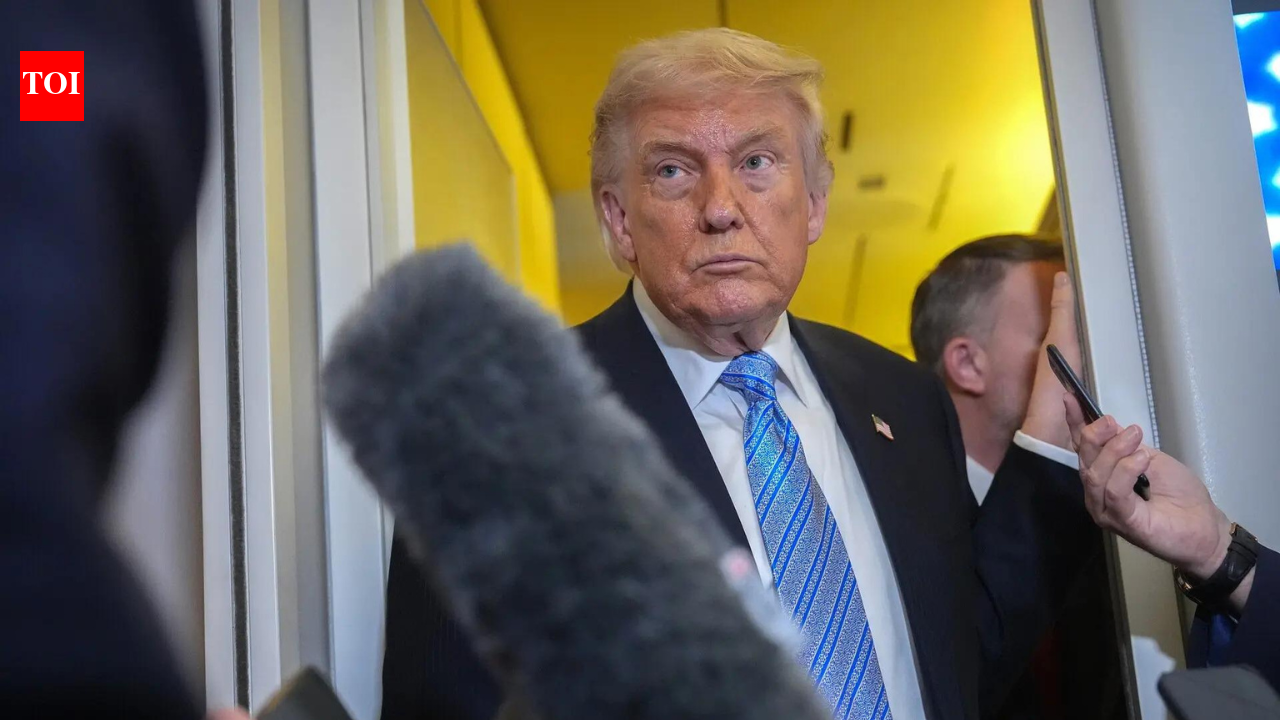
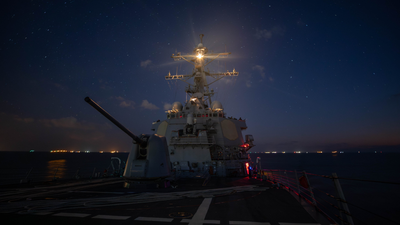
In what could be music to the ears for Indian shipyards, US has allowed foreign shipyards to produce warships abroad. Since 1968, building a US Navy ship anywhere but on American soil has been more or less unthinkable, locked in by a law so absolute it barely needed enforcing. That law, 10 US Code 8679, bans the construction of navy ships and major hull or superstructure sections in foreign shipyards, with only a narrow carve-out allowing the President to waive this rule for national security reasons after notifying Congress.President Donald Trump has now decided to actually reach for that waiver, and the implications stretch well beyond American shores, right into shipyards on India’s western coast.A new National Security Presidential Memorandum signed by Trump pushes for scaling up what officials are calling the ‘Finland model’, already in use for the Coast Guard’s Arctic Security Cutters, where the first vessels are built abroad by foreign yards and the construction of later ones to be shifted to US shipyards. Under the memo, foreign shipbuilders willing to accept a fairly demanding set of conditions could build up to two ships each across three different ship classes at their own home shipyards, before those vessels are handed over to the US.
Any foreign yard taking up this route must simultaneously build a new shipyard in the US, or take majority ownership of an existing one and build every ship after the first two in the US. The conditions insist that the shipbuilder must hire and train an American workforce, licence its proprietary shipbuilding technology and techniques to that new US shipyard, and source an American supply chain for construction and maintenance. The Secretary of War has been delegated authority by Trump to make the actual national security determination on any such waiver.This is where India enters the picture, though perhaps not quite in the way expectations might suggest. Larsen & Toubro, Mazagon Dock Shipbuilders and Cochin Shipyard already hold Master Ship Repair Agreements (MSRAs) with the US, arrangements that allow American naval vessels to undergo repair and sustainment work at Indian yards while transiting the Indo-Pacific. But it is worth being precise about what these agreements actually cover. MSRAs apply specifically to Military Sealift Command vessels, the non-commissioned, civilian-crewed support ships that carry the USNS prefix, not the commissioned, Navy-crewed combatant warships that carry USS. Indian shipyards servicing an actual US Navy warship remains a different proposition altogether, and this memo, while opening a new door for foreign-built ships more broadly, does not by itself change that distinction.With this waiver mechanism now formalised, Indian yards holding MSRA status could, potentially, be considered for construction work under the new framework. The memo also directs the Secretary of War to submit, within 120 days, a plan to boost nuclear submarine and aircraft carrier readiness, including greater use of private shipyards and a proposed fifth public navy shipyard, alongside a separate plan for a new competitive acquisition approach for surface combatants capable of anti-submarine warfare, surface warfare and convoy escort duties.

