

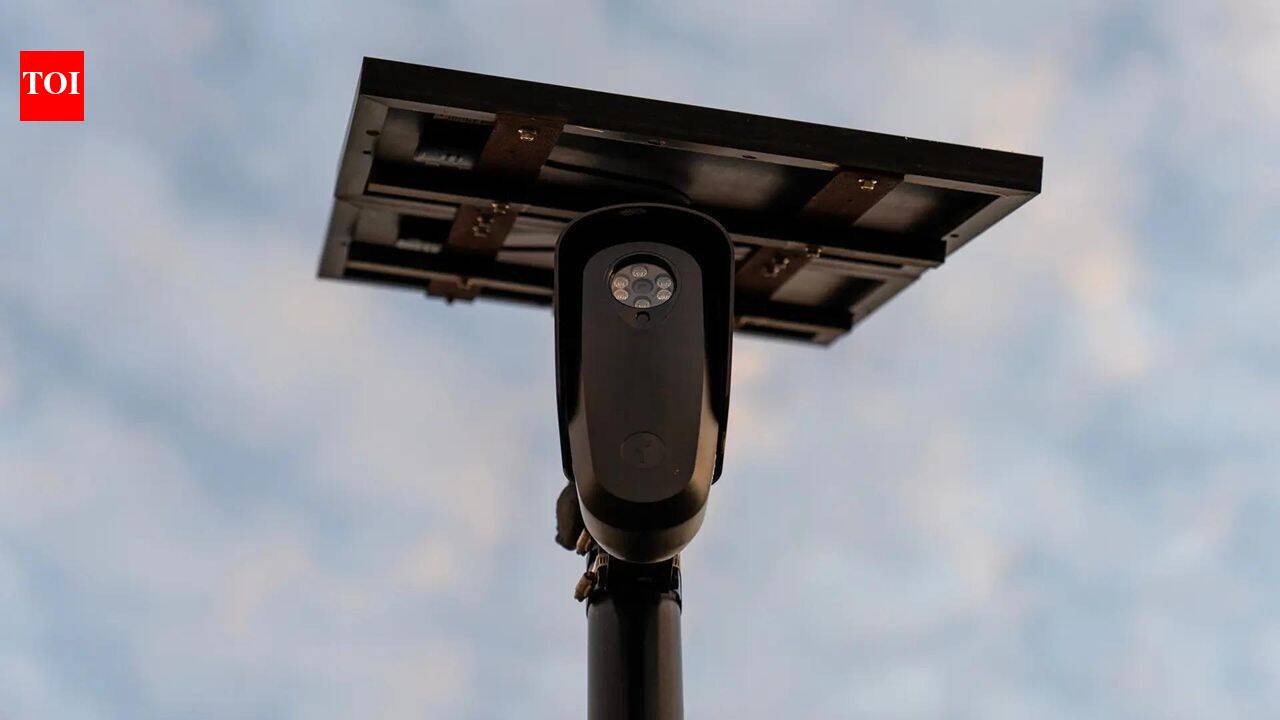
A growing backlash against Flock’s Safety’s Automated license plate reader (ALPR) cameras is spreading across the United States, with hundreds of cities deactivating cameras or ending contracts while some residents have physically damaged the devices. The opposition is largely driven by concerns over privacy, the scale of data collection and reports of misuse by law enforcement. Flock says it has around 120,000 ALPR and pan, tilt and zoom cameras deployed across the US, creating a large network that can help police track vehicles. However, critics argue that the same system can also be used to monitor people’s movements, raising concerns about mass surveillance.
US cities deactivate Flock cameras and cancel contracts
City governments in several parts of the US have started taking action against Flock’s camera network. Fort Collins in Colorado, Eugene in Oregon, Madison in Wisconsin, Knoxville in Tennessee, Syracuse in New York and Walla Walla in Washington are some of the cities that have deactivated cameras or canceled contracts with the company.In recent months, Flock cameras have been cut down with an electric saw in upstate New York, covered with paint in Oakland, California, and hit by a truck in Idaho. In Florida, a man has used a piece of cardboard attached to a pole to block a camera’s view.In June, a West Virginia man accused of destroying several Flock cameras was arrested.
What are Flock Safety’s ALPR cameras
Flock sells its technology as a tool that can help law enforcement agencies investigate and solve crimes. Its ALPR cameras automatically scan the license plate of every vehicle that passes them. The company’s pan, tilt and zoom cameras can also record live footage that can later be reviewed.Police agencies with access to the system can search recorded license plate and vehicle information to trace or reconstruct the movement of vehicles during investigations. Flock says its cameras collect tens of billions of data points every month. Because the cameras are connected, law enforcement agencies can use information collected across the wider network. The usage, however, is subjected to state rules.Flock says its default setting keeps camera data for 30 days, though police departments can change the period depending on state and local rules.
Why Americans are concerned about Flock cameras
The scale and searchability of the network have become major concerns for privacy advocates. “It’s a violation of people’s privacy,” Caleb Williams, a 24-year-old resident of rural South Carolina who described himself as a political independent, said as quoted in a CNN report.Adrien Kaiser, a self-described constitutional conservative from northwest of Houston, said: “Rational people know it comes down to violating personal liberties.” Jon Dendy, a progressive from Massachusetts, raised similar concerns.“I firmly believe the government can do things to make life better for people, but a surveillance state is the first step towards a police state,” Dendy said.The opposition has brought together people with different political views. Conservatives have raised concerns about government power and constitutional rights, while progressives have warned about surveillance and possible government abuse.
Reports of police misuse add to privacy concerns
Concerns have increased following reports of police officers allegedly misusing Flock’s system. According to a report by 404 Media cited in the original story, there have been more than a dozen cases involving police officers accused of or arrested for using Flock technology to harass or stalk people, including former partners.Another Flock feature called “FreeForm” reportedly allows users to search camera records using descriptions such as clothing and tattoos. Flock has said the feature includes guardrails that alert administrators when searches contain terms involving race, ethnicity, religion or nationality.Flock CEO Garrett Langley has argued that privacy and public safety do not have to come at the expense of each other.“Oftentimes our critics will say we need to make a choice between safety or privacy. And I think that’s I think that’s wrong,” Langley said. “As a country, as a society, as a species, we have proven over and over and over again that we can have safety and privacy.”The company has also introduced an automatic audit process designed to flag suspicious or questionable use of its technology.

