

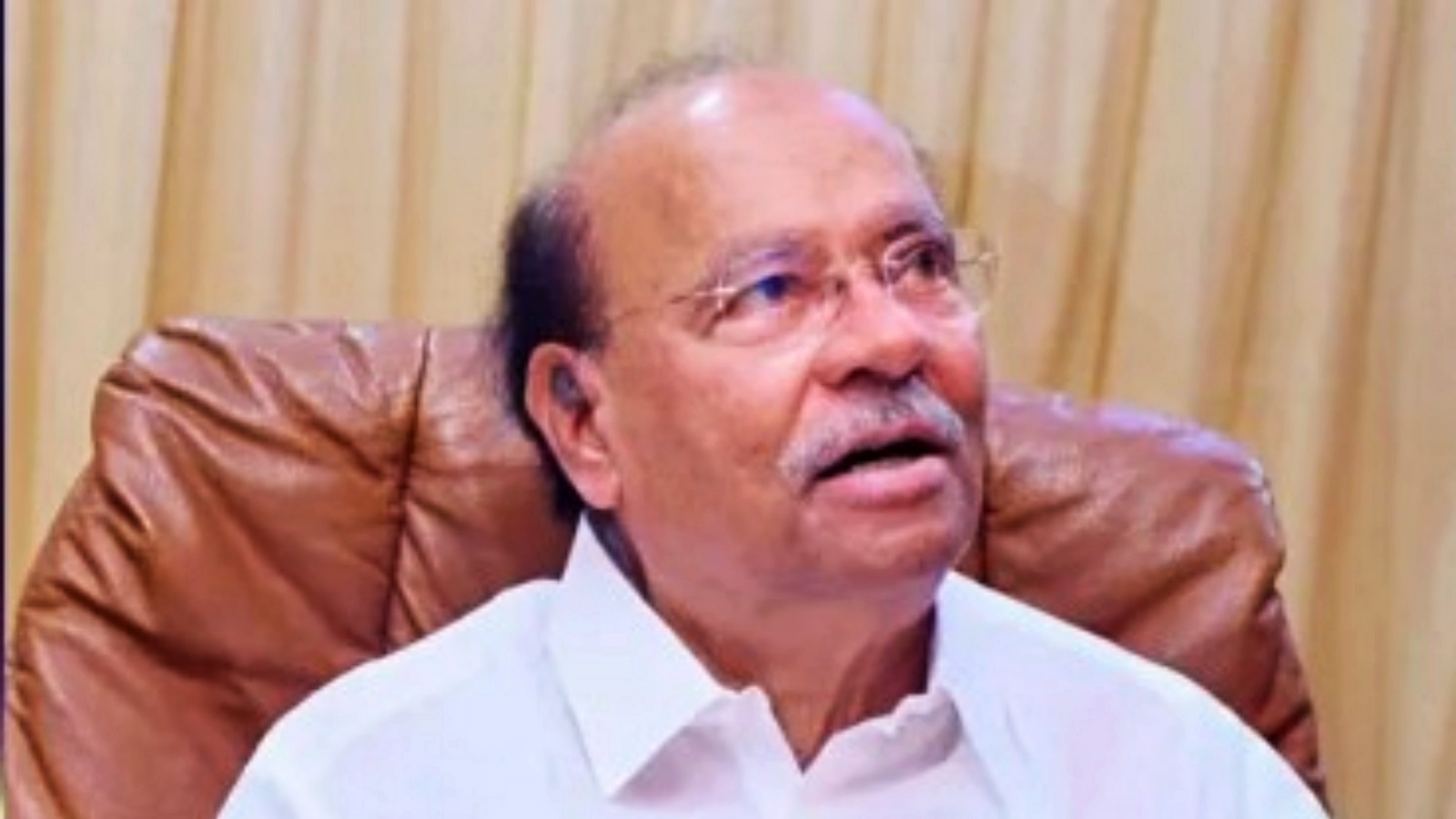
Every political movement eventually confronts the same question: what remains after the founder decides to stop speaking? On Saturday, as he turned 88, Pattali Makkal Katchi (PMK) founder Dr. S. Ramadoss attempted to answer that question with unusual simplicity.
“I am retiring from politics,” he told party workers gathered at Saraswathi College near Tindivanam. “From today, I will not speak about politics or interfere in political matters. Anbumani will take care of politics. His wife will also support him. Those who come to meet me should not discuss politics with me.”

The declaration, delivered during a birthday programme that also marked the planting of 88 saplings, formally transfers the political movement he built over four decades to his son, PMK president Dr. Anbumani Ramadoss. Citing recurring vertigo, Ramadoss asked visitors henceforth to enquire only about his health — not politics.
“I am suffering from vertigo. I was eager to meet all of you and have come here,” he said. “The relationship between you and me will never change.”
The announcement comes barely weeks after father and son ended a bitter leadership struggle that had split the PMK into rival camps, with both publicly differing over organisational control, alliances and the party’s future. Their emotional reunion at Thailapuram last month signalled reconciliation. Saturday’s announcement transformed reconciliation into succession.
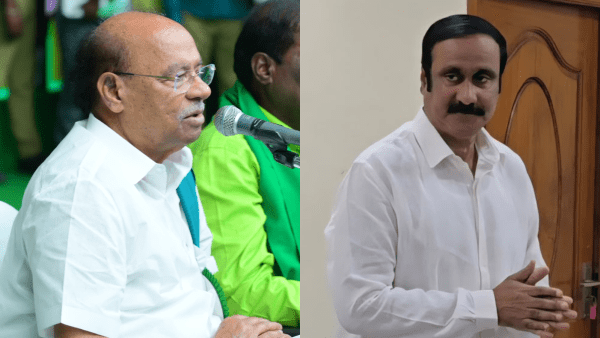
The declaration, delivered during a birthday programme that also marked the planting of 88 saplings, formally transfers the political movement he built over four decades to his son, PMK president Dr. Anbumani Ramadoss.The Ramadoss legacy
Yet Ramadoss leaves behind far more than a political party. He leaves behind one of the most consequential — and contested — social movements modern Tamil Nadu has produced.
Long before he became a politician, Ramadoss was a village doctor in Villupuram whose inexpensive medical practice earned him local recognition. In 1980, he founded the Vanniyar Sangam, seeking greater educational and employment opportunities for one of Tamil Nadu’s largest and most politically consolidated Most Backward Class (MBC) communities.
That movement would fundamentally reshape Tamil Nadu’s reservation politics.
Throughout the 1980s, the Vanniyar agitation demanded separate reservation in education and government employment. It also developed an unmistakable style of protest. Roads across northern Tamil Nadu were blocked not with barricades but with freshly cut government-owned roadside trees. Villages stopped highways at their own boundaries. Entire transport networks came to a standstill. One week-long blockade in September 1987 paralysed large parts of northern Tamil Nadu. Earlier road and rail blockades had already demonstrated the movement’s organisational capacity.
The method became so iconic that one of PMK’s most recognisable leaders would forever carry the nickname “Kaduvetti” (tree cutter) Guru — a name that itself became shorthand for that era of agitation. Those protests often turned violent. Police firing and clashes claimed several lives. But they also achieved their central political objective.
After the DMK returned to power in 1989, the existing Backward Class category was divided into Backward Classes and Most Backward Classes. Vanniyars were placed within the newly created MBC category, securing a separate 20 percent reservation that remains one of the defining achievements claimed by Ramadoss throughout his political career. From that social movement emerged the Pattali Makkal Katchi, or PMK, in 1989.
The ambition was never modest. Ramadoss repeatedly spoke of capturing power in Tamil Nadu itself. At one point he recalled believing the PMK would win government immediately after its birth and argued that history, including Rajiv Gandhi’s assassination, altered that trajectory. Reality proved less accommodating.
The PMK once emerged as an indispensable alliance partner capable of influencing governments across ideological divides. It won 20 Assembly seats in 2001 and remained an important force in coalition politics for years.
But electoral relevance steadily narrowed. The party suffered setbacks in the 2009, 2011, 2014 and 2016 elections, lost all Assembly seats in 2016, returned with five MLAs in 2021 only through alliance with the AIADMK, and today commands roughly a 4 percent vote share. Lok Sabha elections reflected a similar decline: no MPs in 2009, one in 2014 and none thereafter.
Influence increasingly became negotiation rather than electoral strength. Yet numbers alone cannot explain Ramadoss’ political legacy. His career was built upon social justice rhetoric while remaining inseparable from the deeply uncomfortable history of caste violence that came to define the PMK in the public imagination.
Relationship with Dalits
The party became closely associated with the Vanniyar community’s often fraught relationship with Dalits, particularly in districts such as Dharmapuri and Villupuram.
The 2012 Dharmapuri riots following an inter-caste marriage remain among Tamil Nadu’s darkest caste conflicts. Critics long accused the PMK of encouraging caste mobilisation under the language of community rights. Ramadoss himself attracted intense criticism in 2013 after blaming Tamil cinema for encouraging Dalit boys to pursue inter-caste marriages. His supporters remember the architect of reservation. His critics remember the politics of exclusion. Both memories now coexist within the same political biography.
In recent years Ramadoss had sought to revive the movement’s original vocabulary. Last year, he warned of “historic protests” if the state failed to implement a 10.5 percent internal reservation for Vanniyars. Addressing thousands at the once-in-twelve-years Chithirai Muzhu Nilavu Vanniyar Youth Conference in May 2025, he urged cadres to intensify mobilisation and reminded them that disciplined booth-level work could transform electoral fortunes.
The transition
Even then, the generational transition remained visibly incomplete. On the same stage, Ramadoss publicly warned office-bearers that positions would not survive without work, while Anbumani sat beside him smiling.
Saturday finally settled that lingering uncertainty. “Anbumani will look after everything,” Ramadoss declared.
The son, here, inherits both an organisation and a paradox. Unlike his father, Anbumani enters leadership carrying a national administrative reputation. As Union Health Minister, he became associated with public health reforms, the National Rural Health Mission and restrictions on smoking in public places. He has repeatedly spoken of transforming the PMK into a broader development-oriented political party capable of governing Tamil Nadu.
Yet every attempt to build that “PMK 2.0” inevitably returns to the same unresolved question. Can a party born from caste mobilisation truly outgrow the social identity that created it? That challenge has become even sharper in today’s Tamil Nadu, where new political forces have unsettled old electoral equations and caste arithmetic alone appears increasingly insufficient.
There was a quiet symbolism Saturday. The founder who once mobilised entire highways through protest asked visitors, almost gently, to stop discussing politics with him.
For a man who spent decades making politics impossible to ignore, retirement arrived not with another agitation, another slogan or another demand. It arrived with 88 saplings. Whether those trees ultimately outlive the movement he planted nearly half a century ago is no longer a question for Ramadoss. It is now entirely Anbumani’s.

