

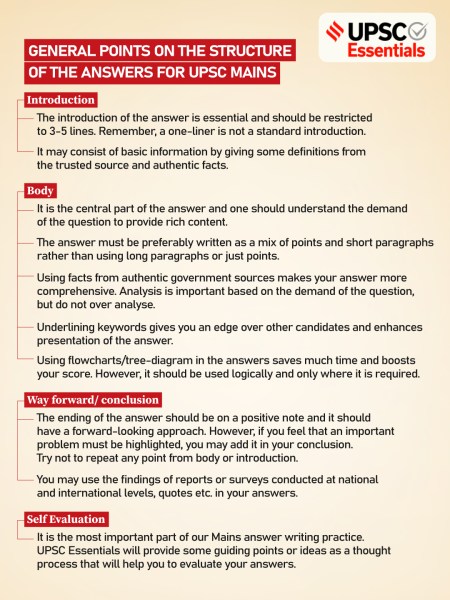
UPSC Essentialsbrings to you its initiative for the practice ofMains answer writing.It covers essential topics of static and dynamic parts of the UPSC Civil Services syllabus covered under various GS papers. This answer-writing practice is designed to help you as a value addition to your UPSC CSE Mains. Attempt today’s answer writing on questions related to topics ofGS-2to check your progress.
🚨Click Hereto read the UPSC Essentials magazine forJuly 2026.Share your views and suggestions in the comment box or at manas.srivastava@indianexpress.com🚨
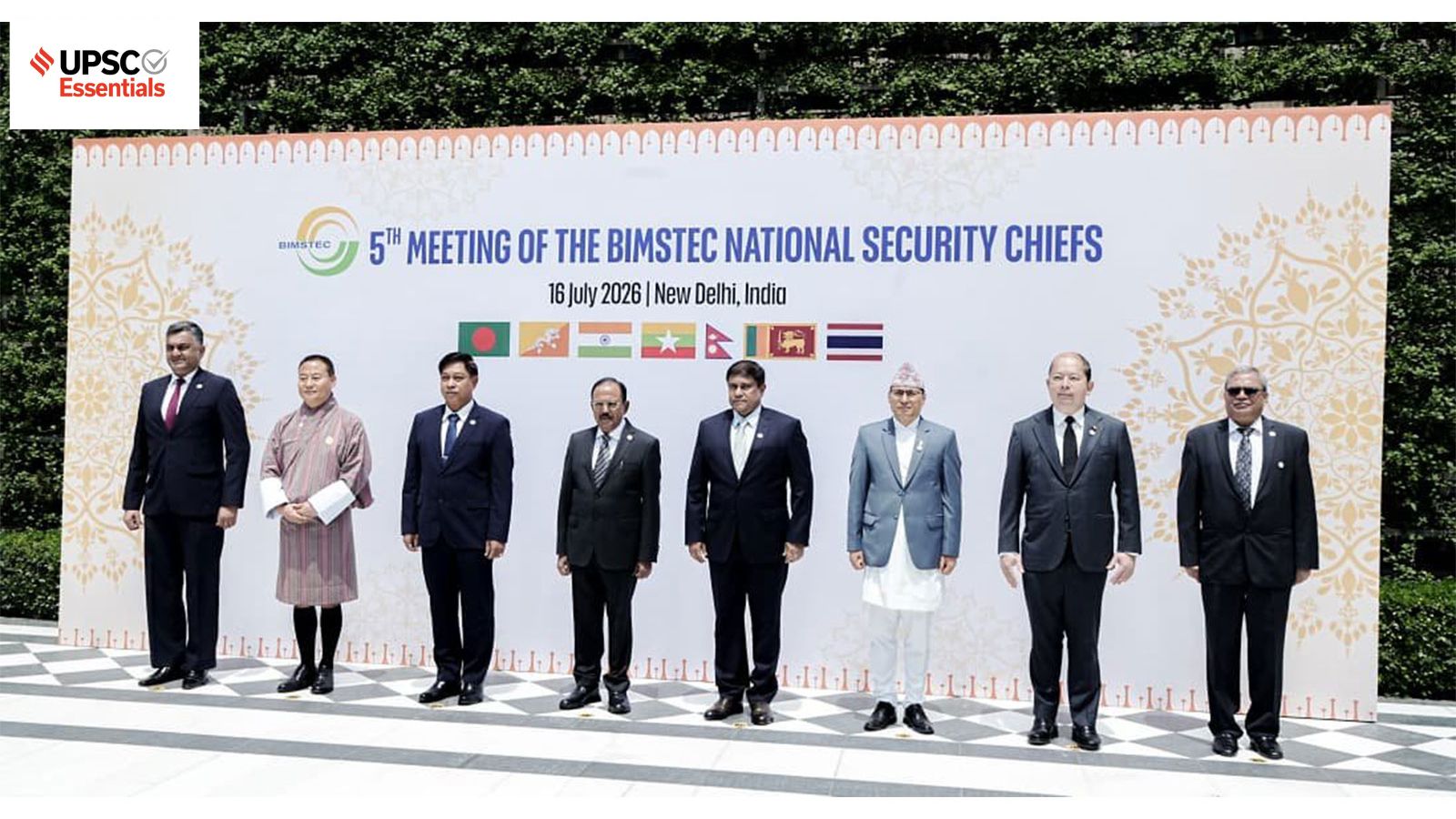
Discuss the strategic significance of BIMSTEC for India in advancing its ‘Neighbourhood First’, ‘Act East’ and Indo-Pacific policies. What are the key challenges that hinder the organisation from realising its full potential?
QUESTION 2
India’s policy of strategic autonomy is being tested by the deepening geopolitical divide between Russia and the West. Discuss in the context of NATO’s changing strategic outlook and India’s evolving partnerships with Europe and the United States.
QUESTION 1: Discuss the strategic significance of BIMSTEC for India in advancing its ‘Neighbourhood First’, ‘Act East’ and Indo-Pacific policies. What are the key challenges that hinder the organisation from realising its full potential?
Relevance: BIMSTEC is increasingly central to India’s regional diplomacy as it strengthens cooperation on security, connectivity, and economic integration in the Bay of Bengal. The topic links directly with GS Paper 2 (International Relations) under regional groupings, India’s neighbourhood policy, maritime security, and Indo-Pacific strategy.
Note: This is not a model UPSC answer. It only provides you with a thought process which you may incorporate into the answers.
Introduction:
Story continues below this ad
— The Bay of Bengal Initiative for Multi-Sectoral Technical and Economic Cooperation (BIMSTEC), which includes Bangladesh, Bhutan, India, Myanmar, Nepal, Sri Lanka, and Thailand, serves as a link between South and Southeast Asia.
— With the Bay of Bengal evolving as a strategic center of the Indo-Pacific, BIMSTEC has emerged as a critical component of India’s Neighbourhood First, Act East, and Indo-Pacific visions.
Body:
You may incorporate some of the following points in your answer:
Strategic significance of BIMSTEC for India
— BIMSTEC promotes India’s political and economic involvement with its eastern neighbours while also providing a venue for regional cooperation, notwithstanding SAARC’s limited functioning due to India-Pakistan rivalry.
Story continues below this ad
— BISTEC serves as a link between South Asia and ASEAN, mostly via Thailand and Myanmar. It promotes cross-border connectivity through programs like the India-Myanmar-Thailand Trilateral Highway, which enhances trade and people-to-people contacts.
— BIMSTEC encourages collaboration in maritime security, the blue economy, connectivity, and sustainable development, which complements India’s goal of a free, open, inclusive, and rules-based Indo-Pacific.
— It promotes stronger regional value chains and economic cooperation. It also promotes sub-regional collaboration through BBIN and other connectivity initiatives.
Conclusion:
Story continues below this ad
— BIMSTEC has emerged as India’s primary regional platform, integrating South Asia, Southeast Asia, and the Indo-Pacific. Its success will be dependent on translating political purpose into efficient implementation, improving connectivity, and building a rules-based, secure, and prosperous Bay of Bengal region that is consistent with India’s regional and global strategic goals.
(Source: What is BIMSTEC, and why is it in focus ahead of its 30th anniversary?, How not to miss the BIMSTEC opportunity, again, With uncertainty looming, challenges and opportunities for India’s Act East policy, http://www.pib.gov.in)
Points to Ponder
Reasons behind SAARC’s limited effectiveness.
Need for sustained political commitment and implementation
Related Previous Year Question
Do you think that BIMSTEC is a parallel organisation like the SAARC? What are the similarities and dissimilarities between the two? How are Indian foreign policy objectives realized by forming this new organisation? (2022)
QUESTION 2: India’s policy of strategic autonomy is being tested by the deepening geopolitical divide between Russia and the West. Discuss in the context of NATO’s changing strategic outlook and India’s evolving partnerships with Europe and the United States.
Story continues below this ad
Relevance: The transformation of NATO from a traditional collective defence alliance to a broader security, technology and industrial partnership has significant implications for the evolving global security architecture. It is relevant for UPSC GS 2 under India’s bilateral and multilateral relations, India’s strategic autonomy, India-Europe relations, transatlantic partnerships, and the Indo-Pacific.
Note: This is not a model UPSC answer. It only provides you with a thought process which you may incorporate into the answers.
Introduction:
— India’s strategic autonomy refers to its capacity to pursue its own diplomatic and security policies without partnering with any military group.
— In the evolving multipolar order, however, the growing gap between Russia and the West, combined with NATO’s change, has made this balancing act more difficult.
Body:
Story continues below this ad
You may incorporate some of the following points in your answer:
India’s evolving partnerships with Europe and the United States
Story continues below this ad
— India has increased its cooperation with the United States and Europe in defence manufacturing, vital technologies, cyber resilience, marine security, and supply chain resilience.
— Europe’s rising defence spending and hunt for trusted manufacturing partners open up potential for Indian defence businesses and the ‘Make in India’ initiative.
— India has increased its ties with Europe through the India-EU Security and Defence Partnership, the Trade and Technology Council, negotiations for the India-EU Free Trade Agreement, and collaboration on connectivity and the Indo-Pacific.
Conclusion:
— India’s strategic autonomy is no longer about maintaining equidistance, but rather about increasing strategic flexibility. As NATO’s role expands beyond traditional military deterrence, India must use new partnerships with Europe and the United States into possibilities while maintaining long-standing connections with Russia and protecting its sovereign decision-making.
(Source: NATO’s transformation opens possibilities for India, In a turbulent world, India and Europe provide an anchor, http://www.pib.gov.in)
Points to Ponder
Evolution of NATO’s role after the Cold War
Challenges posed by India’s longstanding defence ties with Russia
Related Previous Year Questions
“The reform process in the United Nations remains unresolved, because of the delicate imbalance of East and West and entanglement of the USA vs. Russo-Chinese alliance.” Examine and critically evaluate the East-West policy confrontations in this regard. (2025)
‘The expansion and strengthening of NATO and a stronger US-Europe strategic partnership works well for India.’ What is your opinion about this statement ? Give reasons and examples to support your answer. (2023)
Previous Mains Answer Practice
UPSC Essentials: Mains answer practice — GS 3 (Week 164)
UPSC Essentials: Mains answer practice — GS 3 (Week 163)
UPSC Essentials: Mains answer practice — GS 2 (Week 162)
UPSC Essentials: Mains answer practice — GS 2 (Week 163)
UPSC Essentials: Mains answer practice — GS 1 (Week 163)
UPSC Essentials: Mains answer practice — GS 1 (Week 162)
Subscribeto ourUPSC newsletterand stay updated with the news cues from the past week.
Stay updatedwith the latestUPSC articlesby joining ourTelegram channel–IndianExpressUPSC Hub, and follow us onInstagramandX.

