

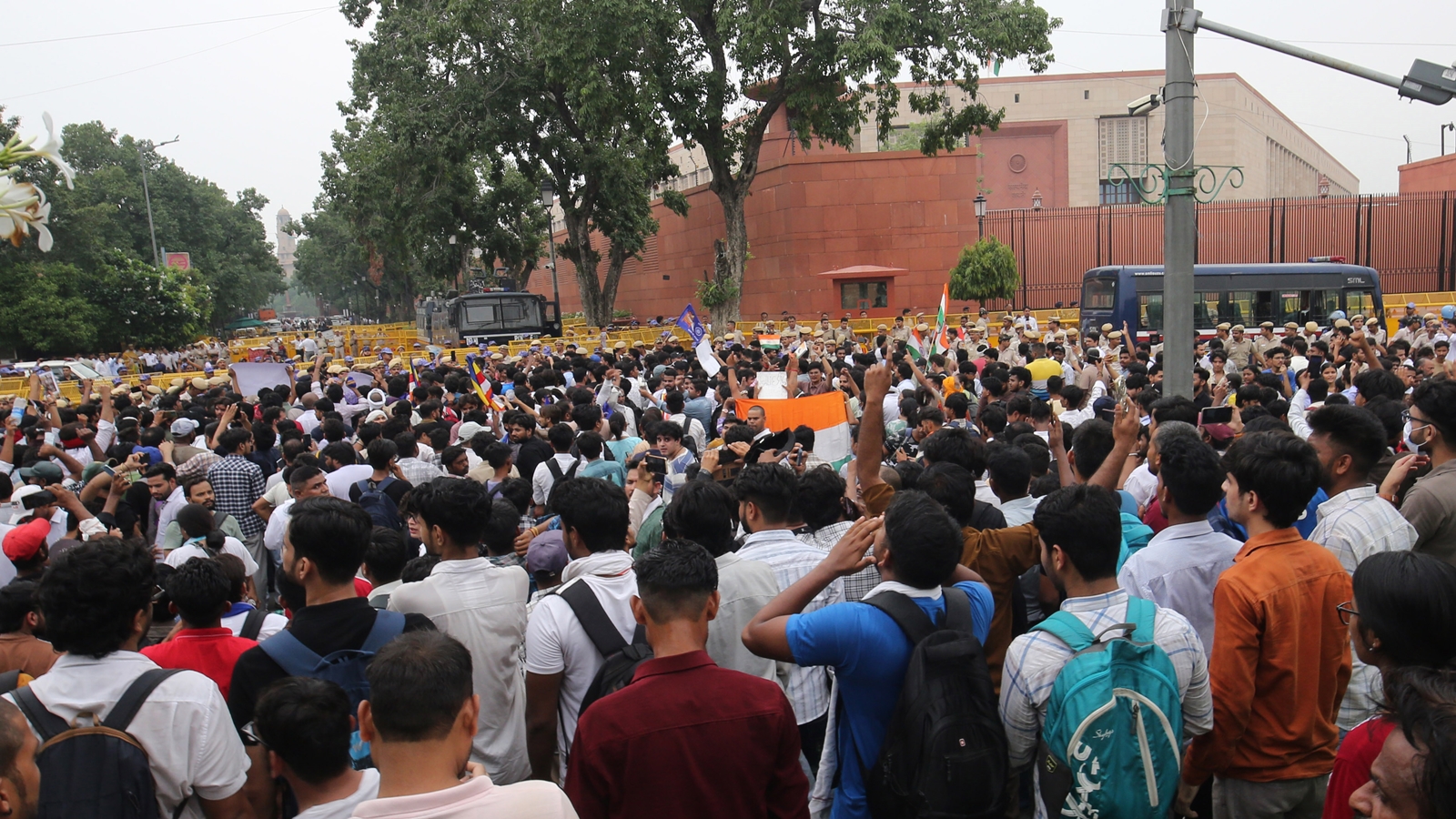
Around 3 pm on Monday, as MPs gathered inside the Parliament for the first day of the Monsoon Session, an eerie silence filled the Sansad Marg. The road was strewn with abandoned shoes and slippers – the only traces of the tens of thousands of students and young professionals who had, minutes earlier, marched towards the Parliament demanding the resignation of Union Education Minister Dharmendra Pradhan. Lathicharged and subjected to tear gas shells by Delhi Police and Rapid Action Force personnel, the protesters had been pushed back.
For the Cockroach Janta Party (CJP), it marked a turning point – the protest, which had caught the attention of the country, appeared to have slipped out of its control.

It all unraveled after the CJP announced that they had been invited by the government for talks – a win, though marginal and eventually inconsequential.
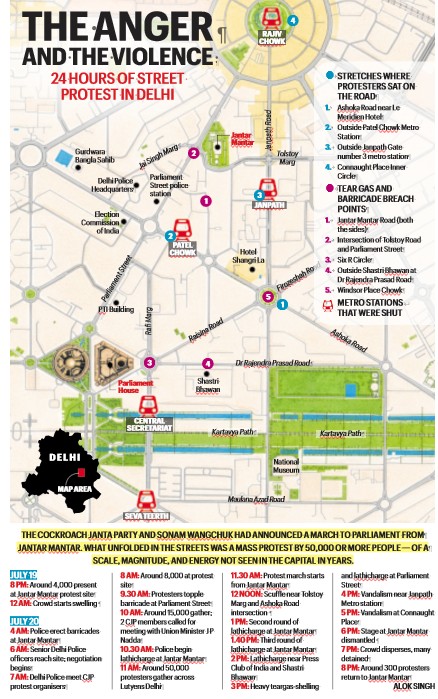
The day had begun much earlier, with students and young professionals filtering through police checkpoints to reach Jantar Mantar, where the CJP had been camping for nearly a month over the alleged mismanagement of the NEET examination.
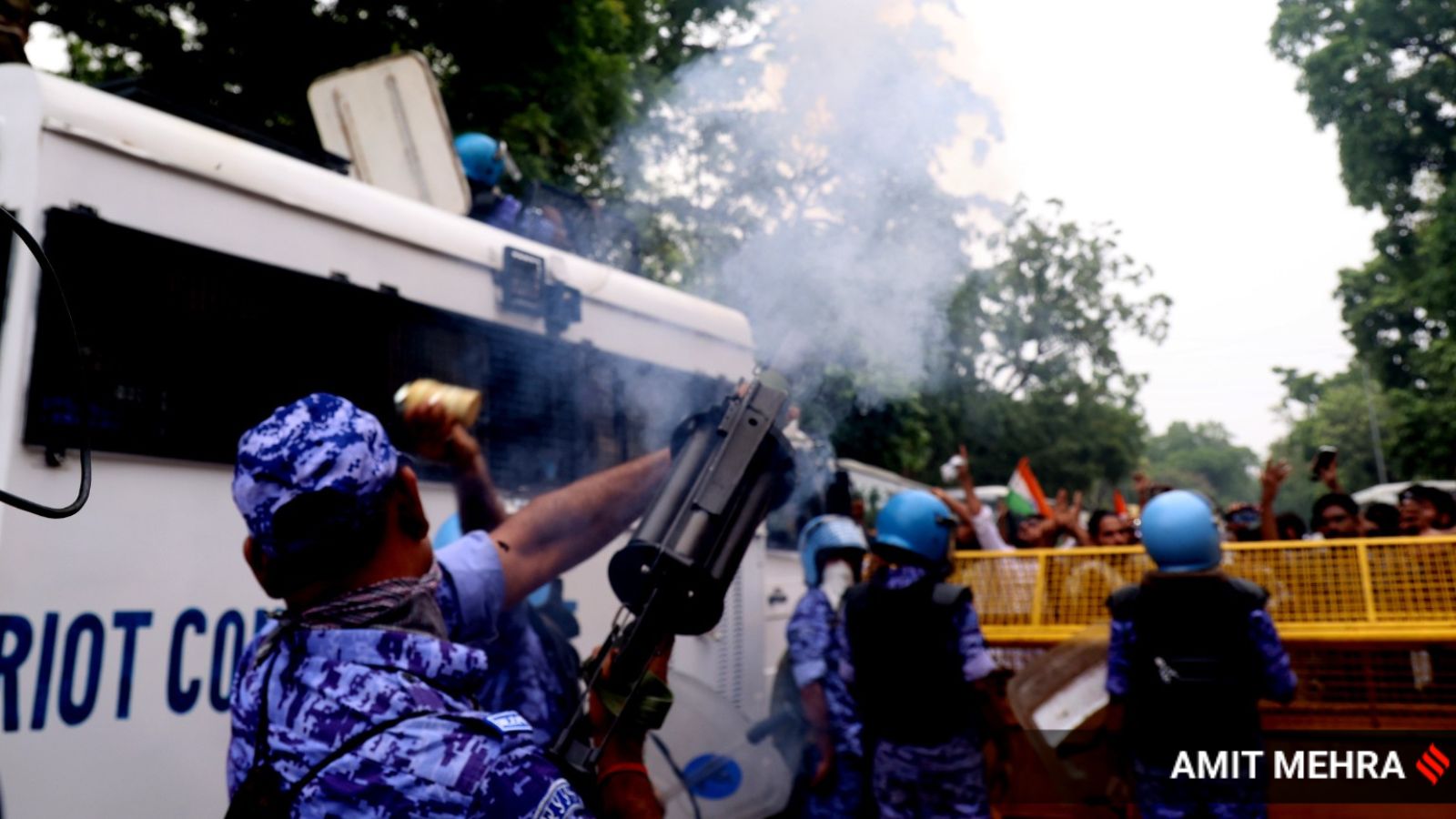 Security forces used tear gas to dispel agitators gathered at Jantar Mantar on Monday. (Express photo)
The police had welded together two layers of barricades to confine the protesters to Jantar Mantar and adjoining Tolstoy Road. However, by 9.30 am, the number of protesters had grown so much that they started climbing on top of the police barricades, with slogans of ‘Vande Mataram’ and ‘Jai Bhim’ being raised in the background.
At 11.30 am – two-and-a-half hours later than the scheduled time to start the march – Gitanjali Anngmo, Sonam Wangchuk’s wife, announced from the stage: “Sonam has requested Dipke, who has been on a hunger strike, to break his fast, as he needs energy to lead the protest and the march.”
A few minutes later, Dipke drank a glass of juice, breaking his two-day-old fast.
Story continues below this ad
“We will start the march in 10 minutes… it will be led by Gitanjali ma’am and Riya’s father,” Dipke announced. He was referring to Riya Kumari (24), who allegedly died by suicide in Dehradun while preparing for the NEET re-exam last month.
Soon after, Dipke and Anngmo’s delegation moved towards the Kerala Bhavan in a mini truck.
As the convoy approached the barricades near Kerala Bhavan around 12.10 pm, it was met by a line of paramilitary personnel in riot gear. Realising they won’t be allowed to move further, Dipke asked the protesters to sit down on the road.
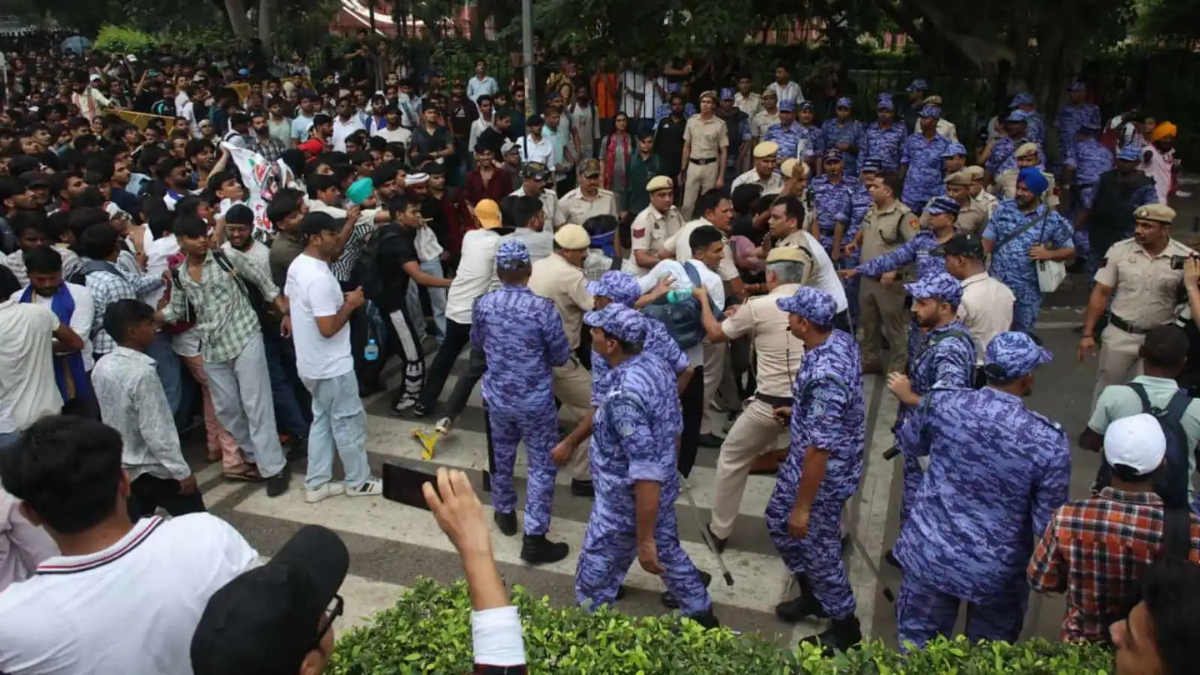 CJP protesters clashes with Delhi Police; several cops injured (Express Photo: Praveen Khanna)
He told the gathering, “I want to tell you that the government has called us for a meeting. And Ashutosh (Raka) is right now meeting (Union Minister) J P Nadda.”
Story continues below this ad
As the crowd cheered, he added, “Till the meeting ends, let’s all sit down here.”
At this point, the crowd belonged to Dipke: listening to him, responding to his directions.
However, with the Parliament within sight, the crowd repeatedly pressed against the barricades. By 12.30 pm, the convoy had reached about 100 m from the police barricading – manned by over 30 to 40 paramilitary personnel. Feeling that it’s about to cross the last hurdle before they could march to the Parliament, the crowd started to urge security personnel to let them go.
“Modi jab jab darta hai, Police ko aage karta hai (When PM Narendra Modi is scared, the sends the police),” they screamed, with a group of about hundred protestors – most of them women – staging a sit-in near the barricades, Dipke’s truck just behind them.
Story continues below this ad
Around 1 pm, the protesters again pushed towards the barricade. A group of men overturned one of them, with bottles and slippers being thrown from among the crowd toward security forces. The security personnel charged towards them with lathis, hitting some of them.
This made the protesters turn around, with hundreds running towards Dipke’s truck.
Again, Dipke appealed for restraint. “Please keep it peaceful. I urge you all to sit down,” he said.
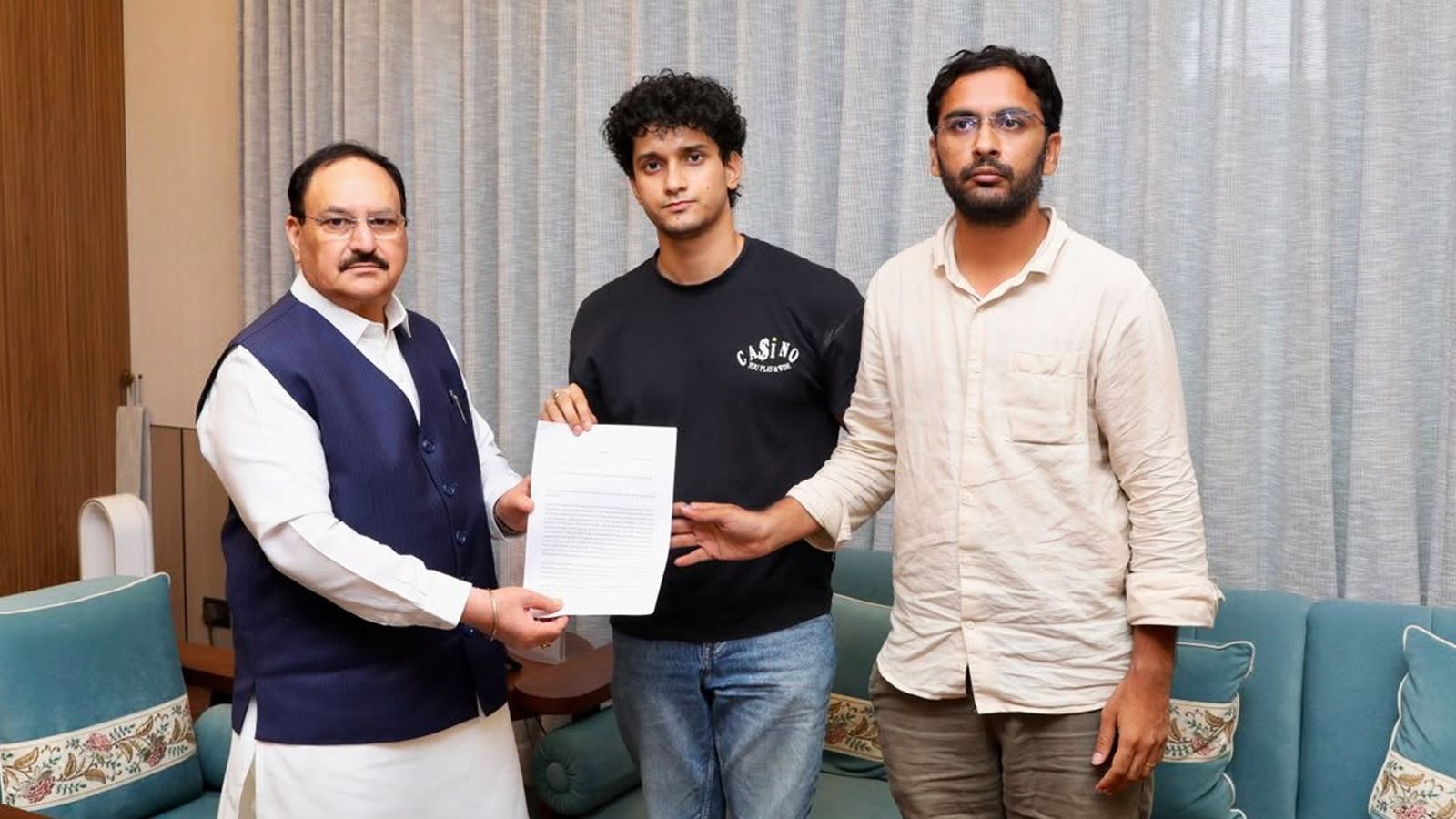 Nadda met CJP spokespersons Saurav Das and Ashutosh Ranka even as security forces wielded batons and fired tear gas at the protesters, some of whom had reached just a few metres away from Parliament. (Credits: X/ @SauravDassss)
But his sway over his supporters had started to fade by then.
Around 1.30 pm, the protesters again started pushing the barricades.
Story continues below this ad
On the other end of Jantar Mantar, towards the Leo Tolstoy Marg, the crowd pushed through barricades and poured onto Sansad Marg despite the police repeatedly announcing that prohibitory orders under Section 163 of the BNSS were in force.
“I don’t mind getting beaten up… I can do this much for the country’s future,” said Abhishek Kumar (19), a BCom student at Allahabad University, as he and hundreds of others pushed through the barricades.
As the barricading gave way, the crowd slowly filled most of the Sansad Marg until the Parliament Street police station.
For the next couple of hours, protesters were hard pressed to find a spot to stand as every inch of space was occupied.
Story continues below this ad
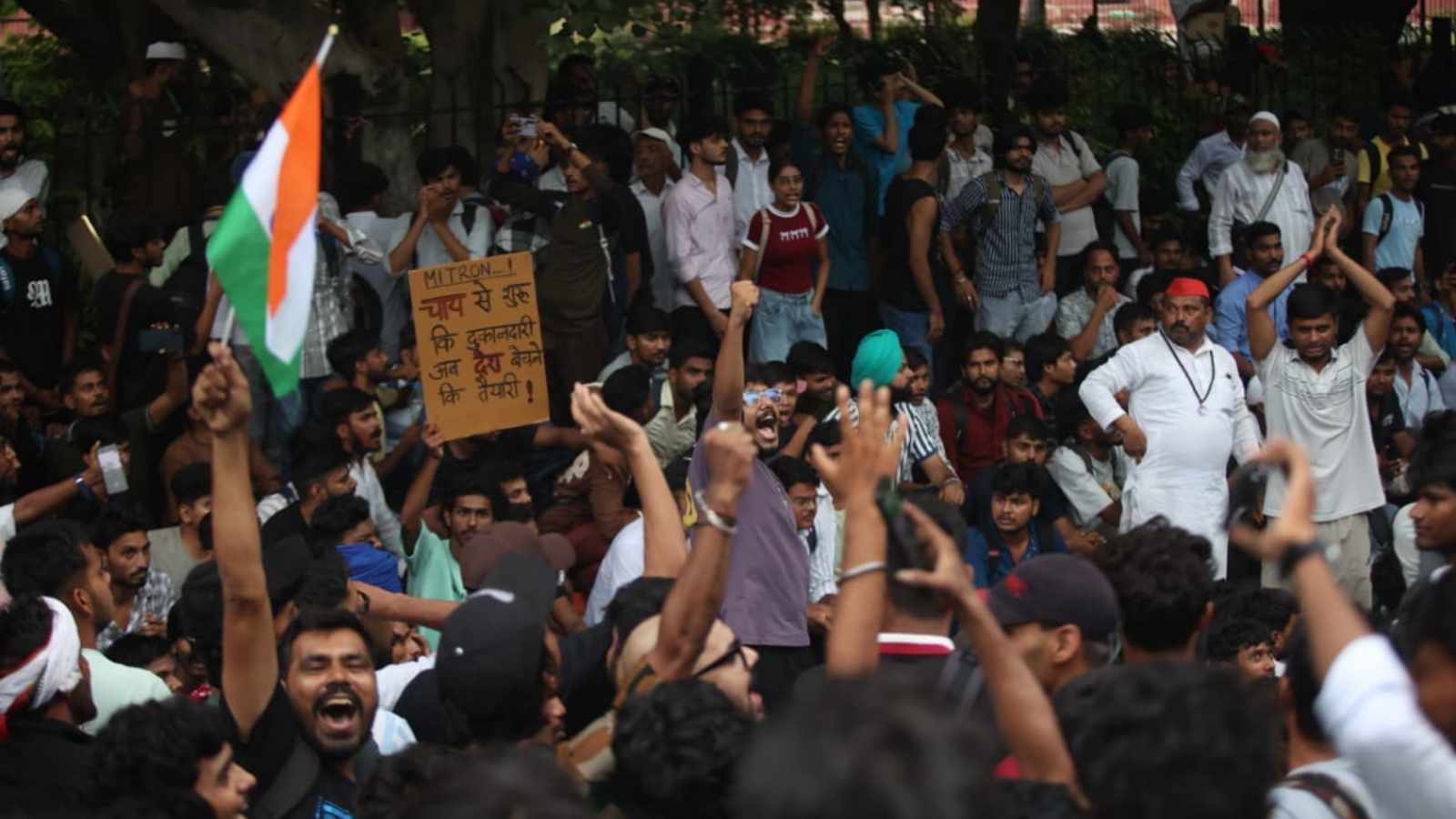 Protesters at the CJP-led march to Parliament. (Express photo: Praveen Khanna)
The crowd was persistent: every half an hour, they pulled back as the police resorted to lathicharge but again pushed back after regrouping.
Slowly, the protesters reached the intersection of Ashoka Road and Sansad Marg – within striking distance of the Parliament. The protest by then was only 700 m away from the Parliament.
This was when the police decided that they had had enough.
A spate of tear gas shells were fired for the next hour in between lathi charges, as the police pushed back the crowd towards Jantar Mantar.
Story continues below this ad
As protesters scattered through Central Delhi, the march fragmented into smaller groups clashing with police on different roads.
Back at Jantar Mantar, Dipke stood with other CJP members – the stage already demolished by the police, and the arena deserted.

