

3 min readNew DelhiUpdated: Jul 6, 2026 02:41 PM IST
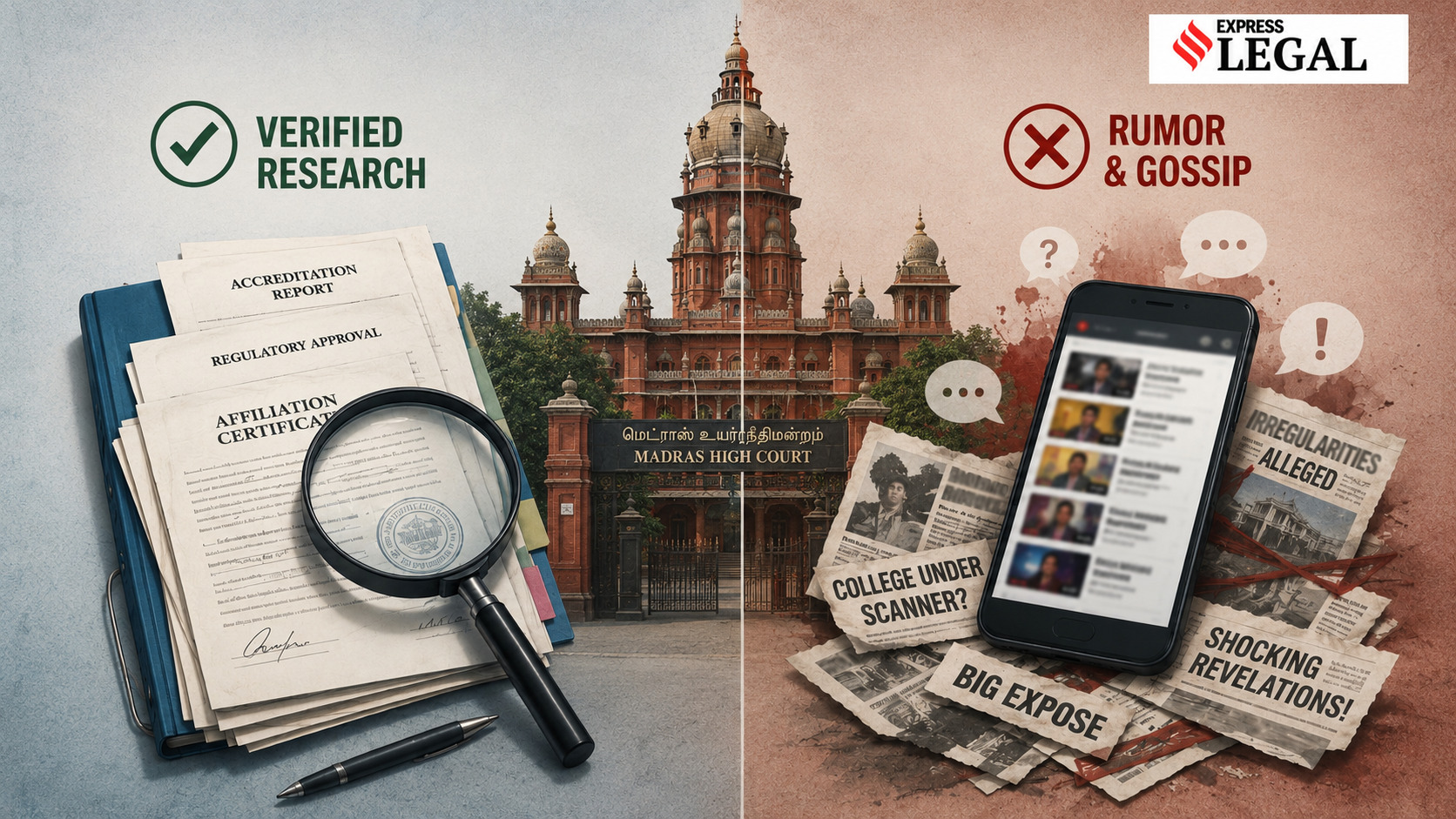
The Madras High Court recently dismissed a public interest litigation (PIL) filed by a man who relied on YouTube videos and newspaper clippings to demand a sweeping investigation into an engineering college in its regulatory approvals, affiliation, accreditation and autonomous status. The high court also ruled that public interest cases cannot be built on “digital gossip” and “unverified electronic media reports”.
Chief Justice Sushrut Arvind Dharmadhikari and Justice G Arul Murugan were hearing a public interest litigation (PIL) filed by one D Radhakrishnan against Sri Venkateswara College of Engineering and Technology and various other educational authorities.

“A person filing the public interest litigation should be a diligent researcher, not a casual collector of unverified electronic media discourse. In the present case, the petitioner has merely bundled newspaper clippings, YouTube references, and a First Information Report to build a narrative of widespread malpractice against the seventh respondent (Sri Venkateswara College of Engineering and Technology),” the court said in its July 3 order.
The petitioner’s counsel, senior advocate R Shunmugasundaram, was seeking an independent committee of regulatory officers to look into how the college secured and maintained its autonomous status and affiliation.
His claims relied heavily on an ongoing investigation by the Directorate of Vigilance and Anti-Corruption (DVAC), alongside an existing 2025 FIR,to build a narrative of widespread malpractice against the college.
However, the court found the man’s legal request highly contradictory. In April 2026, he explicitly asked the authorities to immediately withdraw the college’s accreditation, yet he approached the court asking for an investigative committee under a completely transformed pretext.
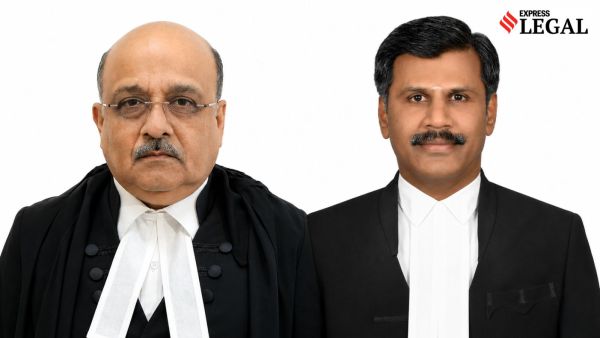 Chief Justice Sushrut Arvind Dharmadhikari and Justice G Arul Murugan dismissed the petition due to a lack of extensive research.
‘No independent research to verify facts’
- The court pointed out a glaring contradiction in how the petitioner approached the justice system.
- The judges noted that the petitioner cannot first approach statutory authorities demanding an extreme and punitive measure, such as immediately withdrawing a college’s autonomous status and then again approach the high court with a completely transformed request for a simple investigative committee.
- Delving into the quality of the submitted evidence, the court observed that the man had failed to act as a serious researcher.
- The high court found that he merely gathered together unverified newspaper clippings and YouTube references without doing any independent research to verify the foundational facts.
- The bench highlighted that a criminal investigation by the Directorate of Vigilance and Anti-Corruption (DVAC) is already actively underway, and hence the matter is entirely sub judice.
- The high court felt strongly that this petition was not filed to serve the public interest, but rather to unnecessarily sensationalise a legal process that is already in motion.
- The court concluded that any PIL filed without a single shred of independent, verified research fails to meet the stringent legal threshold and must be firmly throttled at the very beginning.
- The high court entirely dismissed the petition but did not impose any costs on the petitioner.
(With inputs from Avinash Verma, Avinash is an intern with The Indian Express)

