

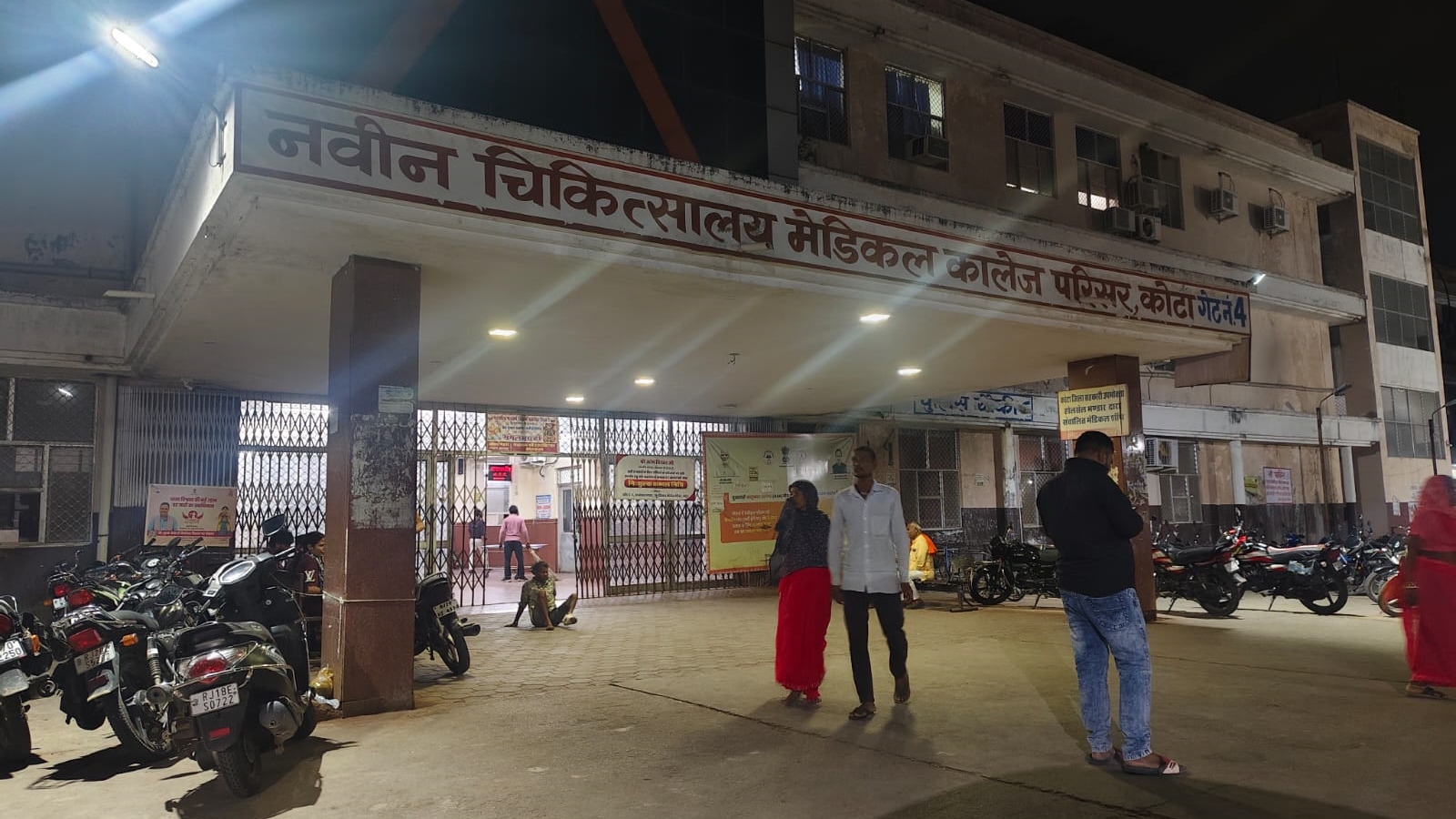
Nearly two months after five women died following childbirth via C-section in Rajasthan’s Kota, investigations by state health authorities have shifted the focus away from the faulty oxytocin injection as the root cause. An eight-member expert committee, set up by the Rajasthan government to probe the recent maternal deaths, has flagged several procedural lapses, including poor monitoring of high-risk pregnancies, insufficient medical treatment records and gaps in infection control mechanisms, The Indian Express has learnt.
This despite regulators from three states, along with the apex drug controller, taking action against the manufacturer and distributor of the anti-haemorrhagic drug. The Rajasthan Drug Testing Laboratory had found a batch ineffective, saying tests revealed that the injections contained no trace of oxytocin, its active ingredient.
Investigators had also scrutinised evidence of record tampering for the batches of oxytocin, including the company’s inability to produce raw testing data along with improper storage of finished products.

Earlier, the World Health Organisation (WHO) had sought information on the possible link to ineffective oxytocin — an injection used to induce labour and to contract the uterus for preventing blood loss after delivery.
But the unreleased reports of separate Rajasthan government committees and an expert team from AIIMS, New Delhi, which has been accessed by The Indian Express, stop short of attributing the deaths to the ineffective drug. Instead, it highlights serious deficiencies in clinical monitoring and documentation, according to multiple doctors and officials familiar with the findings.
The report of an eight-member expert committee constituted by the Rajasthan government, said, “We also note that clinical presentations are different in almost all cases … drugs leading to any reaction or causing shock is negligible. The committee views that the absence of active pharmaceutical ingredient oxytocin cannot be attributed to mortality.”
The committee report is based on a review of clinical records of 12 patients who died or had severe complications and a report of a six-member committee from AIIMS, Delhi.
What the investigators found
The investigations found that the five women died of different medical conditions, with no single common cause linking the deaths. Instead, investigators flagged poor monitoring of high-risk pregnancies, including missing records of hourly blood pressure and pulse checks, urine output, liver function tests and medication administration. Autopsies were also not conducted in two cases where they could have conclusively established the cause of death.
Story continues below this ad
Gayatri Rathore, Rajasthan’s principal health secretary, said, “There were several factors that led to these deaths and the committee has recommended improving the protocols in hospitals. While both hospitals do see such deaths, as they tend to receive the most complicated cases, unfortunately the deaths were clustered and therefore got highlighted.” Dr T Shubhamangala, head of the Rajasthan committee and assistant mission director of Rajasthan’s National Health Mission, could not be reached for a comment.
More questions than answers?
“An assumption is being made that routine checks were not performed since none of them has been recorded,” one of the sources said. Another expert, speaking on condition of anonymity, said, “Even if we assume that symptoms such as drop in blood pressure happened because of an allergic reaction to the oxytocin, it would have gone down over a period of time and not reduced from normal to zero suddenly. That tracking figure is also not available.”
Investigators attributed the five deaths to different reasons. Two deaths were recorded at JK Lone Hospital, Kota. One woman died due to a pre-existing heart disease that led to changes in her heart rhythm, as recorded in an electrocardiogram. The second woman died due to complications arising from excessive blood loss in postpartum haemorrhage.
The three other deaths occurred at New Medical College Hospital. One woman died of disseminated intravascular coagulation (DIC), a condition in which the body’s clotting mechanism goes into overdrive, resulting in a clot that causes a life-threatening blockage in the artery carrying blood to the lungs. The second woman died of hypovolemic shock, a condition in which severe blood loss causes multiple organ failure, including kidney failure. The third woman died due to stitch chorioamnionitis — a condition in which a stitch placed on the cervix to prevent premature birth leads to infection of the membranes surrounding the foetus and amniotic fluid.
Story continues below this ad
Faulty record-keeping
The examination of patient files revealed severe lapses in record-keeping at the hospitals. The committee found that there were inadequate notes on the patient history, the treatment they were given, continuous monitoring records on parameters such as blood pressure and pulse rate. “This is noted not only in clinical case notes but also in operation theatre notes and nursing documentation,” the committee found.
Importantly, the committee found that the hospitals were using pre-printed clinical notes and treatment orders. The same was true of operative records. “Such practices are not consistent with accepted standards of individualised patient care,” the committee noted. The committee further found deficiencies in the informed consent process. “There is a need to strengthen the consent process to ensure that procedure-specific risks, benefits, alternatives, and potential complications are clearly explained and documented,” the report said.
The committee found that these deficiencies were a matter of routine practice in these hospitals and said, “Certain protocols related to obstetric emergency care, postoperative monitoring, and management of high-risk pregnancies require review.”
Based on findings from the six-member AIIMS-New Delhi team, which also included a microbiology expert, the Rajasthan committee noted that while there was no evidence to link these deaths to infection acquired in the hospital, there was a need to strengthen infection control practices. The AIIMS committee noted an absence or inadequate functioning of structured infection control mechanisms. Crucially, the hospitals also did not have mechanisms to monitor the availability, inventory and use of various drugs. The committee said that there was a need for SOPs on “procurement, storage, maintenance, dispensing, and monitoring of drugs and consumables.” The committee added that “in no case there has been any mention of having been given additional oxytocic or uterotonic medications as per clinical records.”
Story continues below this ad
There was no record of consent and no documentation of blood transfusion. “There is also a conspicuous absence of protocols for storage and infusion of blood products,” the report said.
What do other experts say
Dr Hrishikesh Pai, former president of the Federation of Obstetric and Gynaecological Societies of India (FOGSI), said the deaths could not be attributed to the ineffective oxytocin unless a formal death review committee established such a link. “Unless the deaths can be conclusively linked to the faulty oxytocin by a death review committee, we have to assume they happened because of complications of high-risk pregnancies. These numbers are not unlikely for bigger hospitals that usually receive the most complicated cases,” he said.
However, he argued, an important indicator of whether the deaths were unusual would have been a spike in maternal mortality rates. No such increase was observed at either hospital. New Medical College Hospital recorded 14 maternal deaths in 2025 compared with three so far this year. Maternal deaths as a proportion of live births stood at 0.25 per cent in 2025 and 0.16 per cent in 2026. JK Lone Hospital recorded 25 maternal deaths in 2025 and four so far this year, with maternal mortality falling from 0.2 per cent of live births in 2025 to 0.1 per cent this year. The “questionable” SOP theory is certainly not borne out by the numbers.
Pai even wondered why oxytocin alternatives were not available or used. “Oral misoprostol and tranexamic acid should be made available at all centres that handle delivery. Carbetocin, a synthetic analogue of oxytocin, should also be made available as it is heat stable and unlike oxytocin does not require constant temperature control,” he said.
Story continues below this ad
The Kota maternal deaths were followed by maternal deaths in Bikaner and Jodhpur too, which the state government has delinked from those at Kota and attributed to complications arising out of high-risk pregnancies.
Maternal mortality in India — largely driven by postpartum haemorrhage and infections — has declined substantially over the years. Rajasthan remained close to the national average, recording 87 maternal deaths per lakh live births in the 2022-24 Sample Registration Survey estimates.
Jackson Laboratories, the manufacturer of the spurious oxytocin, has been facing regulatory action for years. In 2023, state drug regulators ordered the company to stop manufacturing several tablets, capsules and injectables. The company, however, did not comply and continued production under unhygienic conditions.

