

3 min readPuneUpdated: Jun 12, 2026 02:38 PM IST
Written by Vishakha Toshniwal

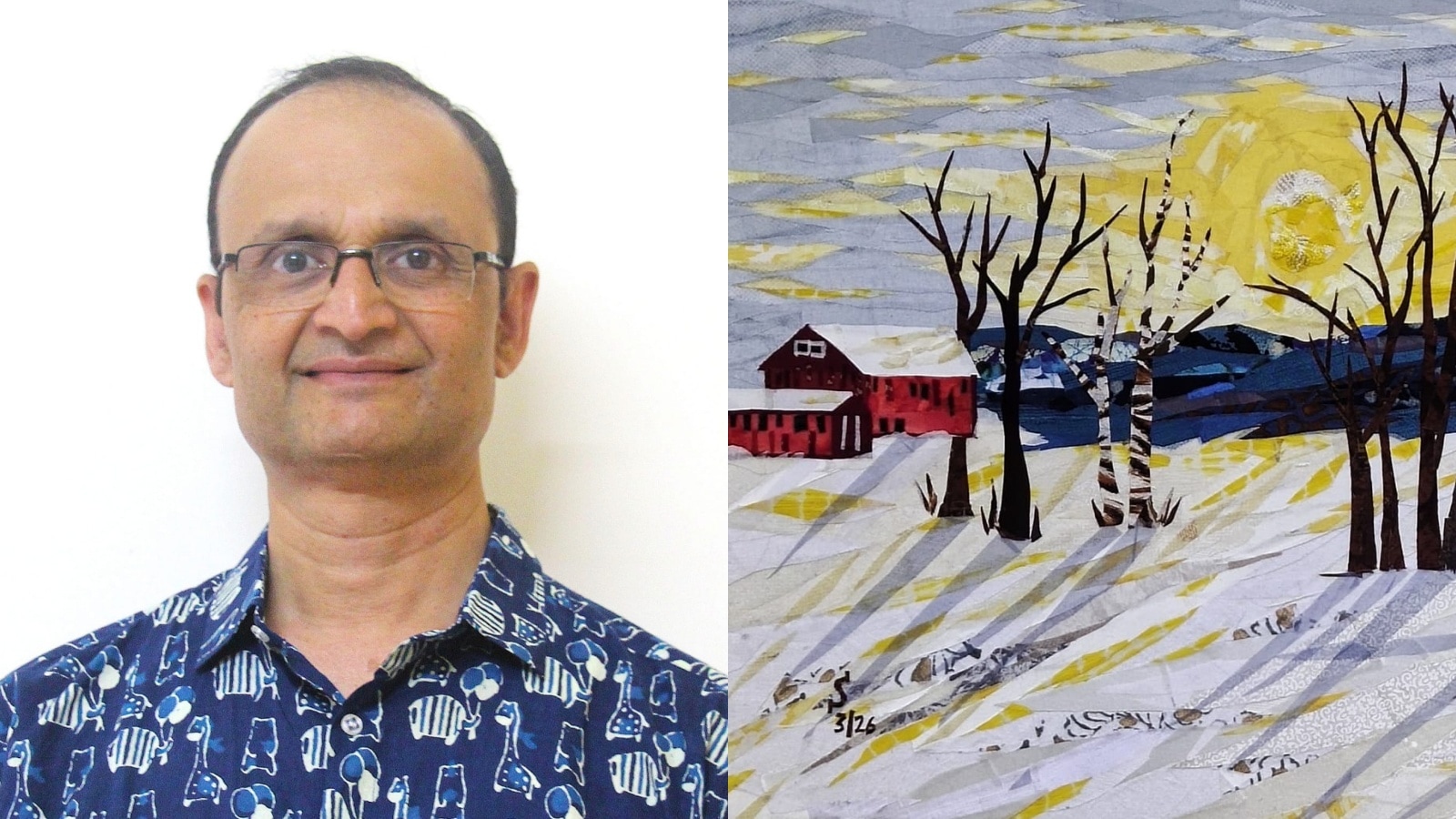
As a practising pathologist, art has always been more than a hobby for Dr Dattatreya Phadke. The turning point came in 2011 while Dr Dattatreya Phadke was living in the United States for higher studies and professional work. During a visit to an art fair in Ann Arbor, Michigan, he encountered an artist creating quilt-based artworks stitched from fabric pieces. “I found the work vibrant and unique,” he recalls. “This art explains the concept of re-birth and sustainable art practices.”
Unlike conventional painting, Phadke’s fabric collages use no paint at all “People are really mesmerised and awestruck when they first look at my art and are not able to identify whether it’s the colour or scraps of cloth’’. Thousands of discarded textile scraps become his colour palette. “I get scraps from the local tailors and use them to create sustainable art out of it,” he adds. His work has since been exhibited extensively in Pune and Mumbai.
Themes like floral compositions, still lifes, abstracts and occasional figurative works are inspired by his travels and photographs. “I don’t recreate a photograph exactly; I try to capture its essence through fabric,” he explains.
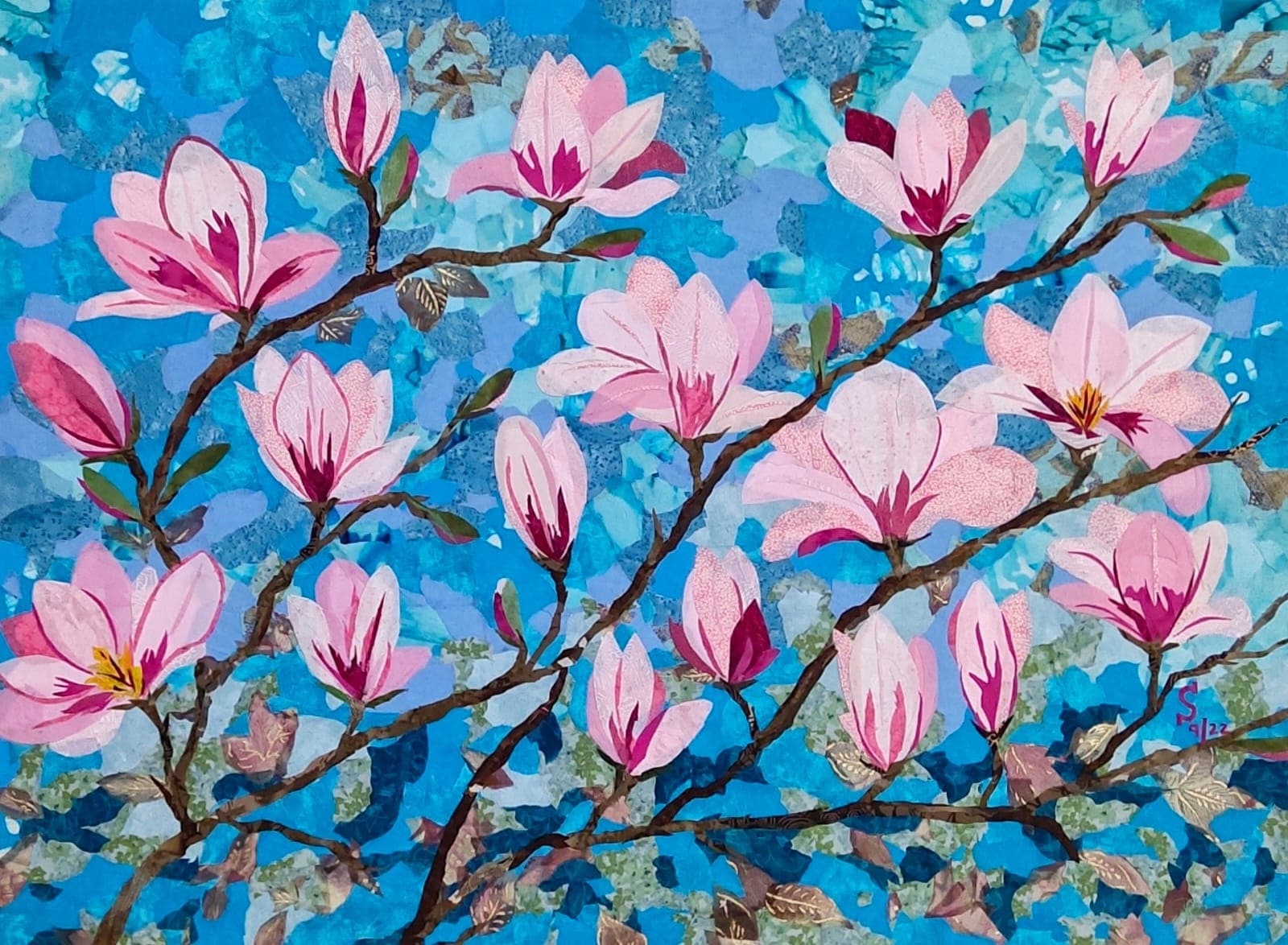 Fabric painting of bold and beautiful Magnolia. (Source: Express Photo)
Over the years, Phadke participated in numerous solo and group exhibitions, winning awards and selling several works. “My work bought in the Jahangir Art gallery was bought by people who are keen about this art and some of them have also reached out abroad.” After relocating to India in 2018, Phadke resumed his medical practice full-time while continuing fabric collage. “Pathology can be demanding and stressful. Art is my stress buster,” he shares.
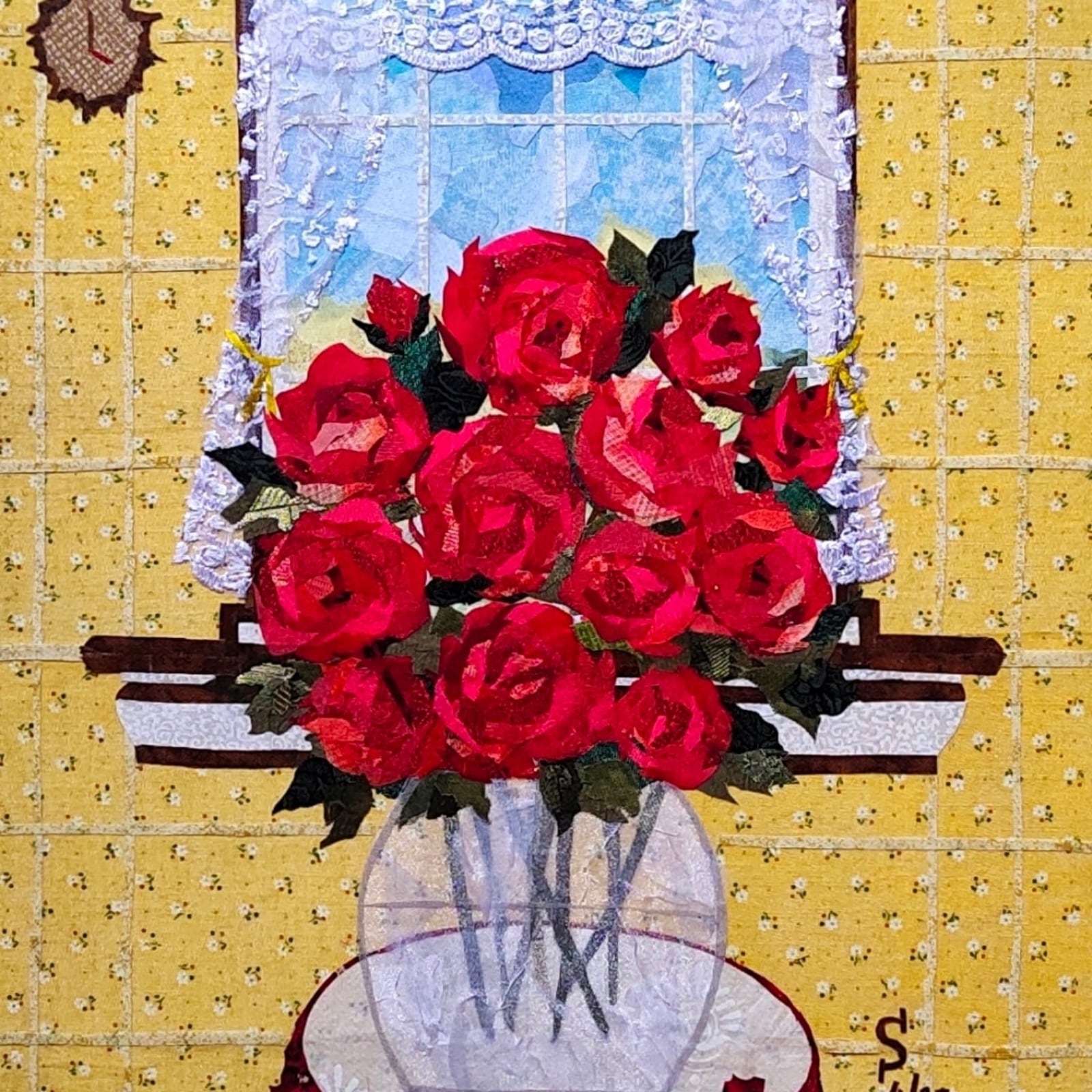 Fabric painting of reoses are forever. (Source: Express Photo)
The environmental dimension is central to his work. His current exhibition, The Living Fabric, at Nehru Gallery in Mumbai from June 9 to June 15, 11 am to 7 pm, highlights how discarded textiles can be transformed into art. The exhibition views fabric scraps as materials with a previous life, capable of being reborn into something meaningful while reducing textile waste destined for landfills. “It isn’t just about transformation, but a mindset that sees potential where others may see a dead end,” notes the exhibition statement.
The author is interning with the Indian Express

