

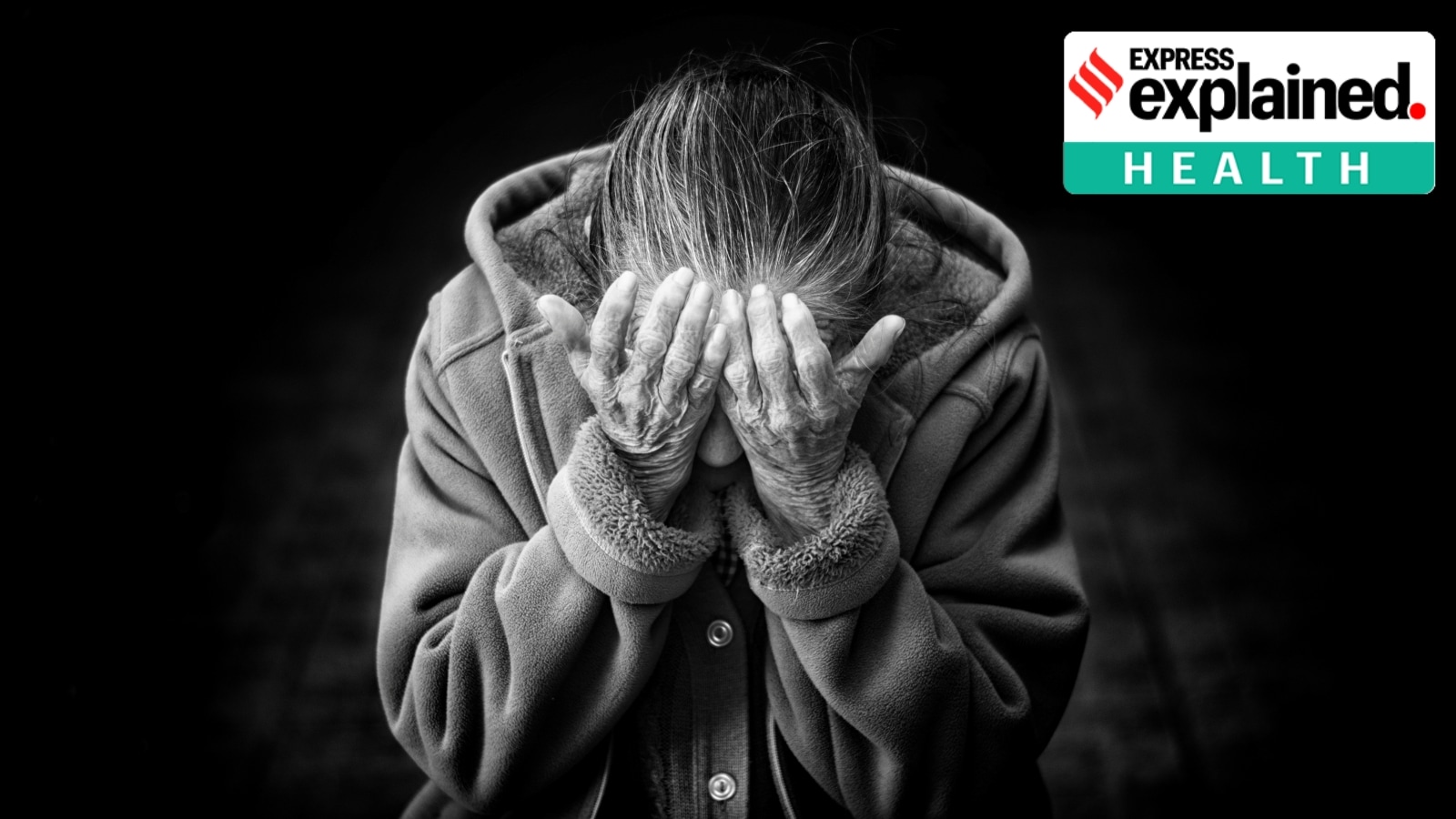
When the author of Persepolis, Marjane Satrapi, died at age 56 on Thursday (June 4), news reports quoted her family and associates as saying she died “of sadness” or grief a little over a year after the death of her husband, the Swedish filmmaker Mattias Ripa, whom they described as “the love of her life”.
“Died of sadness”, however, is a broad description rather than a specific medical diagnosis. “Grief is more associative than causative and can aggravate underlying conditions,” said Dr Mamta Sood, professor of psychiatry at the All-India Institute of Medical Sciences (AIIMS), New Delhi. She spoke to The Indian Express.

When people say someone “died of sadness”, what does that mean from a psychiatric and medical perspective?
From the psychiatric perspective, it may mean that the person was experiencing sadness so severe that he/she had stopped eating, refused treatment and had succumbed to suicidal ideas. The most common reason for sadness is depressive disorder which can be present alone or can be comorbid with almost all psychiatric conditions. From the medical perspective, it may mean that there was a sudden exacerbation of pre-existing medical disease by itself or due to negligence of medications.
Chronic stress and sadness may lead to high-stress hormones that may result in infections due to weakened immune system, or stroke and heart attack due to increased blood pressure and higher risk of blood clots. In medical literature, there have been reports of acute cardiomyopathies in elderly women provoked by stress (one of which was reported to be death of a relative). This has been called stress cardiomyopathy or takotsubo cardiomyopathy or left ventricular apical ballooning syndrome or broken heart syndrome.
In this condition, due to sudden stress, there is a sudden surge of stress hormones like adrenaline that results in temporary enlargement of a part of the heart and impairs its pumping function. This can mimic acute heart attack. This is reversible with medical management.
Is there scientific evidence linking grief to increased mortality?
Yes. Studies have found that the relative mortality risk is highest immediately after the loss, especially for six months, because of cardiovascular events like heart attack and stroke. The increased risk of mortality continues for many years, especially in men. Higher mortality rates in men are because of increased risk of death by suicide, accident, cardiovascular and infectious diseases.
How does intense grief affect the brain and the body’s stress-response systems?
There has been research going in this field, although nothing is conclusive. Imaging studies have shown that many brain structures are activated while experiencing intense grief. Amygdala becomes hyperactive as it perceives loss as an immediate threat, resulting in anxiety. The prefrontal cortex becomes underactive resulting in brain fog. The anterior cingulate gyrus which regulates pain becomes overactive.
Story continues below this ad
Normally, the Hypothalamic-Pituitary-Adrenal axis, the body’s main stress-response pathway, increases stress hormones during danger and turns them off when the threat passes. In intense grief, cortisol levels remain elevated for weeks and months. This in turn alters cellular and humoral immunity, which results in increased susceptibility to infections, disrupts sleep cycle, and alters appetite. There is an increase in sympathetic activity which results in constant adrenaline spikes that elevates baseline heart rate and blood pressure resulting in cardiovascular diseases.
What is the difference between normal grief, prolonged grief disorder, and clinical depression?
Grief is the emotional, cognitive, functional, and behavioural response to death of a loved person. It is natural and is experienced as a continuous process that varies from person to person.
Acutely, it is very intense and painful. It is experienced as sadness, crying, anxiety, numbness, intense yearnings, preoccupation with thoughts and memories of the deceased, disturbed sleep and appetite, difficulty in concentration, disinterest in functioning of daily life. It proceeds in waves with sudden intense reactions because of internal and external reminders of the loss.
The grieving process may take a few weeks to months. The grieving person gradually comes to terms with the reality of the loss and everyday activities are resumed. The memory of the deceased is associated with sadness and longing but unlike in the acute phase, it is not persistent. This is how normal grief is experienced. It is not a mental disorder.
Story continues below this ad
In prolonged grief disorder, pervasive longing or preoccupation with the deceased persists for more than six months after the loss. A person experiences intense emotional pain characterised by sadness, guilt, anger, denial, blame, difficulty accepting the death, feeling one has lost a part of one’s self, an inability to experience positive mood, emotional numbness, difficulty in engaging with social or other activities. There is significant impairment in functioning.
Clinical depression is characterised by core symptoms of sadness, lack of pleasure in previously pleasurable activities (anhedonia), and low energy (fatiguability), which is persistent for at least two weeks and pervades across all aspects of life. There is negative thinking like ideas of helplessness, worthlessness, and helplessness. There may be poor concentration, low self-esteem, remorse, guilt feelings, and suicidal ideas.
In severe form, a person may also have delusions and experience hallucinations. These are accompanied by significant impairment in sleep, appetite, functioning in all domains: personal, social, occupational, and recreational.
In normal grief, sadness comes in waves mostly in response to triggers associated with the deceased but gradually a person comes to terms with the loss and starts to function. In prolonged grief, core symptoms remain pervasive, persistent (for more than six months after loss), and are associated with impaired functioning. In depression, there is a cluster of symptoms which are constant, generalised, not related to specific events, and there is associated negative thinking. Like prolonged grief disorder, symptoms are intense, persistent (for at least 2 weeks), pervasive, and result in impairment of functioning.
Story continues below this ad
In most of the persons experiencing grief, it resolves gradually without professional help. The support from family, social network, and sometimes religious practices and reassurance usually suffice. There is a need for seeking professional help for prolonged grief disorder which involves psychotherapy and medications. For depressive disorder, professional help is needed.

