

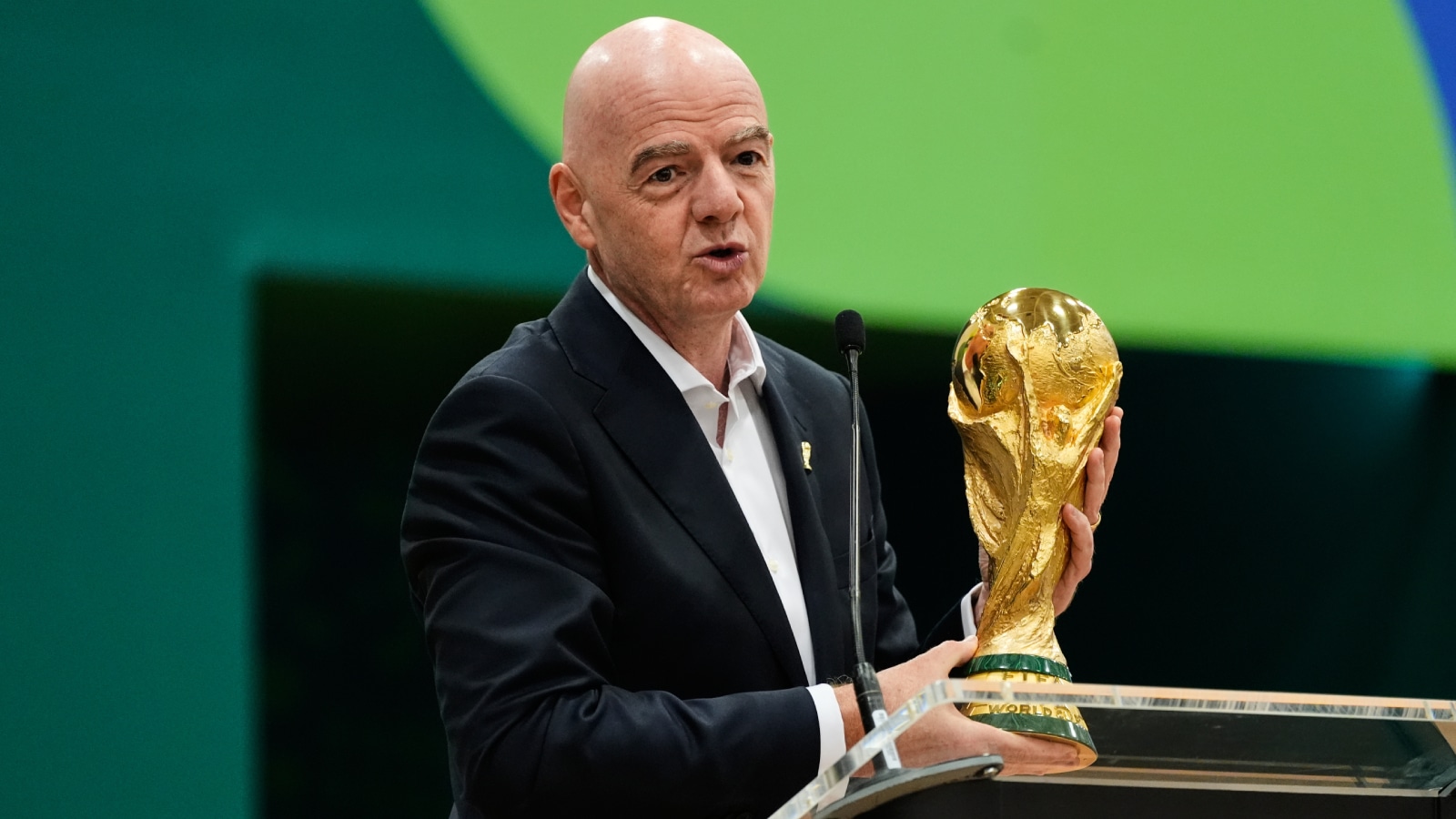
In May 2015, as dawn broke over Zurich, plain-clothed FBI agents moved through the corridors of the luxurious Baur au Lac hotel. Curtains were drawn to shield embarrassed football officials from television cameras as they were escorted out. The images travelled around the world: FIFA, football’s untouchable empire, finally under siege.
The arrests marked the beginning of the end for the old order. Sepp Blatter would soon be gone. Michel Platini’s succession plans would collapse. FIFA, battered by corruption scandals and criminal investigations, needed a new face.
When those curtains were eventually pulled back, another figure emerged from the wreckage: Gianni Infantino. The Swiss lawyer – with a perfectly round bald head – whom most football fans recognised only as the man standing on stage during UEFA Champions League draws, reaching into glass bowls to pull out little balls containing team names.
A functionary and master of ceremonies was nobody’s idea of the most powerful man in world sport. But a decade later, Infantino has become precisely that.
He is close enough to US President Donald Trump to be greeted as “my boy Gianni” in public. Close enough to Vladimir Putin to receive Russia’s Order of Friendship. Close enough to Qatar’s ruling establishment to defend the country with a fervour that often sounded more political than sporting.
When Infantino campaigned for the FIFA presidency in 2016, he promised reform. Instead, his presidency has come to be defined by something else: proximity. Not merely proximity to football’s centres of power, but proximity to power itself.
His relationship with Trump is particularly revealing. FIFA presidents have always dealt with presidents and prime ministers. Yet, Infantino’s relationship with Trump feels unusually warm, unusually public and unusually personal.
Story continues below this ad
When Trump established a White House task force for the 2026 World Cup, Infantino was a prominent presence. The FIFA Club World Cup trophy appeared in the Oval Office. The pair has repeatedly shared stages, exchanged compliments and publicly praised one another.
Opening doors
The relationship has also taken Infantino into arenas far removed from football. At Trump’s invitation, he stood alongside world leaders during the signing of the Sharm el-Sheikh Declaration – another reminder that the FIFA presidency under Infantino increasingly resembles a diplomatic posting. When the Nobel committee gave Trump a royal snub, Infantino conjured up a FIFA Peace Prize out of thin air and awarded it to the gleeful American president.
When critics questioned the closeness, Infantino defended it openly, arguing that FIFA needed a strong relationship with the US president to ensure a successful World Cup in North America.
However, the pattern had emerged long before Trump.
Ahead of the 2018 World Cup, Infantino developed a notably cordial relationship with Putin. Russia was already under scrutiny over Crimea, election interference allegations and a state-sponsored doping scandal. Yet FIFA’s public posture remained one of enthusiastic partnership.
Story continues below this ad
Infantino repeatedly praised Russia’s preparations. Putin publicly thanked FIFA for keeping politics out of football. Infantino declared the 2018 World Cup to be the “best ever”, a phrase he would later recycle for subsequent tournaments. After the event, Putin awarded him the Order of Friendship, one of Russia’s highest state honours.
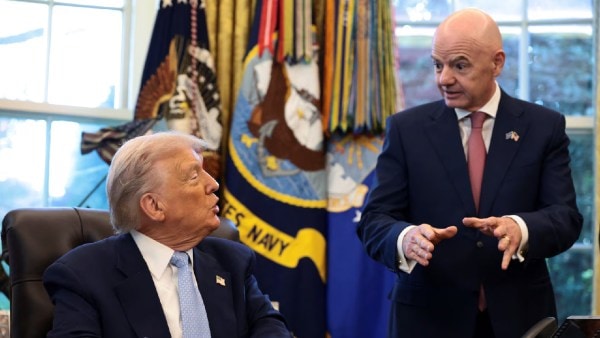 Infantino’s relationship with Trump feels unusually warm, unusually public and unusually personal. (Reuters Photo)
For critics, the symbolism was uncomfortable. Football’s governing body was not merely staging a tournament in Russia. It often appeared to be helping burnish the country’s international image.
Then came Qatar.
No World Cup host has faced greater scrutiny in modern times. Questions about migrant workers, labour rights, LGBTQ+ rights and the enormous costs of hosting dominated the headlines leading up to the 2022 tournament.
In Doha, on the eve of the tournament, Infantino delivered one of the most remarkable speeches ever made by a sports administrator. “Today I feel Qatari,” he declared. He went on to say he felt like a migrant worker, disabled and gay, while accusing Western critics of hypocrisy.
Story continues below this ad
The speech lasted nearly an hour. It instantly became one of the defining moments of the World Cup.
Right place, right time
Whether in Moscow, Doha or Washington, Infantino has displayed an uncanny instinct for identifying where influence resides and ensuring football remains closely aligned with it. Supporters would argue this is simply practical politics. World Cups require governments. Borders need opening. Security arrangements need coordinating. Stadiums need building. No FIFA president can afford to antagonise heads of state.
There is truth in that argument.
Yet, previous FIFA leaders generally maintained the appearance that football stood above politics, however imperfectly. Infantino often appears fascinated by politics itself.
His public appearances increasingly resemble those of a travelling diplomat rather than a sports administrator. He moves between presidential offices, royal palaces and international summits carrying one of the world’s most valuable commodities: football’s legitimacy.
Story continues below this ad
Meanwhile, FIFA has grown richer and more powerful than ever.
The men’s World Cup has expanded from 32 to 48 teams. The Club World Cup has expanded dramatically. Revenues have surged into billions. Development money has flowed to member associations across the globe. Many federations remain fiercely loyal because Infantino has recognised one of FIFA’s oldest political truths: success in football governance is measured not by headlines but by votes. And votes often follow money.
In that sense, Infantino has been extraordinarily successful. He has consolidated power more effectively than many of his predecessors while avoiding the scandals that consumed them. Yet, there remains a lingering irony.
The man who arrived promising to restore trust in FIFA may ultimately be remembered less for reform than for relationships. The administrator, once known for pulling balls from a glass bowl during UEFA draws, now spends his time navigating presidential palaces, royal courts and the Oval Office.
Story continues below this ad
His greatest achievement was not inheriting football’s power. It was understanding where power already lived – and making sure he was standing beside it when the cameras rolled.

