

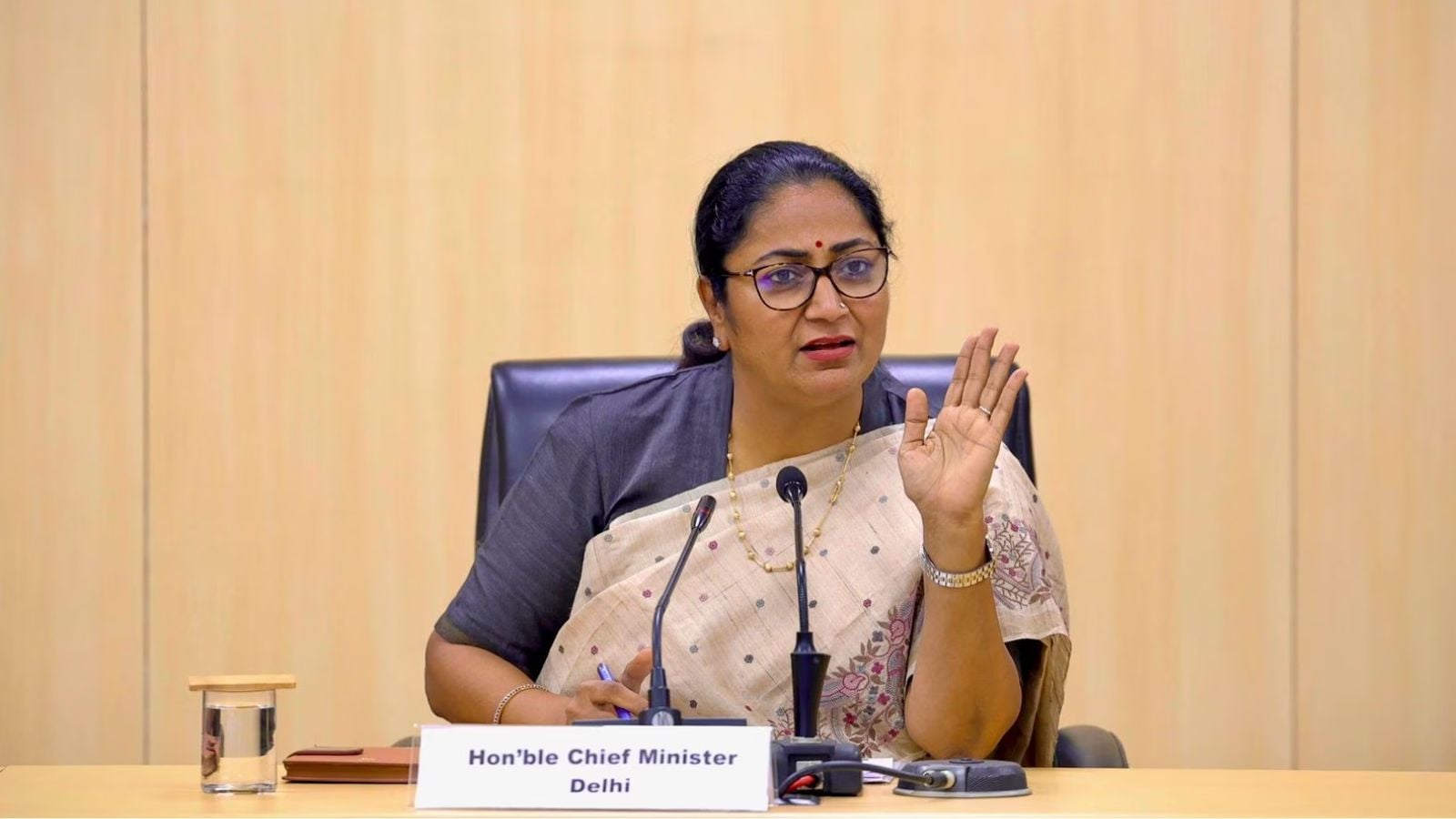
In an effort to bring several low-income families under the food security system in the Capital, the Delhi Government has decided to revise the annual family income eligibility limit for ration cards, from Rs 1.20 lakh to Rs 2.5 lakh, Chief Minister Rekha Gupta announced on Thursday. The CM also announced that the process of issuing new ration cards has resumed on a large scale from May 15.
In January this year, the government had revised the annual family income cap for availing ration cards from Rs 1 lakh to Rs 1.2 lakh under Delhi Food Security Rules, 2026.
“The aim is to bring more poor and middle-class families under the welfare net. The proposal to revise the annual family income criteria has been discussed at the cabinet level and has been positive… a final decision will be taken soon,” she said.
Addressing a press conference, Gupta on Thursday said the government carried out a comprehensive audit of the public distribution system (PDS) after coming to power, which had unraveled large-scale irregularities.
She said that a total of 7,71,384 ineligible and bogus beneficiaries of the ration card were identified, out of which, 6,46,123 beneficiaries were found to be above the prescribed income limit and therefore ineligible for subsidised ration.
Another 95,682 beneficiaries had not availed ration for more than a year. In 6,185 cases, the names of deceased persons continued to remain on ration records, while 23,394 beneficiaries were found to be drawing benefits from multiple locations, the CM said.
“With these ineligible names removed, nearly 7.72 lakh new spots have opened up in the system, paving the way for new eligible beneficiaries to receive ration cards,” said Gupta.
Story continues below this ad
The CM said 3,72,367 applications for new ration cards and 99,501 applications for inclusion of family members are currently pending. Since applicants’ residence, income and eligibility status may have changed over time, all applicants will be given an opportunity to apply afresh under the latest eligibility norms, officials said.
Further, the CM said that all ration card-related services, including fresh applications and addition or deletion of family members, have now been shifted online.
“People can apply either from home or through nearby facilitation centres,” CM said, adding that digitisation will bring transparency, accountability ensuring that food security benefits reach only eligible households.
Urging the public to apply, Gupta said online applications for new ration cards and for adding family members have been opened through the e-District portal (edistrict.delhigovt.nic.in) from May 15, 2026.
Older applications submitted in the past have also been returned to applicants through their login profiles. Applicants can update and resubmit them with a valid family income certificate and other required documents, said officials.
Story continues below this ad
Gupta said that her government has implemented the Delhi Food Security Rules, 2026, giving effect to the provisions of the National Food Security Act (NFSA), 2013. As part of the reforms, ration distribution has been modernised through extensive use of technology.
“Traditional weighing machines at fair-price shops are being replaced with electronic weighing machines, while biometric authentication has been made mandatory. Ration will no longer be distributed without biometric verification, a move aimed at eliminating complaints of under-weighing and reducing leakages,” CM said.
Further, Gupta said that earlier, family income details were accepted largely on the basis of self-declarations, allowing ineligible individuals to enter the system while genuine beneficiaries were often left out.
Under the new framework, applicants will have to submit Aadhaar cards, proof of residence, the latest income certificate and Aadhaar details of all family members. This, she said, will help ensure accurate verification and prevent misuse of welfare benefits.
Story continues below this ad
To curb corruption and irregularities, the government has put in place a robust digital and administrative verification mechanism, officials said.
According to officials, under this framework, in the first stage, food and supply officials will digitally scrutinise applications and documents, with field verification conducted wherever necessary. In the second stage, verified applications will be examined by the Assistant Commissioner and in the final decision will be taken by a district-level committee headed by the District Magistrate and comprising two local MLAs, officials added.
Once approved, ration cards will be generated digitally and can be downloaded directly from the portal, said officials.

