

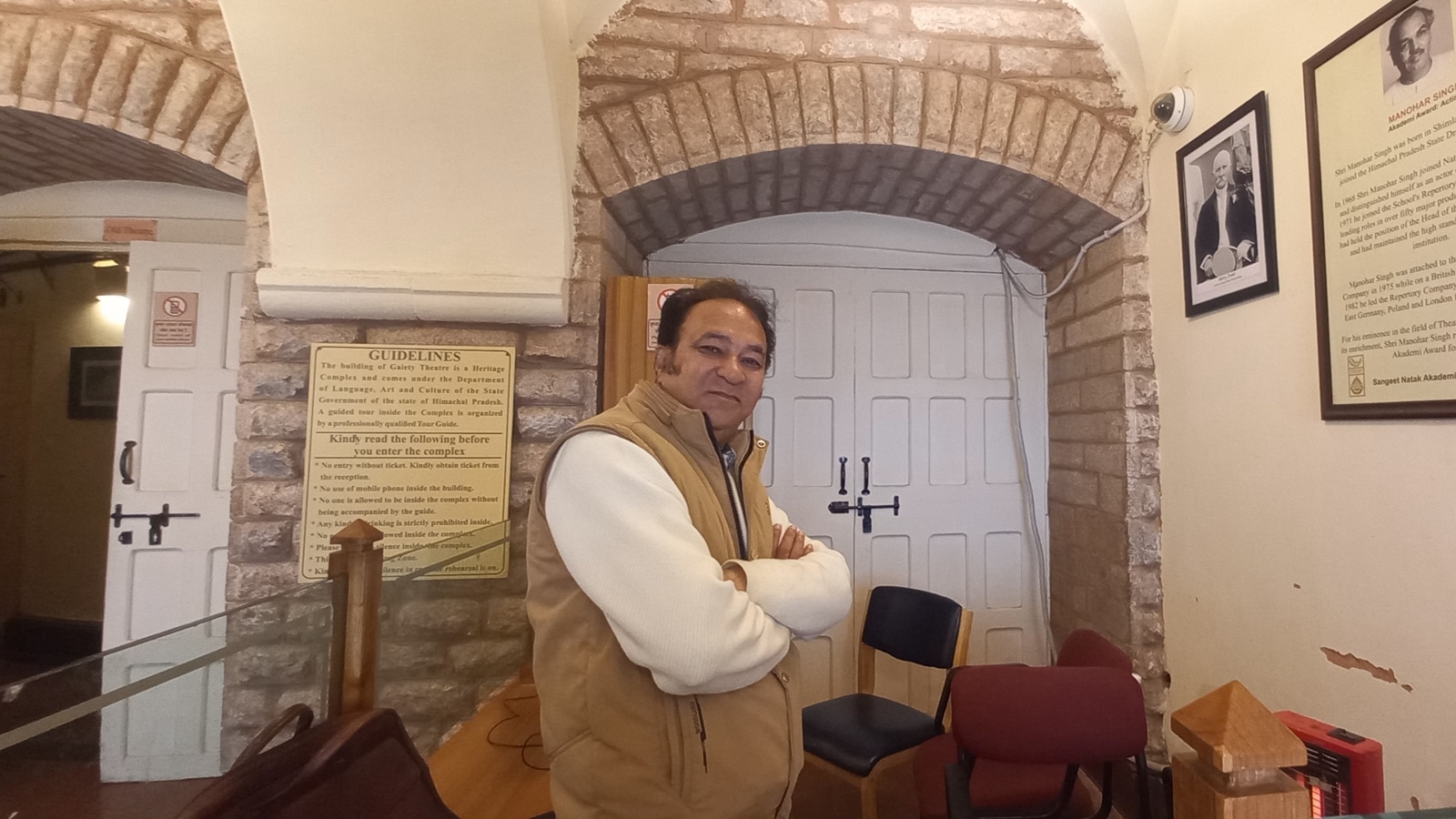
It’s 11 am, and Sumit Vashisht sits in a cozy corner of Shimla’s Gaiety Theatre, chatting with a female colleague while keeping an eye on the door. “Usually people — especially foreign tourists — start coming in the afternoons or evenings,” Vashisht, a 59-year-old tour guide, says.
But the foreigners who seek out Sumit are rarely seeking mere sightseeing tips, because Sumit’s work extends far beyond the Gaiety Theatre. A distinguished-looking man with a broad forehead, 70s sideburns and a yellow jacket, Vashisht has a bigger mission: helping foreign tourists find fragments of their past and, in the process, the closure they seek.

“Helping foreigners trace their roots in this hill town is my passion, which I have eventually converted into a unique form of tourism. Today, many people in Shimla are offering this type of tourism,” Sumit tells The Indian Express. “But I was the first one.”
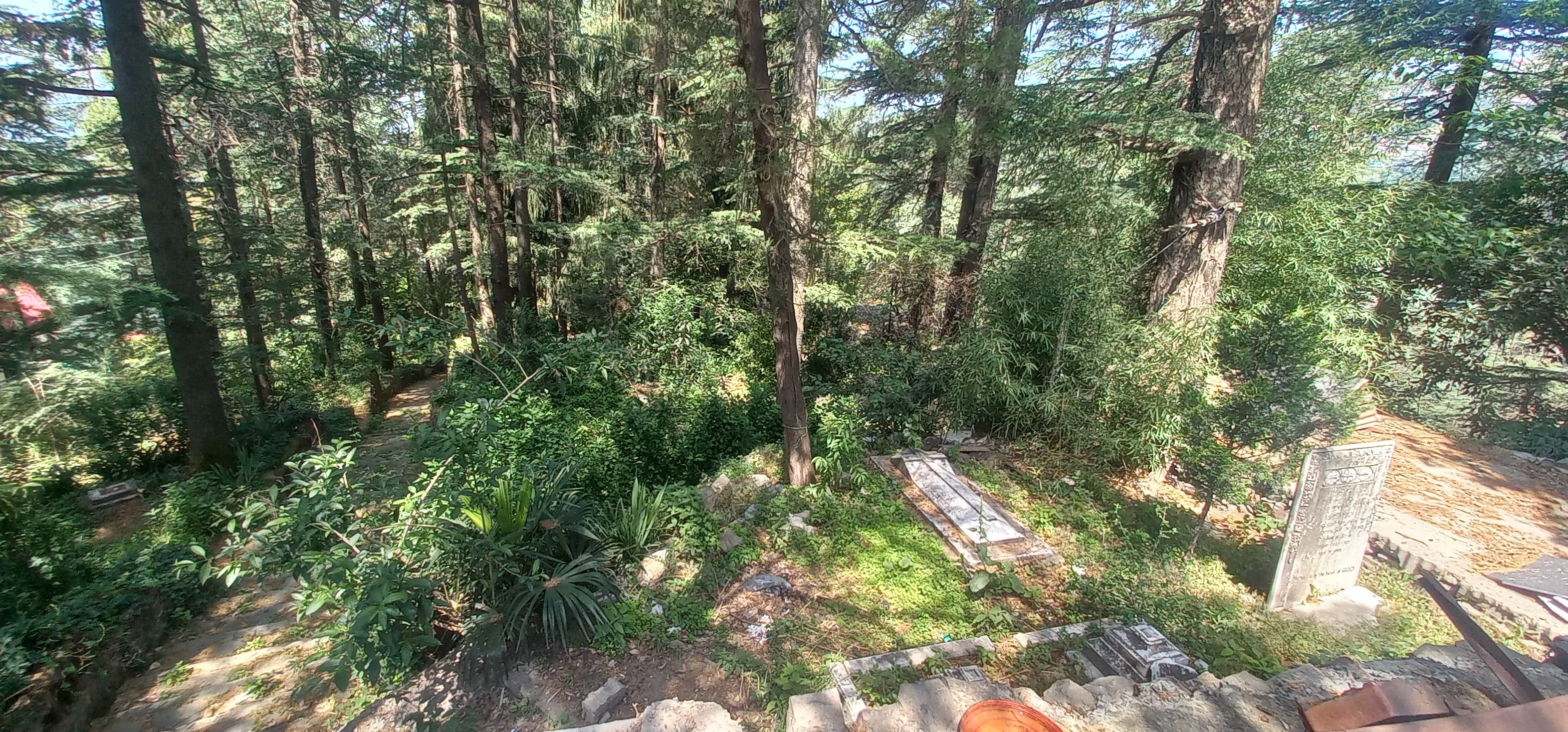 Graves at British-era Cemetery Kanlog in Shimla were among the various graves where Sumit Vashisht helped foreigners trace their ancestors. (Express photo by Saurabh Parashar)
A home in the hills
Situated on a crescent-shaped ridge in the southwestern Himalayas, at an elevation of 2,397 meters, Shimla’s base rests on seven grasslands: Jakhu Hill, Prospect Hill, Observatory Hill, Elysium Hill, Summer Hill, Potters Hill and Museum Hill. While the first British settlers settled here were from the armed services, it eventually became a significant colonial town, being declared as the summer capital of India in 1864.
After the British left India in 1947, they left behind markers of their architectural expertise: Gaiety Theatre, Viceregal Lodge, Auckland House, and Christ Church. But it was at another such structure where the seeds of his unique career were sown.
“It was a chance meeting with a group of three or four foreigners at Cecil Hotel (now called The Cecil). One of them told me about the links of his ancestors from Shimla. He told me that they were buried in cemeteries here. That tale seemed fascinating,” says Sumit.
Story continues below this ad
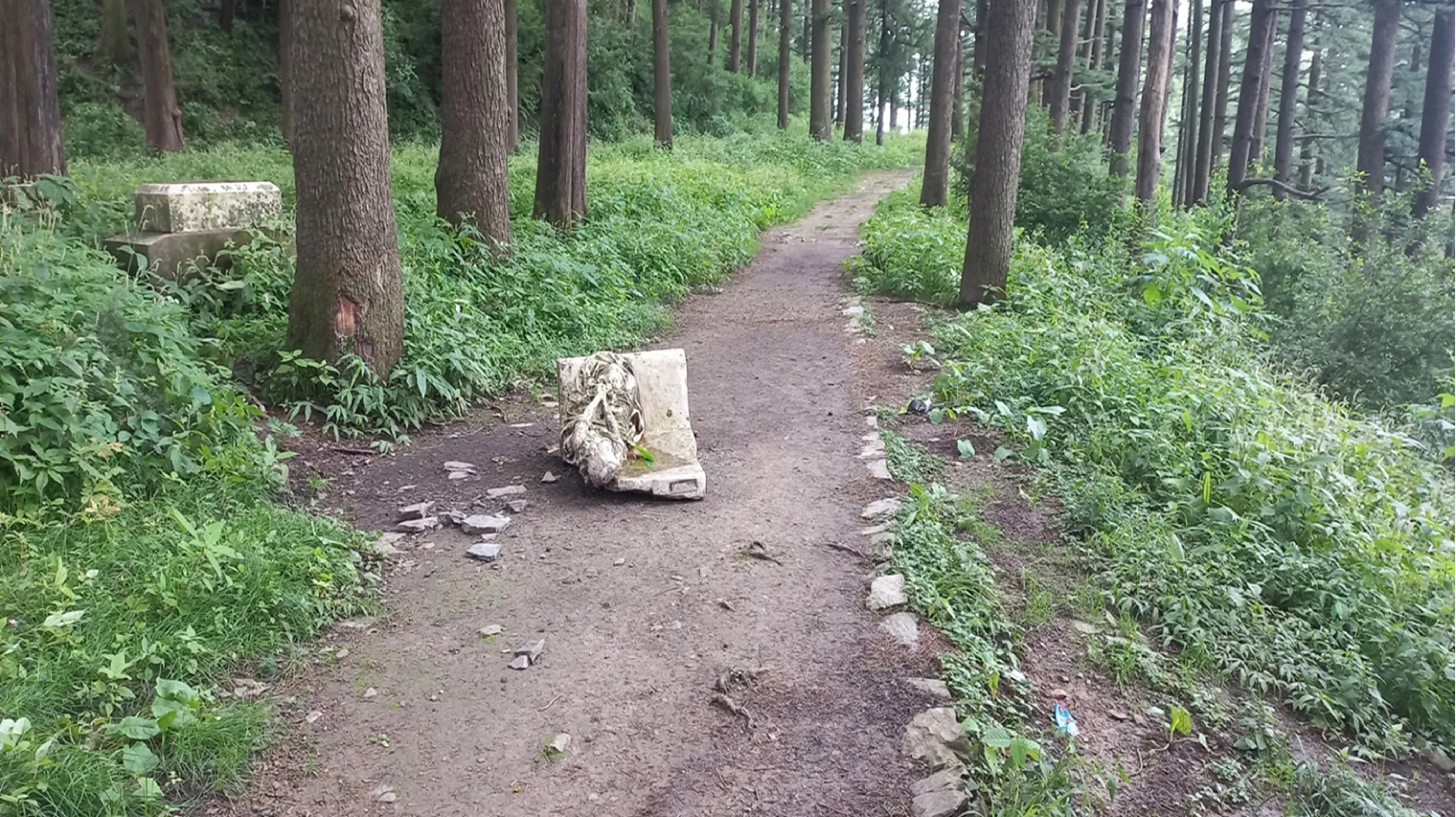 A view of the Sanjauli Cemetery. (Express photo by Saurabh Parashar)
As he dug deeper into history, Sumit learnt that many foreigners have come to Shimla in the past to trace their roots in cemeteries where their ancestors had rested for more than a century, and to locate villas once owned by their great-grandparents, now almost impossible to identify amid the densely populated localities of the hill town.
“Many of them had to return empty handed. And then, I met Abbott in 2009,” says Sumit, as his face lights up. Sumit may not remember Abbott’s full name – it has been 17 years — but the impact the visitor from the UK had on him is hard to miss. “Abbott was born in Shimla and had left India at the age of 10 in 1948. He had studied briefly at St Edward’s School. I helped him trace the house where he had spent his childhood,” says Sumit, a triumphant look on his face.
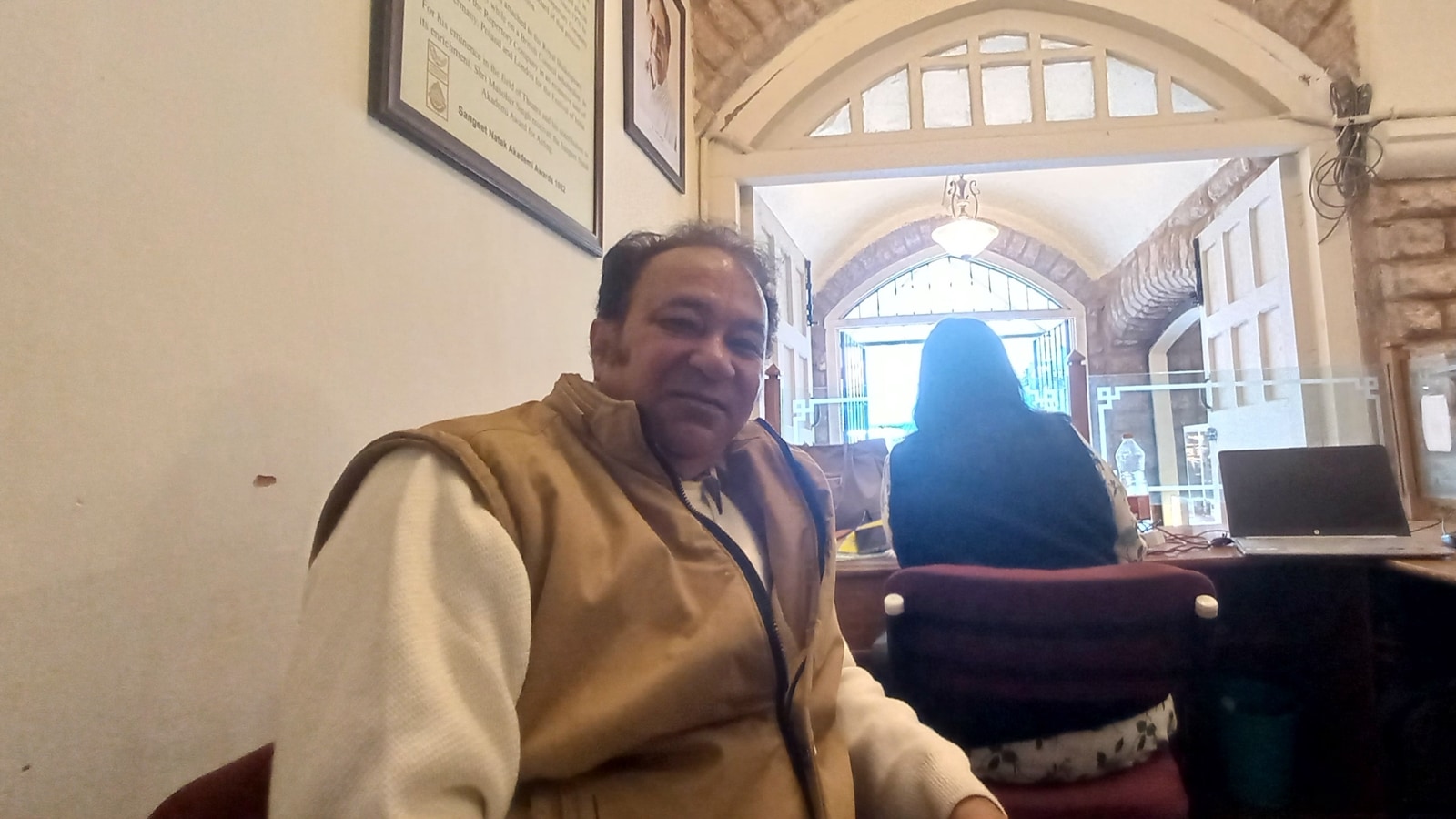 Sumit Raj Vashisht at Gaiety Theatre where he was allocated a space by the Department of Language Art & Culture. (Express photo by Saurabh Parashar)
Sumit’s story
Though his roots trace back to Rohtak district in Haryana, Sumit’s family has been living in Shimla for over half a century now. His late father, Tilak Raj Vashisht, a train ticket examiner with the Northern Railway, was transferred to the city in the 1960s on the now UNESCO-protected Kalka-Shimla Railway section. Sumit was born soon after, at Snowdon — the place where Himachal’s premier Indira Gandhi Medical College and Hospital is now situated. He did his schooling from Shimla but then, the pursuit of higher education took him back to his father’s roots – in Rohtak. Here, he graduated from Maharshi Dayanand University (MDU) before enrolling for a Diploma in Tourism from Delhi University in 1992.
Story continues below this ad
“Why did I choose tourism? I am still looking for an answer to this question,” he says.
In the decade that followed, Sumit did “some 31 jobs” in the tourism sector but nothing stuck for long. He had started to feel suffocated in Delhi, with its searing heat and unpredictable people. “When my last employer tried to dictate to me, I left the place,” he says, without elaborating much. This time, Sumit knew that he wanted something more stable and long-term. And there was only one place that could provide him that. He packed his bags and returned to Shimla. “This was 2005-06,” he recalls.
Return of the native
But work satisfaction did not immediately follow. “At that time, tourism in Shimla offered very limited options — open a hotel, start a restaurant or run a travel agency. But none of these were my cup of tea. Neither did they interest me nor did I have the kind of money needed to start such ventures,” he shares. “Still, I wanted to do something different in the tourism sector. Although, I did not know what that would be…,” says Sumit. “Until, that is, I met Abbott.”
In the last 17 years, Sumit has helped many foreigners trace their roots. Some of these journeys into the past have been overwhelming for him, he says. “For instance, a woman named Clare Penny from Scotland came down, searching for her late grandmother’s house. After much effort, we traced Mathew Villa, which once belonged to her grandmother, in Kaithu — a locality that was once a village on the outskirts of Shimla.”
Story continues below this ad
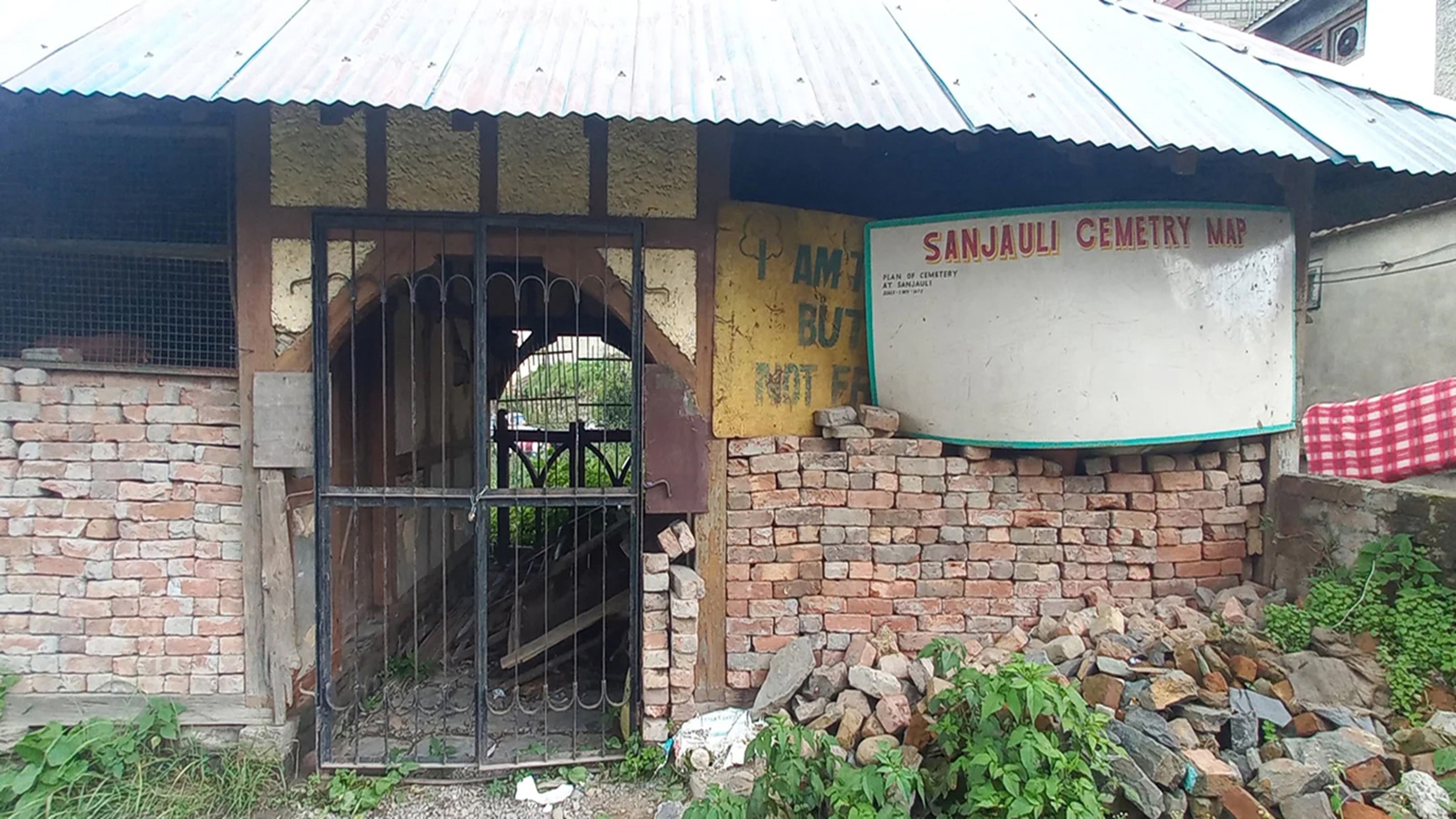 A view of the Sanjauli Cemetery. (Express photo by Saurabh Parashar)
But it was what Clare did next that took Sumit by surprise. “She had brought her grandmother’s ashes with her. It was her last wish that her ashes be scattered at the cemetery in Sanjauli. Until then, I had not known that some Christians also practised cremation. This was in 2023,” says Sumit. Shimla’s earliest cemetery was located behind Oak Over, the official residence of the Himachal Pradesh Chief Minister. Later, the cemetery was shifted to Sanjauli. Today, it is the largest cemetery in Shimla. Apart from this, cemeteries exist at Kanlog, near St Bede’s College in Navbahar, and other places. There is also the Commonwealth War Grave cemetery at Jutogh cantonment area.
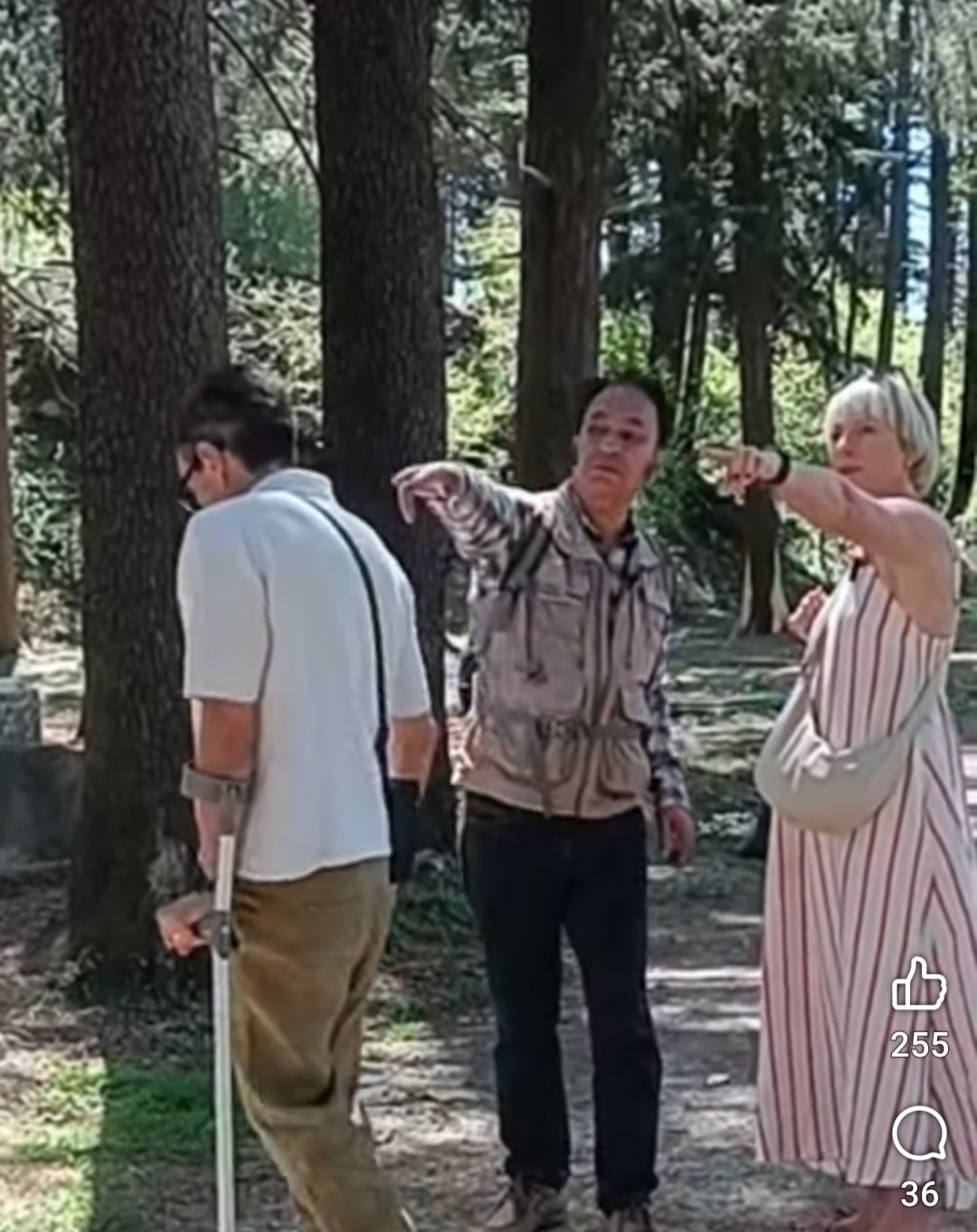
But it is the Sanjauli Cemetery where the searches of most of Sumit’s clients end. “In April, a couple from London — Eve and Mark — visited Shimla solely to fulfil the last wish of Eve’s grandmother who wanted her ashes scattered in the town,” says Sumit.
A last wish fulfilled, Eve recounted to Sumit that her grandmother, the daughter of a British Army officer, had studied at Loreto Convent, Tara Hall. In a video recorded at Sanjauli Cemetery and uploaded by Sumit on his Facebook page, Eve can be heard sharing the story of her grandmother. Though she left India during Partition and moved to Hampton, she could never forget her years in Shimla.
“Hardly a day passed without her speaking about the town. Even in her final years, she wished to return to the Himalayan foothills after her death,” Eve says in the video. “What I realised after meeting so many foreigners and listening to their emotional stories is that it was not only Indians — Hindus, Muslims, Sikhs and others — who suffered because of the Partition,” Sumit says as he gets pensive. “The Partition also caused immense suffering and uncertainty to many British families…”
Story continues below this ad
Sumit often thinks about the state of mind of the former inhabitants of his city. “They must have been haunted by questions: where should we go? What should we do with our houses and properties in Shimla? Many either sold their homes at throwaway prices to Indians or donated and gifted them to their Indian servants,” he says.
As Sumit’s credibility grew, organisations such as the British Association for Cemeteries in South Asia (BACSA) and the Families in British India Society (FIBIS) also established contact with him. BACSA works to preserve and document European cemeteries across former territories of the East India Company, including India, Sri Lanka, Myanmar and Malaysia. FIBIS assists people researching family histories connected with British India and helps them understand the social and historical context in which their ancestors lived.
 Graves at British-era Cemetery Kanlog in Shimla were among the various graves where Sumit Vashisht helped foreigners trace their ancestors. (Express photo by Saurabh Parashar)
‘Paper’ trail
Tracing graves in centuries-old cemeteries, locating British-era houses, and accessing birth and death records preserved in the Shimla Municipal Corporation office is a daunting task, requiring extensive coordination with local authorities and institutions. The Shimla Cemetery Association, led by St Michael’s Cathedral Church president Father Antoniy Dixon, and secretary Raj Kumar, has repeatedly raised concerns about the deteriorating condition of cemeteries. The association claims to have repaired several graves and tombstones from its own funds.
Story continues below this ad
“We still possess many British-era records. Unfortunately, some have been lost or destroyed over time,” says Raj. “Despite these challenges, we make every possible effort to trace records and assist foreigners searching for the graves of their ancestors. Besides Shimla, cemeteries also exist in other hill towns, where the British Army established Cantonment areas. These are Dagshai, Kasauli — both in Solan district, Palampur, Dharamshala (Kangra), etc.”
Raj and his team also receive requests from people urging them to send the pictures of graves of their ancestors.
Shimla Municipal Corporation Commissioner Bhupender Kumar Attri said the civic body, established as a municipal committee in 1851, still preserves birth and death records of many British and Indian residents from the colonial era and pre-Partition period. “Even today, foreigners approach us seeking records related to their ancestors, and we try to accommodate them. We have digitalised the entire birth and death record from 1865 to 2015,” Attri tells The Indian Express.
For Sumit, the work is more than just a profession. It is a collaborative effort built on memory, heritage and raw emotions. “I cannot do this single-handedly… The work I do requires tremendous teamwork. I have a team of around 15 to 20 people, all of them are locals,” says Sumit, seated in his office where portraits of famous thespian Manohar Singh, British architect Irwin, and Indian architect Ved Segan, who had conserved and restored the Gaiety in 2000s, watch over him.
Story continues below this ad
Fulfilling as it is, Sumit’s job is also unpredictable, much like the lives of the Shimla residents whose graves he goes looking for.
“Sometimes, we don’t receive a single foreign customer throughout the year. But then there are years we receive around eight to 10 foreign customers. This year so far, I have only met that couple, who came to me last month, from London,” says Sumit.
Not one to chase numbers – he makes a decent earning conducting guided trips around Himachal Pradesh besides the Gaiety Theatre tour – Sumit prefers to focus on individual stories and the impact they have had on him. “There were moments when my eyes welled up hearing the stories of Britishers who remained deeply attached to Shimla, until their last breath,” he says.

