

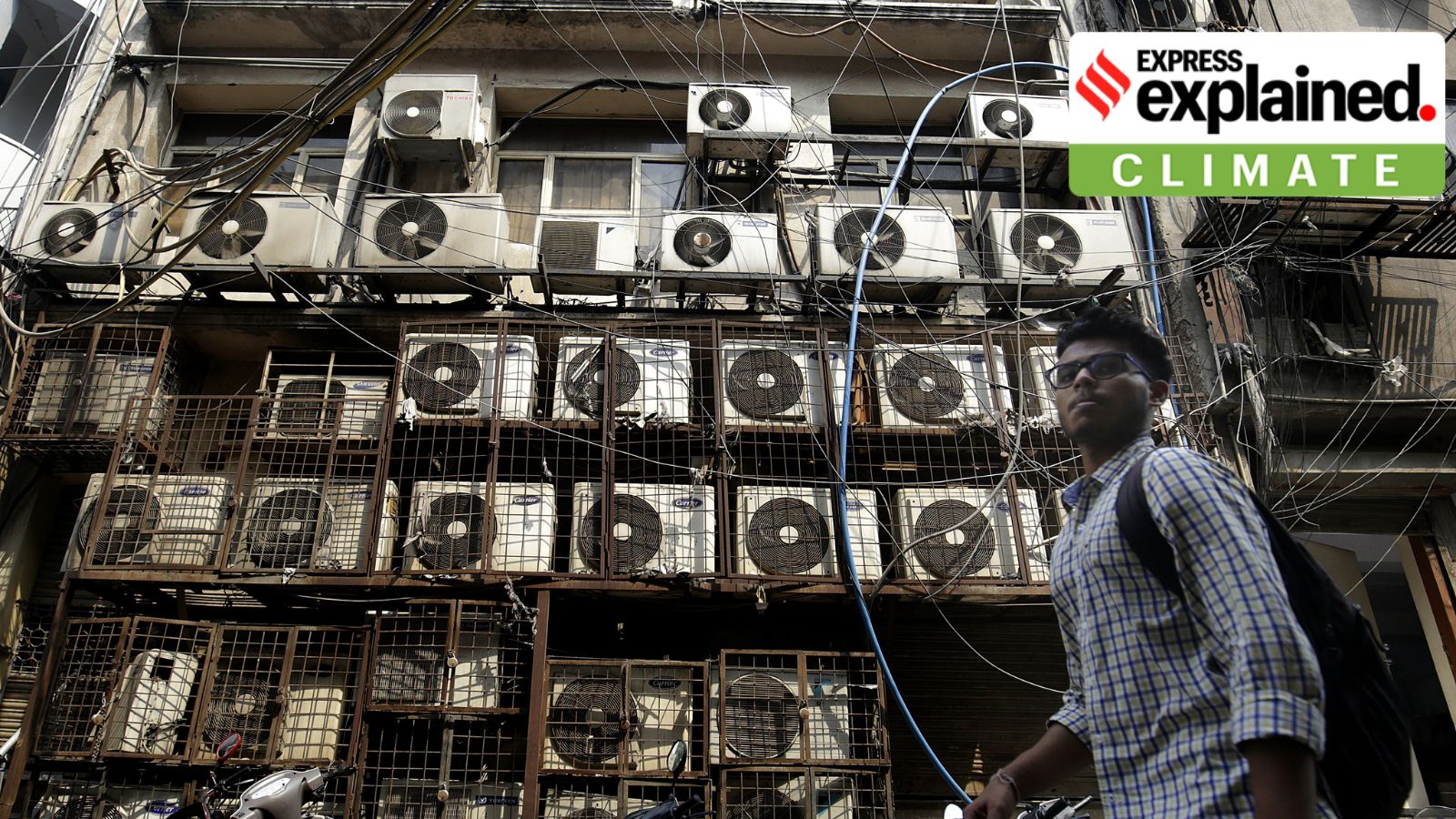
While most of the conversation about extreme heat during Indian summers is centred around peak daytime temperatures and the spells of heatwaves, it is slowly becoming evident that warmer nights could pose a greater health risk to human beings, particularly those living in low and middle-income housing units. Both day and nighttime average temperatures are on the rise in India, but recent data suggest that nighttime temperatures could be increasing at a faster rate. Experts say indoor thermal exposure could be a bigger threat to public health than exposure to heat outdoors during the daytime.
A cooler evening and night allow the human body to recover from the heat experienced during the daytime. But if nighttime temperatures also remain high, the body is unable to recoup, and exposure to heat becomes prolonged and sustained, without any relief in between. People are confined in small spaces for several hours at a stretch. The situation gets aggravated inside houses without natural ventilation or access to air-conditioning.

A recent study by Climate Trends, a Delhi-based climate-focused research organisation, in 50 houses in Chennai, all medium and low-income residential units, showed that the occupants were frequently sleeping in temperatures in excess of 32° Celsius. Sometimes, night-time temperatures even exceeded 35° Celsius, very similar to peak day-time temperatures in the city. Health impacts of indoor heat exposure have not been widely studied in India till now, but a few global studies suggest that night-time warming could be a major contributor to heat-related mortalities. In the next phase of their continuing study, researchers at Climate Trends and their collaborators plan to quantify the health impacts of indoor heat exposure in Indian conditions.
Rising night-time temperatures
India’s average temperature has increased by about 0.7° Celsius between 1901 and 2018, according to the 2020 comprehensive climate change assessment over the Indian region. Both day and night-time temperatures have increased during this time, but at different rates.
In the 30 years between 1986 and 2015, the temperature of the warmest day of the year increased by about 0.63° Celsius, while that of the coldest night increased by 0.4° Celsius. This would suggest that the rise in daytime temperature was more pronounced than the nighttime temperatures, and that is true for this period. But the situation changes in future projections. The same assessment said that the temperature of the warmest day of the year could rise by 4.7° Celsius by the end of this century, while that of the coldest night could jump by as much as 5.5° Celsius. Night-time temperatures are all set to rise at a faster rate. This has already begun to happen, according to more recent data by the India Meteorological Department (IMD).
While the rapid rise in night-time temperatures is happening everywhere, it is more pronounced in urban spaces, mainly because of what is called the urban heat island effect. Concrete, roads, bricks and metal absorb the heat during the day and radiate it at night when the Sun is not there. The lack of adequate vegetation and green spaces, loss of water bodies and dense clustering of high-rise buildings amplify this effect. Increasingly, the use of air-conditioners, which emit hot air outside, is emerging as a significant contributor. There could be a difference of 4-6° Celsius or more in the nighttime temperatures of a city centre or a dense residential area of a city, and its outskirts. As we build more, this effect is likely to get further aggravated.
Most of urban India goes to sleep in small houses that are poorly designed and lack natural ventilation. If these houses lack air-conditioners, there is little nighttime relief for the human body. Sleep discomfort, restlessness, exhaustion, and lack of energy are direct results of this condition, which affects people’s productivity the next day. But there are major adverse health impacts as well, whose magnitude is still being assessed.
Story continues below this ad
Heatwave intermittent, heat perennial
Dileep Mavalankar, former director of the Indian Institute of Public Health in Gandhinagar and the person who has possibly done the most extensive work on heat and its health impacts in India, gave an insightful example. He said Ahmedabad Municipal Corporation maintains a daily record of all-cause mortality in the city.
“Ahmedabad records about 100 deaths every day – deaths due to all causes. We have seen that on days when the maximum daytime temperature exceeds 45° Celsius, if the maximum night-time temperature is below 28° Celsius, there is not much of a change in the daily all-cause mortality. But if the nighttime temperature rises to between 28 and 30° Celsius, all-cause mortality increases to about 165. If the nighttime temperature is more than 30° Celsius, mortality goes up to as high as 265. This is an interesting correlation. Even without doing a full-scale analysis of the cause of death, we can see something very significant is happening here. The thresholds would be different for other cities, but there is a very clear indication that higher night-time temperatures are strongly linked to mortality,” Mavalankar said.
At least 23 states and more than 200 cities now have heat action plans that get implemented every summer. A bulk of that is focused on dealing with heatwave-like situations. But a heatwave is a very specific event and is declared when very specific temperature criteria are satisfied. It happens, maybe, two or three times a month. Extreme heat, on the other hand, is a constant in Indian summer. And so is the trend of rising night-time temperatures.
One component of most heat action plans is about long-term measures that need to be taken to reduce impacts. These include coordinated efforts to improve urban infrastructure, come up with better low-cost housing and increase green spaces. There is a need for paying greater attention to these aspects of the heat action plan.
Story continues below this ad
The Climate Trends study on Chennai households noted there are measures that can be applied in the interim to bring immediate relief to people living in cramped households. Passive cooling solutions like reflective roof coatings or whitewashed roofs and walls can make a lot of difference. Some structural changes, like introducing natural ventilation, can also help.

