

4 min readNew DelhiUpdated: May 17, 2026 01:11 PM IST
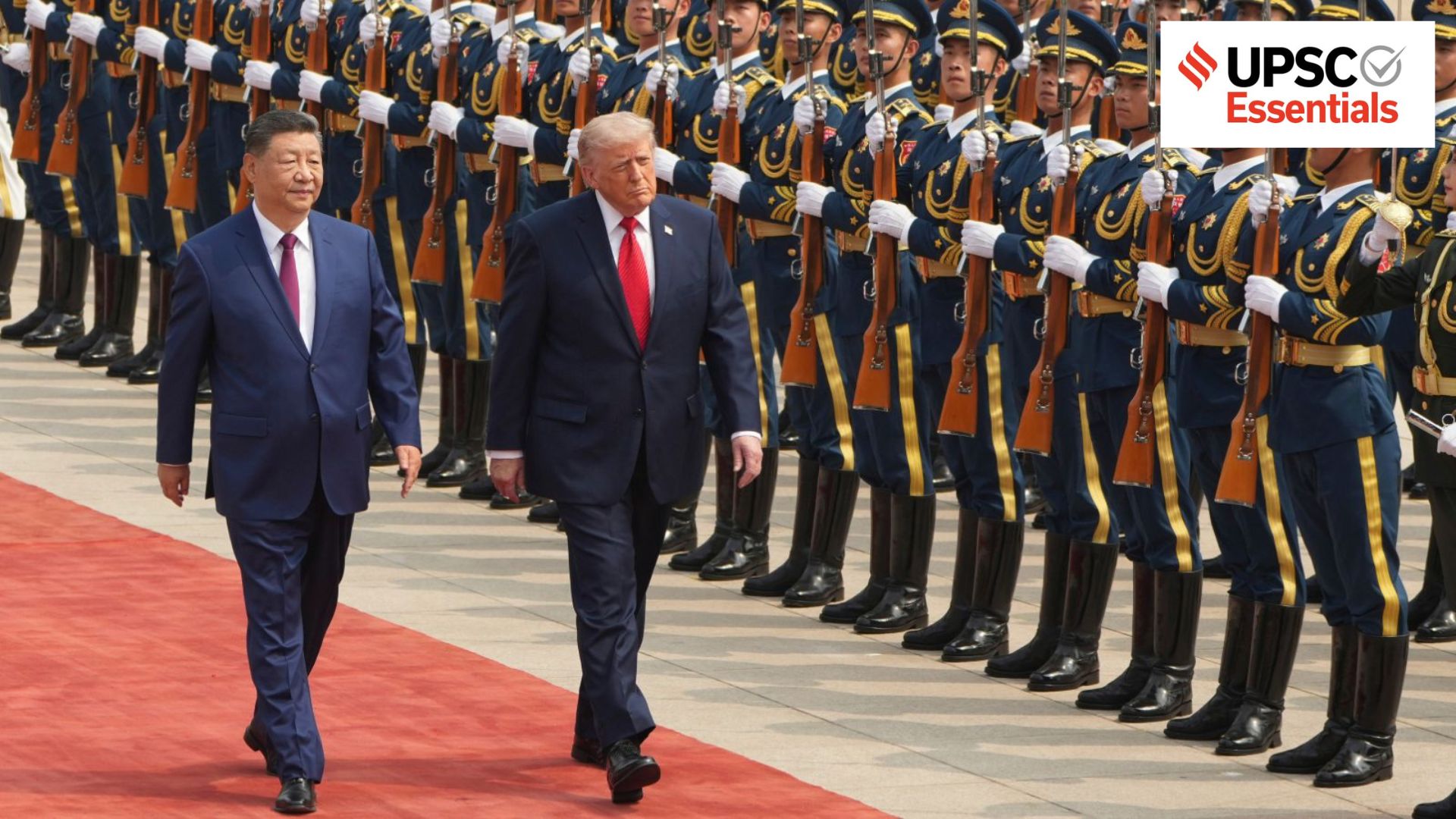
As US President Donald Trump wraps up his two-day visit to China, an ancient feud – the Peloponnesian War – referred to by Chinese President Xi Jinping has become a common refrain to interpret the evolving ties between the two major powers.
In his opening remarks ahead of a closed-door meeting with Trump, Xi asked, “Can China and the United States transcend the so-called ‘Thucydides Trap’ and forge a new paradigm for major-power relations?”

What is Thucydides Trap?
The term Thucydides Trap is traced to the work of Greek historian Thucydides, The History of the Peloponnesian War, which tells the history of a war between the Athenian Empire and Sparta and its allies fought between 431 and 404 BC.
Graham Allison’s book, Destined for War: Can America and China Escape Thucydides (2017), is often credited with popularising the term in 21st century international politics. It is widely understood to refer to the power transition, wherein the rise of a great power threatening an established one often results in war. Thus, in the context of the power transition, reference to Thucydides trap by transition power theorists is no less obvious.
In addition, the Melian Dialogue mentioned in Thucydides’ book, where Athenians assert that “the strong do what they can and the weak suffer what they must” became a reference point for defining power politics in international relations. Realists, who see power as the defining feature of anarchical system of international relations, often draw attention to the work of Thucydides.
Thucydides on power
However, some scholars argue that there are other ways of reading Thucydides on power. For instance, in his article, Balancing Away from War: How the USA and China Can Side-step the Thucydides’ Trap (2025), Michael C Desch discusses at least three ways of reading Thucydides on power.
While the first way is well known, the other ways draw attention to an earlier Athenian speech and a “cautionary” reading of power by Thucydides. Before the outbreak of the war, the Athenians defended their hegemony. But Desch notes that instead of simply asserting that might makes right, they initially emphasised how they behaved more justly with their power and said, “praise is due to all who, if not so superior to human nature as to refuse dominion, yet respect justice more than their position compels them to do.”
Story continues below this ad
The “cautionary” reading of Thucydides on power, according to Desch, warns that changes in the balance of power make weaker and declining powers anxious and tempt “rising hegemons to overreach”. Such a reading emphasises that great powers should seek as much power as they need to protect their vital interests, and use it sparingly to avoid frightening others into forming “counterbalancing coalitions – exactly the kind of reaction that balance‑of‑power realists expect”.
Against such a reading of Thucydides on power, how can Xi’s reference to Thucydides trap be (re) read? Does it necessarily imply a reference to an ancient war or to “hegemonic stability”? The answer would depend on how the two major powers respond to the changing dynamics of power in international relations in the coming days.
We would love to hear what you think about this new initiative. Send your comments atashiya.parveen@indianexpress.com.
Click Hereto read the UPSC Essentials magazine forMay 2026.Subscribeto ourUPSC newsletterand stay updated with the news cues from the past week.
Story continues below this ad
Stay updatedwith the latestUPSC articlesby joining ourTelegram channel–IndianExpressUPSC Hub, and follow us onInstagramandX.


© IE Online Media Services Pvt Ltd

