

It was in a small hospital room in Mumbai in 1978 that a baby boy entered the world. For nearly two years, he lived with his biological mother at an adoption centre in the city. She cared for him herself, holding him close in the only home they knew. “My mother always wanted to keep me with her and raise me on her own,” the boy, who is now in his late forties, recalled. Circumstances, however, decided otherwise.
In early June 1980, while his mother slept, the toddler was taken from her, as he was already on the adoption list. The two-year-old was placed on an Air India flight to Switzerland, accompanied only by a flight attendant. When the plane touched down, he was handed over to his adoptive parents waiting at the airport. That moment severed a physical bond that would remain broken for more than four decades.

Matthias, with his new name and new family, started living in a small village near Zurich. His adoptive father taught in a school; his adoptive mother managed the household. They had already adopted two children before him and later had three biological children of their own. He grew up as one of six siblings.
He had always known he was adopted. There was no single revelation; the truth simply lived in his skin and in the eyes of villagers. “It was impossible not to be aware of it. Interestingly, as a very young child, I initially thought this was completely normal. Before my adoptive parents had biological children of their own, I believed that children simply came to their parents by airplane, from another country. Only later, when my adoptive parents’ first biological child was born, did I begin to understand that this was not how families usually came together – and that my story was different,” said Matthias.
Switzerland in the 1980s was very different from what it is today, he elaborated. “It was far less open and international. For my adopted siblings and me, being among the only people of colour in the village meant standing out all the time. We faced bullying, exclusion, and constant reminders that we were perceived as ‘different’, which made an already challenging childhood even harder. Many things happened that no child should ever have to experience,” said Matthias, who rarely spoke of the tough times to anyone.
“It was difficult – not so much because I was adopted, but because of the emotional complexity of my early environment. As a child, you don’t yet have the words or tools to describe what you are feeling; you only sense confusion, loss, or tension without fully understanding why. There was very little open conversation about identity or my background at home, too. So I largely had to find my own way of making sense of who I was and where I came from. Like many adopted children, I carried questions and emotions long before I was able to articulate them. Looking back, I believe I developed resilience very early in life,” he added.
Watching the natural bonds form around him once his adoptive parents had their own biological children, he understood he wanted the same. “That feeling never disappeared.” In 1996, at 18, he returned to India and visited the centre, hoping for answers. Officials told him nothing could be shared to protect his mother’s privacy. He accepted the door as closed.
Story continues below this ad
Yet the questions remained. He returned to India multiple times, wrote letters, consulted lawyers, and social workers. He even brought his wife to the centre so she could see where his life had begun. Still, records remained sealed. “I always felt that records existed, but I was repeatedly told otherwise.”
The breakthrough came in late 2025 through the Pune-based Against Child Trafficking organisation and the determined support of Arun Dhole and Anjali Pawar. They understood the system and framed the case for the court. “Usually, it’s very difficult to find traces of the parent for these children because the centres do not want to share anything. But we persisted,” said Pawar. Records that had existed for years were finally opened. Contact was made. After 45 years, mother and son would meet again.
The reunion
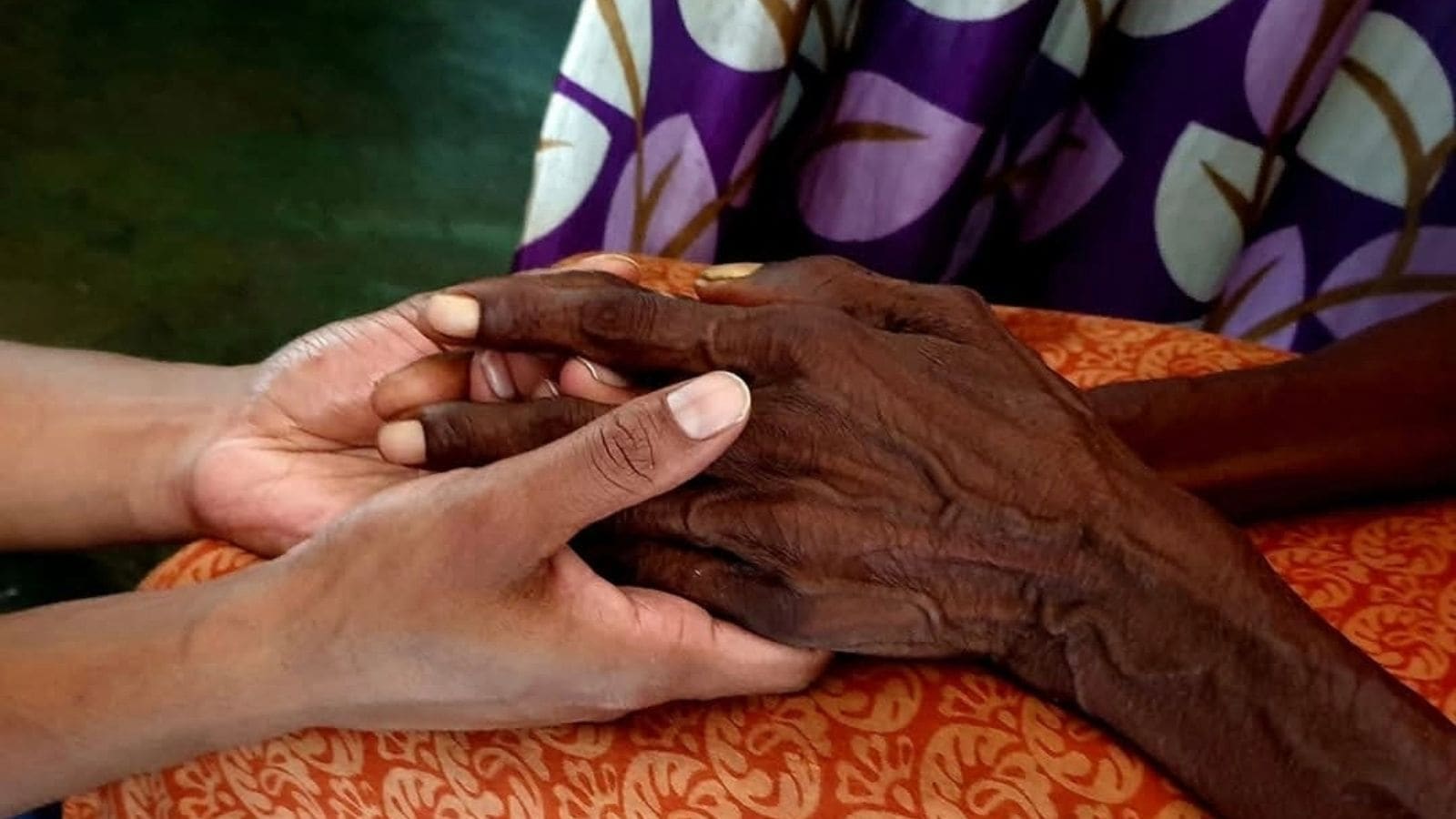
The moment defied easy description. “There was a flood of emotions –joy, relief, disbelief, grief, and sadness for the time we had lost,” Matthias said. “At the same time, there was an immediate and profound sense of connection.” Sitting across from the woman who had given birth to him, who had wanted him, felt both surreal and deeply natural. His partner stood beside him, offering strength; the bond between his mother and his wife formed instantly, another layer of healing.
Some questions found answers. Others remain. He respects his mother’s silence about his biological father. “Meeting my father was never a strong wish for me. For me, the central need was always to meet my mother – understanding her, seeing her, and knowing that she had wanted to keep me. That knowledge meant everything.”
Story continues below this ad
Outwardly, little has changed. But inside, everything shifted. “Meeting my mother helped me understand my roots, her thoughts back then, and the context of my beginnings. It allowed me to understand myself better. Being able to say, even quietly, I have met my mother brings an incredible sense of peace. I sincerely hope that I will be able to see her again soon.”
Today, Matthias works in Switzerland as managing director at one of the world’s largest technology companies. He holds a degree in Business Administration and a Master’s in Banking and Finance. Most importantly, he is father to a 13-year-old girl and a 9-year-old boy – “the love of my life” who give him purpose every day.
In finding his mother, he found not only her, but a missing piece of himself – a reminder that the heart’s earliest bond, though tested by continents and decades, can still find its way home.

