

The United States and Iran have exchanged fire in the Strait of Hormuz, prompting fears that the already fragile ceasefire between the warring nations could collapse. The flare-up came as Washington awaited a response from Tehran to its latest proposals for an agreement to end the war, which began with joint US-Israeli air strikes on Iran on February 28.
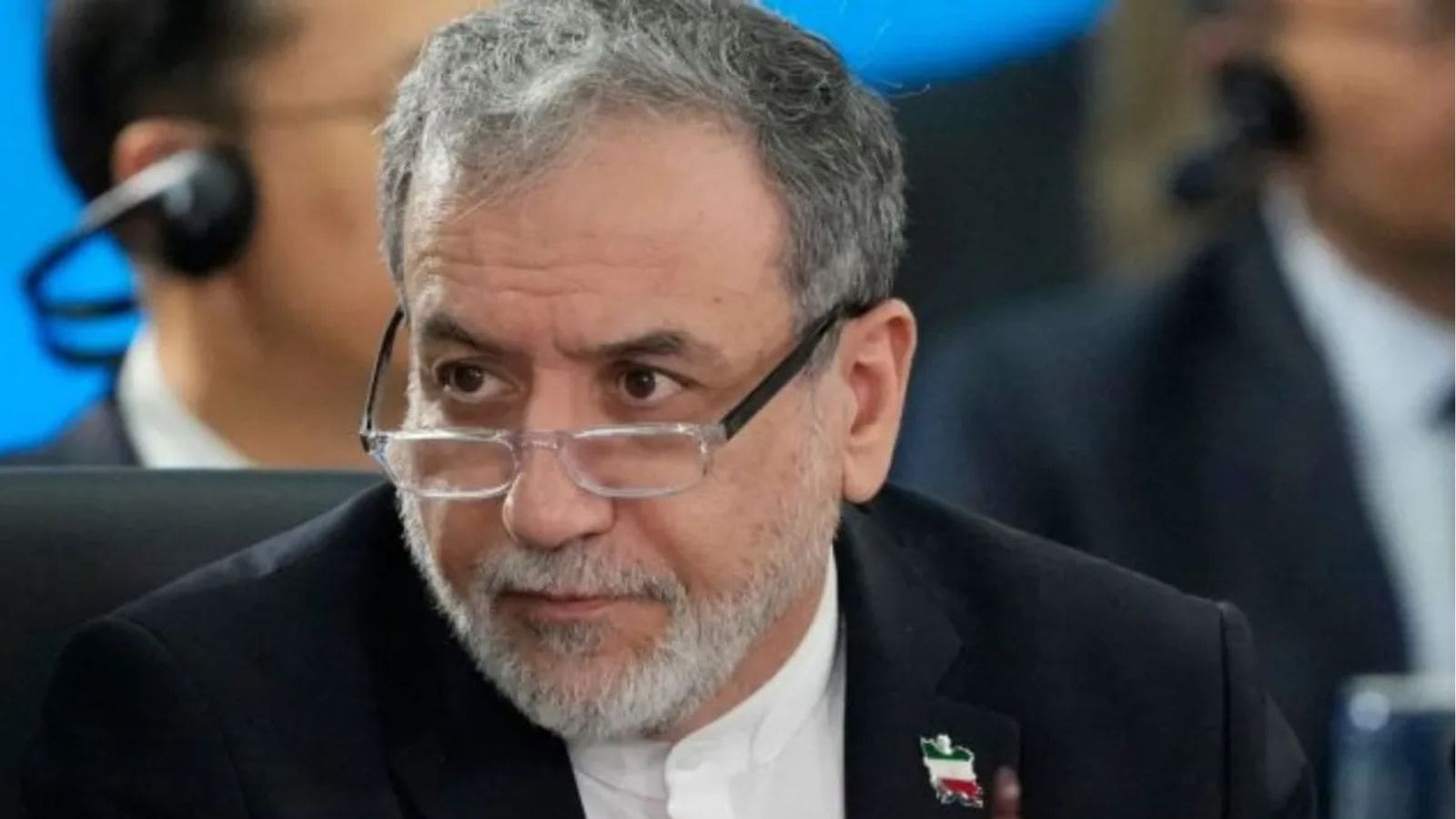
Iran’s Foreign Minister Abbas Araghchi struck back sharply on Friday, accusing Washington of choosing confrontation over conversation. Araghchi said in a post on X that Iran would never yield to pressure, and that the US opts for a “reckless military adventure” every time a diplomatic solution is within reach. He questioned whether recent US military moves were “a crude pressure tactic” or the work of a “spoiler once again duping” President Donald Trump into a new quagmire.

Every time a diplomatic solution is on the table, the U.S. opts for a reckless military adventure. Is it a crude pressure tactic? Or the result of a spoiler once again duping POTUS into another quagmire?
Whatever the causes, outcome is the same: Iranians never bow to pressure. pic.twitter.com/ev7dMIebNB
— Seyed Abbas Araghchi (@araghchi) May 8, 2026
https://platform.twitter.com/widgets.js
Araghchi had earlier warned that the US should be “wary of being dragged back into a quagmire by ill-wishers,” and also dismissed Washington’s ‘Project Freedom’ plan to guide merchant ships out of the strait, calling it “Project Deadlock”, reported CNN.
What triggered Thursday’s clashes
US forces targeted missile and drone launch sites and other military assets in Iran that they said were responsible for attacking three US warships transiting the strait. No vessels were hit, according to US Central Command.
Iran, however, said it attacked US Navy ships after they targeted an Iranian tanker, and accused the US of violating the ceasefire. Iran’s Press TV later reported that the situation on Iranian islands and coastal cities near the Strait of Hormuz had returned to normal after several hours of fire.
US Central Command (Centcom) separately announced on Friday that US forces had disabled two Iranian-flagged unladen oil tankers attempting to enter an Iranian port on the Gulf of Oman in violation of the US blockade, firing precision munitions into their smokestacks to prevent entry, BBC reported.
Trump insists ceasefire holds, issues new threat
Despite the exchanges, Trump insisted no ceasefire breach had occurred. Trump has also threatened more strikes if Iran does not sign a truce quickly, however. In a post on Truth Social, Trump said that the US had destroyed multiple small boats, missiles and drones, and warned that future strikes would be “a lot harder, and a lot more violently” if Iran did not get its deal signed “FAST”.
US Secretary of State Marco Rubio, speaking during a visit to Italy, said Washington expected Iran’s formal response to its proposals on Friday, adding: “I hope it’s a serious offer, I really do.”
Story continues below this ad
Diplomacy continues amid internal Iranian tensions
The Associated Press reported that Pakistan-led mediators are trying to bridge significant gaps between the countries, and that Iran has insisted on ending the US blockade before new talks can begin.’
US Vice-President JD Vance met Qatar’s Prime Minister Sheikh Mohammed bin Abdulrahman Al Thani in Washington on Friday to discuss Pakistan’s mediation efforts. The Qatari PM urged all parties to engage with negotiations to address the “root causes of the crisis.”, reports BBC.
Competing factions inside Iran — particularly the growing influence of the Islamic Revolutionary Guard Corps — are complicating mediation efforts, citing sources familiar with the negotiations, as per the report by Iran International .
Fresh talks planned for Lebanon front
The US on Friday also signalled its readiness to host a new round of Israel-Lebanon talks on May 14 and 15, aimed at halting clashes between Iranian-backed Hezbollah and Israeli forces. A US State Department spokesperson said the intensive talks would aim to deliver “lasting security for Israel, and sovereignty and reconstruction for Lebanon.” The US and Israel have insisted any peace deal requires full disarmament of Hezbollah, which the group rejects.

