

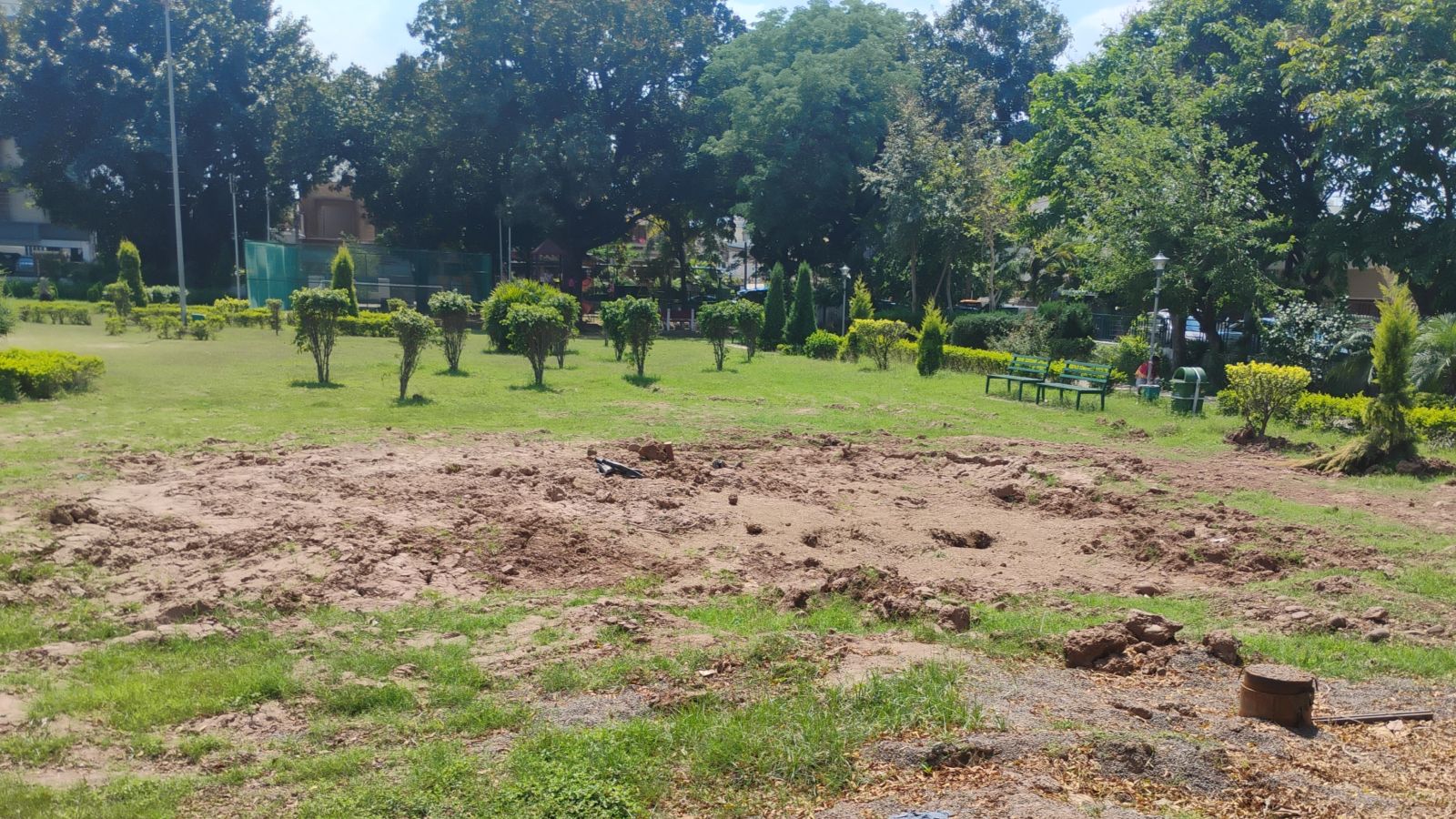
Community centres across Panchkula, conceived as shared neighbourhood spaces for weddings, social gatherings, and community events, are increasingly being diverted for official use, left neglected or rendered partially functional, raising questions over accountability, transparency and residents’ access to civic infrastructure.
A ground investigation, backed by resident testimonies, activist claims and official inputs, points to a consistent pattern: facilities built for public use are either lying defunct, functioning only in part, or operating as government offices.
Municipal-level data for 2024 shows Panchkula has 21 community centres spread across 28 sectors. Of these, at least 10 are currently occupied by government departments, effectively placing nearly half of the city’s community infrastructure beyond regular public use.
A substantial number of these buildings are used by the Municipal Corporation of Panchkula, which continues to function without a dedicated headquarters. Other departments, including engineering, revenue and health, are also operating from community centre premises. Though officially described as temporary arrangements, several have continued for years—in some cases, for decades.
The most striking example is in Sector 4, where the community centre has remained out of public use for nearly two decades.
Constructed around 2003, the building was first allotted to the CRPF and later taken over by the Municipal Corporation, which continues to operate from the site.
Story continues below this ad
“There is no place to sit or gather. People are forced to organise functions in parks or markets,” said T R Sharma, a long-time resident. He pointed out that Sector 4 has nearly 1,800 houses and a population estimated between 5,000 and 7,000.
Resident Welfare Association president M K Sharma said residents have effectively been denied access to the centre for nearly 20 years.
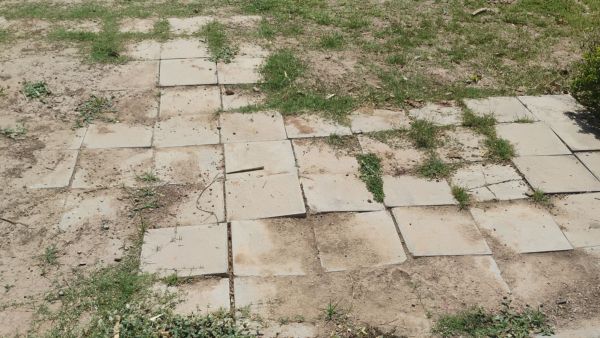 Weeds between broken paving blocks along a walkway in a Panchkula park. (Photo by Deepak Kumar Chaurasia)
The issue had also reached the Punjab and Haryana High Court. Social activist B L Tandon said he had filed a petition challenging the municipal corporation’s occupation of the community centre and claimed the civic body had given an undertaking before the court to vacate the premises.
There is also confusion on the ground. While some residents claimed the building sees occasional public use, others maintained it is entirely under the municipal corporation’s control. A representative of Ward 12 councillor Omwati Punia confirmed that the facility is currently being used fully as a municipal corporation office, with no public functions taking place there.
Story continues below this ad
In Sector 11, the picture is equally troubling in Sector 11. The community centre there has remained shut for over four years and currently functions as a Municipal Corporation storage unit. Caretaker Karamjeet Singh said the premises house uniforms, shoes, cleaning equipment and other materials, with no public events held during this period.
The building itself shows visible signs of prolonged neglect—blocked sewage, leaking structures, and unusable toilets. Despite the condition, a library continues to function on the upper floor amid waterlogging, damaged ceilings and only partially functional air-conditioning.
A representative of councillor Omwati Punia said demolition and reconstruction of the facility have been approved, with Rs 4.95 crore sanctioned for the project. Technical clearance is awaited, with tenders expected once the election code of conduct is lifted. Construction, officials said, is likely to take about a year after work begins.
A mixed picture
Across the city, community centres present a mixed picture. In Sector 12A, the community centre is being used by the engineering and revenue departments, with staff saying the arrangement has been in place since around 2021-22. No public events are being held there.
Story continues below this ad
In Sector 9, the community centre has been allotted to the health or malaria branch for around three years. While residents can access the parking area, the main building is unavailable for community use.
Sector 10 offers a contrast. The community centre there was rebuilt and inaugurated on January 2, 2026, and is now functioning as a public venue with regular events, though minor finishing work is still pending.
The community centre in Sector 14 remains occasionally available for weddings, but the building is in poor shape, with damaged toilets and visible structural deterioration. During a visit, the premises were locked and no official was present.
Elsewhere, including Sector 7, community centres remain in dilapidated condition, with incomplete repairs and no clarity on redevelopment timelines.
Story continues below this ad
Activist S K Nayar described the trend as a “systematic shift from public to administrative use”.
“These centres were built from residents’ money, yet people are being deprived of their use,” he said, adding that centres in Sectors 4, 9, 11, and 12A, among others, have remained occupied for years.
He said that resident welfare associations are at times required to pay between Rs 5,000 and Rs 8,000 even for limited use of such facilities. He also said assurances regarding the shifting of government offices had earlier been made in court, though implementation remains uncertain.
The centres are currently managed by the municipal corporation after being transferred from the Haryana Urban Development Authority about a decade ago. Yet there is no clearly available public policy defining how, or for how long, these facilities can be repurposed for administrative use.
A policy vacuum
Story continues below this ad
That policy vacuum has allowed temporary occupation to stretch indefinitely, without defined timelines or visible accountability.
Further anomalies emerge from Haryana’s online booking system, where several centres—including those in sectors 7, 10, 11, and 12A— are not listed as available for booking.
Residents say the fallout is tangible: reduced access to nearby community spaces, dependence on distant sectors for bookings, fewer venues for social and cultural functions, and a steady decline in civic infrastructure.
What was once envisioned as a city-wide network of shared public spaces now stands fragmented—split between official occupation, partial use and neglect.
Story continues below this ad
And the questions remain: why have temporary arrangements continued for decades, under what framework are public facilities being repurposed, and when will these centres be restored to the residents for whom they were built?
Deepak Kumar Chaurasia is an intern with The Indian Express.

