

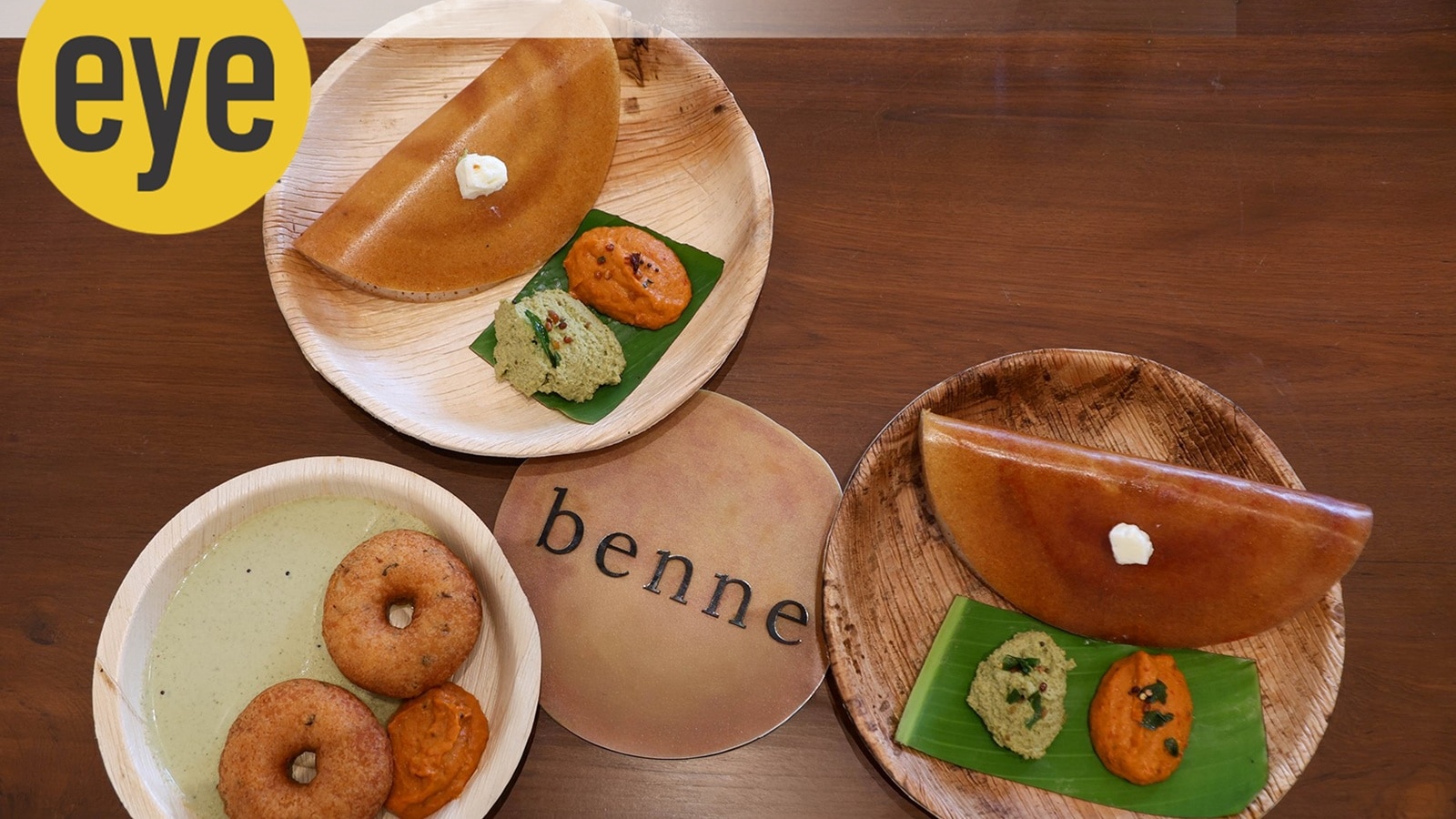
Benne dosa or dose, as purists insist, has taken the country by storm. Once confined to Bengaluru, this thick, crisp, golden-brown dosa, is now drawing long queues across Mumbai and Delhi. Such is its popularity — with its soft and almost pillowy insides and slathered with unprocessed white butter (benne in Kannada) — that even long-standing South Indian eateries have begun adding it to their menus.
At the centre of this surge are Akhil Iyer, founder-producer of The Artist Collective, and Shriya Narayan, a psychologist. Originally from Bengaluru, Iyer moved to Mumbai about 13 years ago, while Narayan moved five years ago. Like true Bangaloreans, they craved the benne dose they grew up eating at institutions such as the Central Tiffin Room (CTR), Vidyarthi Bhavan and countless roadside stalls. In Mumbai, however, they struggled to find anything comparable.

“So I thought of doing it myself,” Iyer said when they opened Benne in Bandra, in June 2024. A 250-sqft eatery with a tight menu of thatte idlis, medu vada, Mysore pak, hot and iced filter coffee, their main attraction was the benne dose in plain, masala, podi plain and podi masala variations. Iyer’s personal project quickly scaled. In under two years, Benne has opened an outpost in Delhi’s Greater Kailash-2; in Mumbai, there’s one in Juhu and a sprawling 4,400-sqft outlet, which opened just last month, in Chowpatty.
To get it right, Iyer trained under a dosa master who runs a popular thela on Avenue Road in Bengaluru. He learned everything from tawa selection and temperature control to fermentation. “This is my honest attempt at doing them right,” he says. After two months of trials, his home turned into an R&D lab while he consulted chefs and Bengaluru regulars to get the flavour right. Dia Mirza stopped by on Day 1 and Deepika Padukone, a Bangalorean herself, visited soon after with husband Ranveer Singh and their families. Soon, Instagram was flooded with queues outside Benne. Soon reels tracing its history and origins, followed.
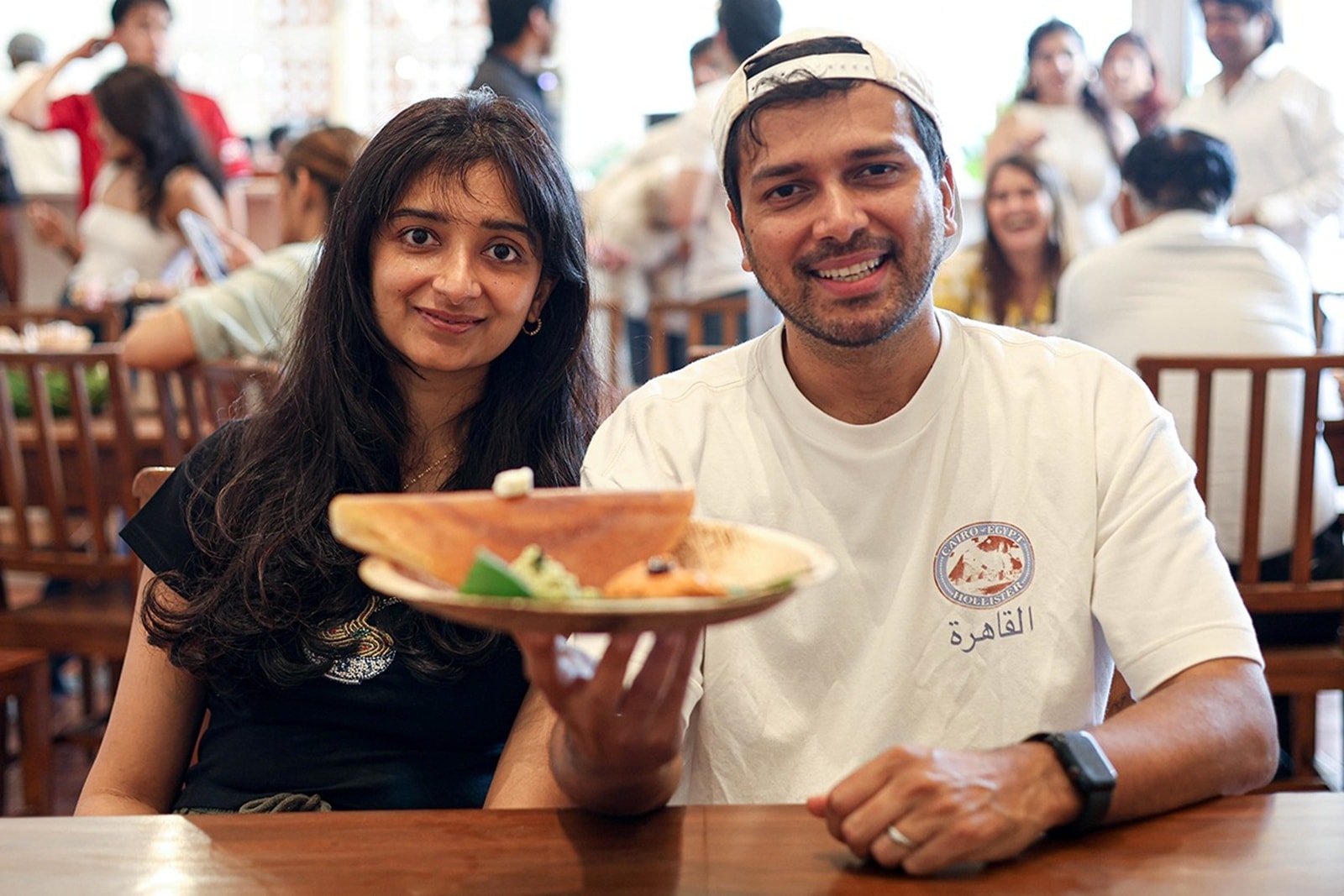 Akhil Iyer and Shriya Narayan, founders of Benne (Express photo by Akash Patil)
Among the many stories is one that leads us to Davanagere, a town about 275 km northwest of Bengaluru, and to a woman named Chennamma. Bengaluru-based food writers Anurag Mallick and Priya Ganapathy, who researched Karnataka’s culinary landscape while consulting for a city-based restaurant Oota, travelled extensively across the state between 2014 and 2016.
Noting that the story may be apocryphal, they share that during a famine, Chennamma moved to Davanagere and began selling dosas made from ragi. “Since Davanagere has many rice mills, mandakki (puffed rice) was available in plenty. Her sons Shanthappa and Mahadevappa tweaked the original recipe, switching from ragi to rice, and added dollops of signature benne (white butter),” share Mallick and Ganapathy.
Shanthappa also started Shantappa Hotel in 1944, which is now the oldest benne dose eatery in town while Mahadevappa’s elder son Ravi started Ravi Hotel. “There’s an Old Sagar Benne Dose Hotel opposite the water tank. However, Sri Guru Kottureshwara Butter Dosa Hotel near JJM Medical College is the most popular place to eat in Davanagere,” say Mallick and Ganapathy.
Story continues below this ad
The benne dosa fever is now spreading across eateries in the country — from Jaipur and Chandigarh to Kolkata. Even in suburbs such as Thane, the newly opened South Indian restaurant BLR Room features it prominently. In Matunga, Mumbai’s long-standing hub for affordable South Indian fare, benne dosa has become a fixture. At Anand Bhavan, an 80-year-old institution, it is among the newer additions and already one of the highest-selling items, says third-generation owner Preetesh Nayak. At the 76-year-old Cafe Madras, the version is richer with butter but less crisp. “This is a recipe we learned from our neighbours. We even add benne to the batter,” says Devavrat Kamath, who claims to be among the early popularisers of the dish in Mumbai.
Meanwhile, Rajesh Nayak, whose father started Liberty Lunch Home at Marine Lines, claims they do the best benne dosa in the city. Explaining what sets it apart, he points to both technique and equipment. “A higher proportion of rice is needed to achieve that texture. The tawa also has to be thicker — typically around 1.5 inches, compared to the half-inch tawas for regular dosas. It ensures even roasting, not just from the centre. At its core, is fermentation. The batter needs to be light and airy. When you press it, your finger should sink right to the bottom,” says Nayak. For all its technicalities, the dish remains humble in origin. “It didn’t come from one single place. It evolved over time. It wasn’t always as crisp or glossy as it is today,” he says.
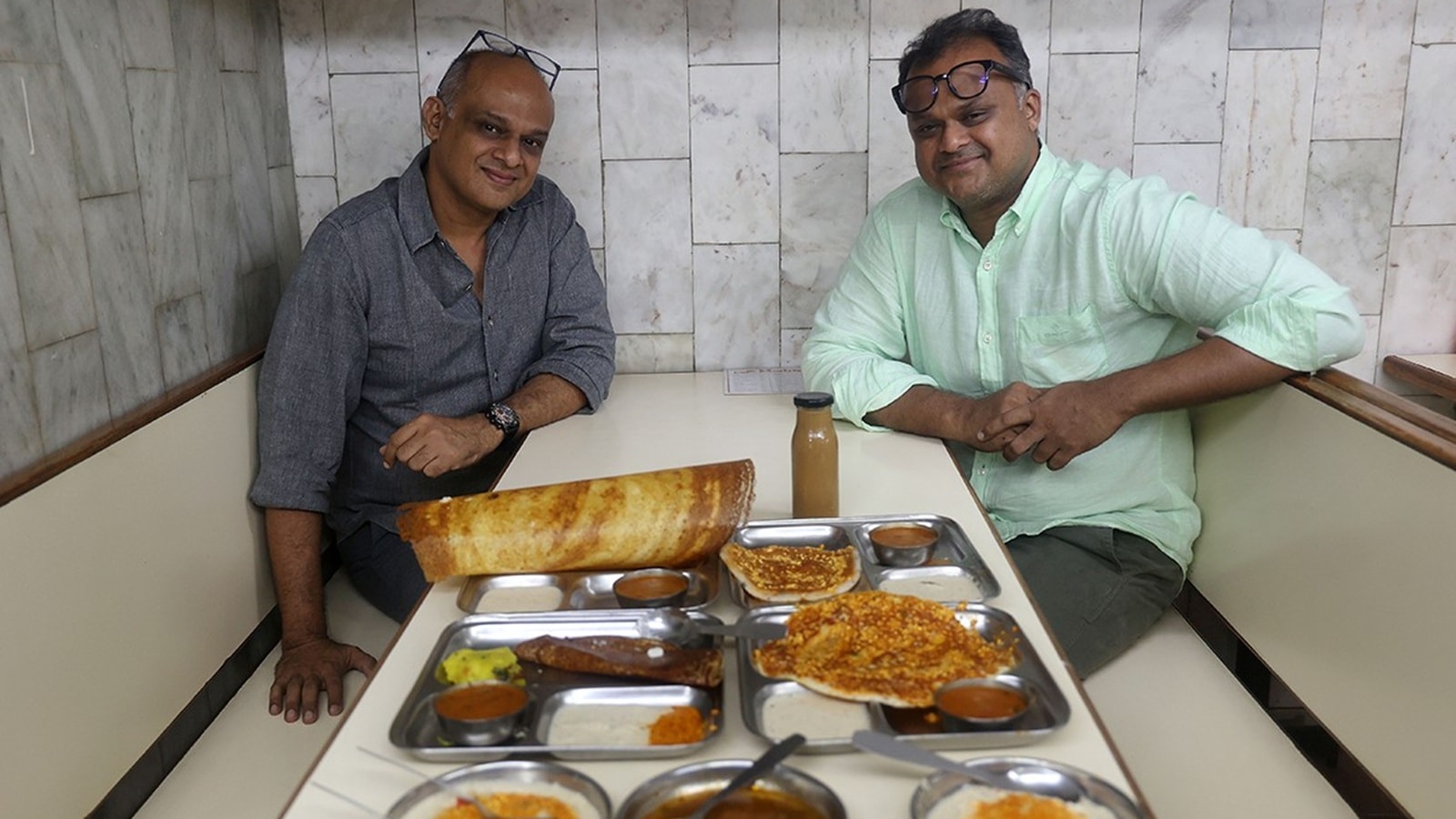 Jai Prakash and Devavrat Kamath, the third-generation custodian of Cafe Madras in Matunga, Mumbai (Express photo by Amit Chakravarty)
The name may be trending now but Bengaluru’s Vidyarthi Bhavan has been serving its iconic version for over eight decades. When asked if demand has risen, Arun Kumar Adiga, a third-generation custodian, says, “People often come asking for benne dose, only to be told that this is what we’ve been serving all along.” He draws clear distinctions. “Tamil Nadu-style dosas are thinner and less crisp. In Bengaluru, most are thin and crisp. Then, there is the Davangere benne dose — soft, smeared with butter and not crisp. Ours is thick, crisp and we have always used butter and ghee.”
Another variation — the benne podi masala dose — has also gained popularity. “There have always been small lanes in Chickpet (Bengaluru) where dosas are smeared with gunpowder,” he says. “Rameshwaram Cafe popularised it by packaging it better.” He adds, “These days, ghee is poured on dosas like it’s water.”
Story continues below this ad
Despite the trend, Adiga isn’t chasing it. “We are a legacy brand. We can’t run behind trends,” he says. On weekdays, most customers are regulars; on weekends, first-timers drawn by social media dominate. The menu remains tight and nearly 70 per cent of sales still come from the masala dose, what many now call benne masala dose.
Even as Mumbai’s Benne remains in the spotlight, Iyer is quick to deflect credit. “The credit goes to the dish itself,” he says. “In the history of dose making, we are just a small blip.” Timing, he says, played a role too. “The market had reached a point of stagnation. People were used to a certain kind of dosa in Bombay — thin, crisp, served with sambar and chutney. But that’s not what we grew up eating.”
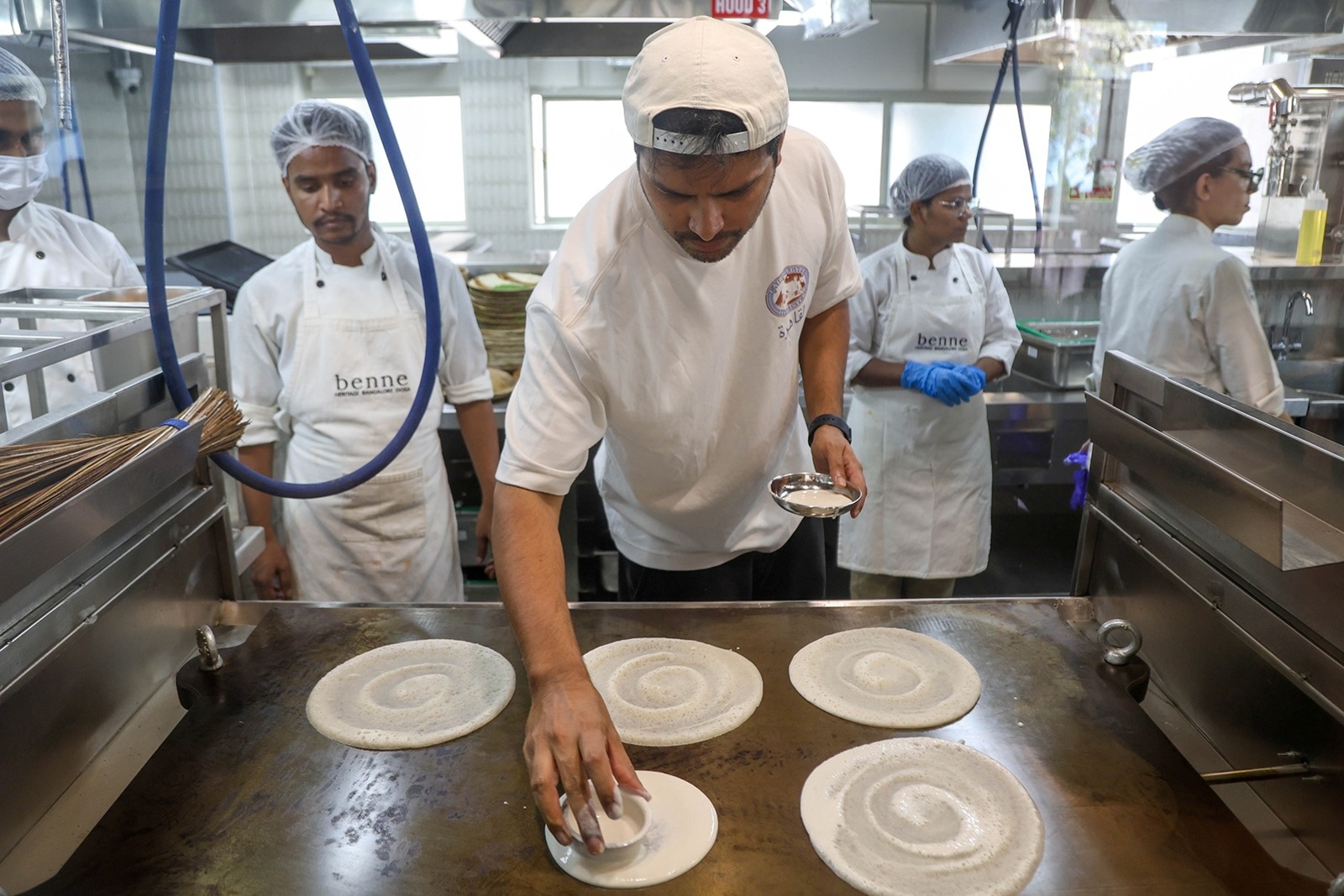 Inside the Chowpatty kitchen of Benne, where Akhil Iyer can be seen making benne dose. (Express photo by Akash Patil)
What Benne offered wasn’t new, just unfamiliar to Mumbai. “It wasn’t innovation. It was simply a product we loved,” says Iyer. “Maybe it also helped that we don’t look like the typical anna or people you’d expect behind a dosa tawa.”
Even before launch, the brand had built a following on Instagram, driven largely by Narayan’s calm, behind-the-scenes storytelling. Today, @benne.bombay has over 73,000 followers and serves as their primary channel for updates.
Story continues below this ad
Ask Iyer about social media’s role, and he acknowledges it. “Instagram definitely helped. But more importantly, it was the people who came to us early, gave us a chance, and spoke about it. I feel proud of my culture and my childhood, and I’m happy to own it. So is Shriya. We’re just grateful people are giving this food a chance,” says Iyer.

