

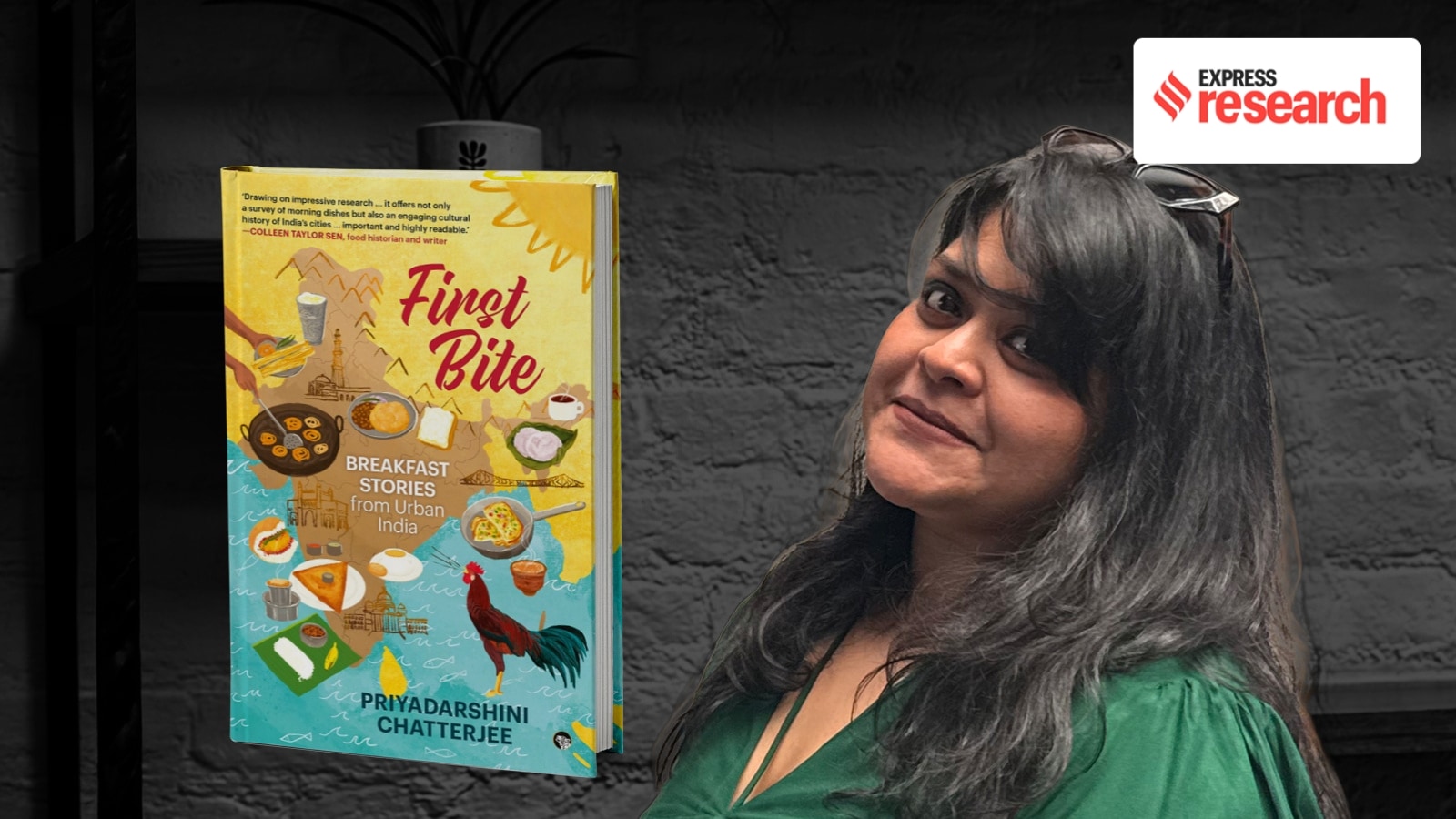
Food, culture, and travel writer Priyadarshini Chatterjee is not a morning person. However, her latest book,First Bite: Breakfast Stories from Urban India(Speaking Tiger Books, 2025), investigates the phenomenon of themorning meal —its evolution over time, the varying patterns across socio-economic strata, and what the first meal in a city tells us about the place: who wakes early, who cooks, who eats out and why.
In the introduction, Chatterjee writes that she was intrigued by claims that India never ate breakfast, and that it was a “concept borrowed from theWest.” Many maintain that Indians historically consumed only twomeals,one at midday and the second in the evening.

However,First Biteestablishes that a population so culturally diverse and socio-economically stratified could not have followed such a linear food pattern. Drawing on ancient Indian texts, regional literature, field notes and interviews, Chatterjee chronicles the breakfast stories of 10 Indian cities.
The many migrant communities in India
For Chatterjee, breakfast became a lens through which to understand movement, labour, and survival in Indian cities. “Who eats out in the morning? This question made me think about migration and migrant labourers, people who eat early on the streets. Their food habits are shaped by the uncertainties of their day and the nature of their work.”
In Delhi, for instance, a significant part of the food landscape is shaped by migrants who sell utilitarian, functional fare rather than “legacy” cuisine. She points to the ubiquity of simple, filling foods, like thekachorisold by vendors operating off cycles, motorbikes, or scooters, stationed at street corners and pavements, designed for affordability. Many other staples of Old Delhi’s vegetarian breakfast —nagori halwa, bedmi puri, and similar items — likely travelled with confectioners from regions such as Varanasi and Kannauj.
Story continues below this ad
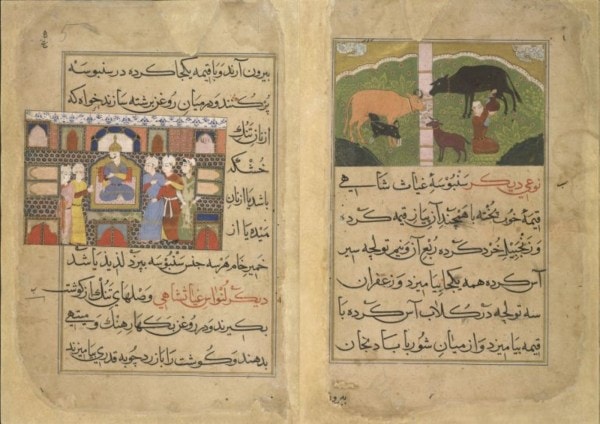 A page from the Nimatnama-i-Nasiruddin-Shahi, book of recipes (Wikipedia)
Migration has also shaped what is often perceived as “local” tradition. “One thing that surprised me,” she says, “was how we associate Kolkata breakfast withkochuri-torkari, often bought from sweet shops.” What is less acknowledged is that the city’s confectionery history is not solely Bengali. “Many North Indian migrant confectioners from Varanasi, Kannauj, and nearby regions set up stores here.” Alongside this runs the equally rich history of Kolkata’s Chinese community, underscoring how multiple migrant networks have shaped the city’s morning plate.
In the South, the now-ubiquitous dosa, especially the masala dosa, owes its spread to Udupi Brahmin migrants who moved to cities like Bengaluru in search of livelihoods. “Their caste location enabled them to dominate food practices deemed acceptable to upper-caste consumers, helping institutionalise what is now seen as a quintessential South Indian breakfast across the country,” Chatterjee says in her interview.
In Varanasi, Chatterjee shifts focus from sellers to consumers, observing a different kind of migration, that of transient foreign visitors. Israeli travellers, in particular, form a visible presence in the city after completing compulsory military service. She writes that “an entire ecosystem…has evolved around this temporary yet permanent community of foreigners…”
Story continues below this ad
As a result, the breakfast landscape expands to include everything from full English breakfasts and Jewish shakshuka to Korean kimchi, coexisting with the city’s deep-fried breads, robust curries, and syrupy sweets. Equally notable is the Bengali diaspora in areas like Bengali Tola, another example of how migration continually reshapes what, and how, India eats in the morning.
The industrial breakfast
“As I said, in a country like ours, there has never been a single way of eating across the social order. It simply never existed. Food habits have always depended on class, caste, and one’s position within sociocultural and religious hierarchies,” Chatterjee says.
Yet the Industrial Revolution in the mid-19th century significantly standardised working hours, making early meals a necessity for labouring populations before the start of the workday. “All classes started to eat a meal before going to work,” she says, linking the consolidation of breakfast to the rhythms of industrial labour.
Even today’s seemingly ordinary breakfast staples — tea, biscuits, and bread — were not always universally accepted. In several regions, including Bengal, such packaged foods were once resisted within orthodox Hindu households, where they were viewed as foreign or “un-Hindu.” Their production histories also shaped this resistance.
Story continues below this ad
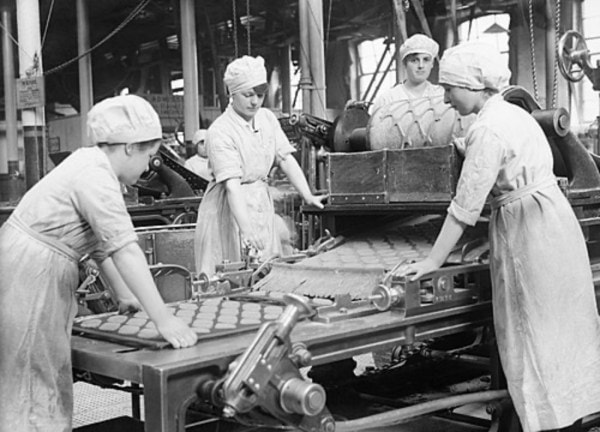 A British biscuit factory in 1918 (Wikipedia)
“Biscuits and bread were often made by Muslim bakers, and in some cases, Parsis, rather than upper-caste Hindus. Even when Hindus were involved, they were frequently from lower castes, which contributed to resistance among upper-caste communities. It was only when such foods moved across social boundaries and became widely accepted that they entered the dominant food narrative.”
With the expansion of industrial food production, however, convenience gradually reshaped consumption. Ready-made bread, biscuits, and other packaged items enabled quicker meals and increasingly defined urban breakfast routines across India.
Ultimately, First Biteusesbreakfast, its foods, vendors, consumers, and makers,as a lens to examine larger questions of labour, gender, migration, community, and the everyday functioning of cities. “But there are also moments when food is stripped of layered meanings and becomes a simple source of sustenance and energy,” Chatterjee reflects.

