

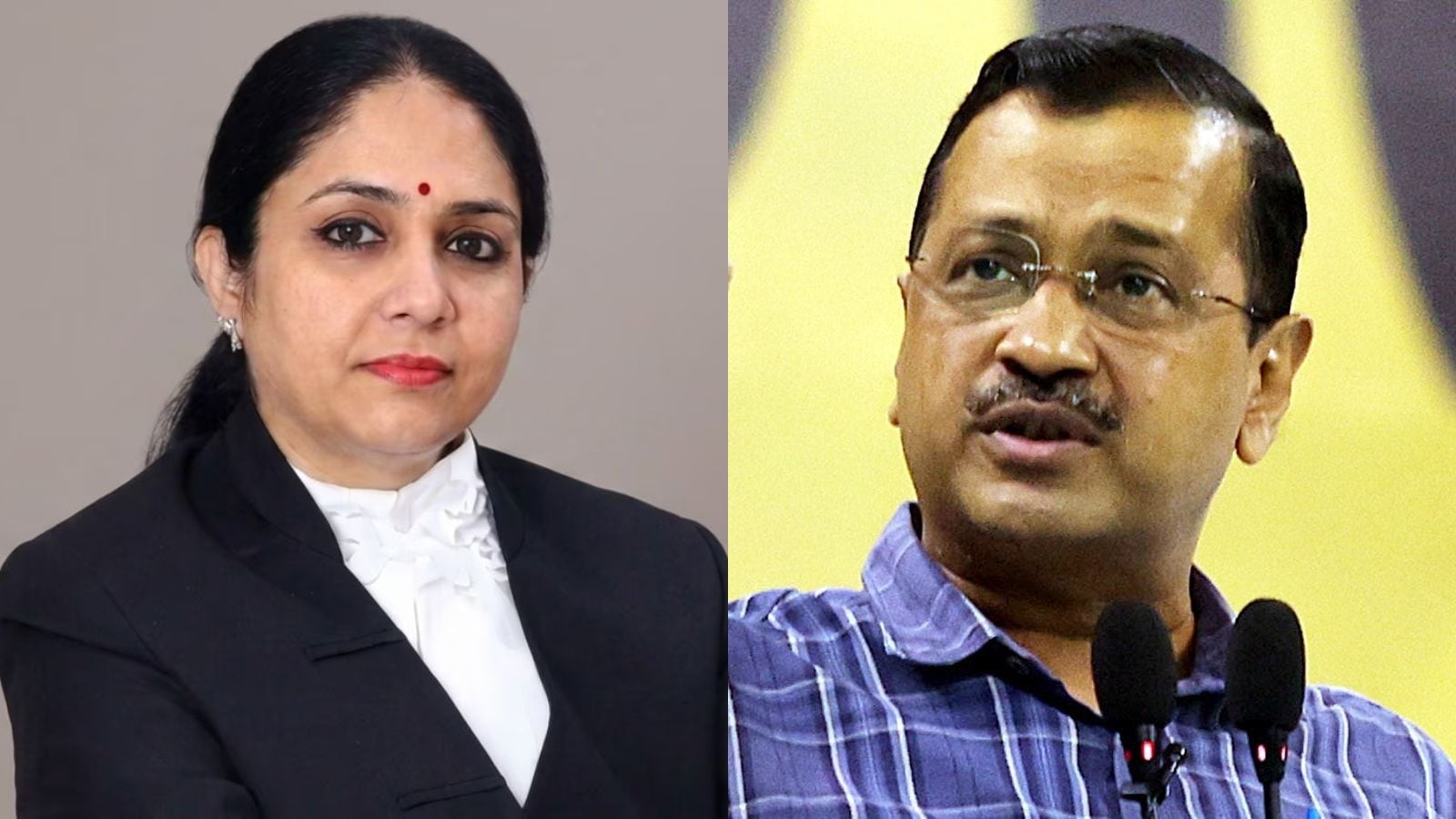
Delhi High Court judge, Justice Swarana Kanta Sharma, Monday refused to recuse herself from hearing the Central Bureau of Investigation’s challenge to the discharge of former Delhi Chief Minister and AAP national convenor Arvind Kejriwal and 22 others in the alleged liquor policy scam. She noted that the recusal applications did not arrive with evidence but rather “with aspersions, insinuations and doubts” cast on Justice Sharma.
Terming that she was put in a ‘Catch-22’ situation by Kejriwal, where he created a “win-win situation” for himself, Justice Sharma emphasised that she will not bend to a “media-driven narrative” and abdicate her duty.

“Without any material on record, a litigant cannot judge a judge… courtroom cannot be a theatre of perception… apprehension of bias was based on conjectures. If I were to accept these applications, it would set a troubling precedent… as it will then depend on the subjective comfort of a litigant… This court will not yield or retreat, where doing so will erode the credibility of the institution,” Justice Sharma said.
“Allegations levelled… were neither proximate nor relevant to the issue. What lends a deeper disquiet is the attempt to attach a media-driven narrative to the proceedings, including instances of vilification without accountability,” she further said.
“A judge cannot recuse to satisfy a litigant’s unfounded apprehension of bias… this court has remained indifferent to the stature of the litigant appearing… this court will stand up for itself and this institution. This court will decide when duty demands… even when it is inconvenient,” Justice Sharma declared.
“Personal apprehension of applicants has not been able to pass the threshold of reasonableness of bias,” Justice Sharma reasoned
Pronouncing the verdict in open court, Justice Sharma reasoned that attending Akhil Bharatiya Adhivakta Parishad events “cannot be said to insinuate political connections” and “judges cannot be placed in an ivory tower”, by barring them from meaningfully engaging with the Bar, when the relationship of the bar and bench “is not limited to courtrooms”.
Story continues below this ad
Addressing Kejriwal’s ground that he apprehends bias owing to a ‘conflict of interest’, where Justice Sharma’s children are empanelled as government panel counsel, the judge reasoned, “Merely because judges take an oath, their family doesn’t, that they won’t enter this profession or do well (in the profession).”
“If children and wives of politicians can enter politics, how can it be just for children of judges (to not enter the legal profession),” she said.
“It is also to be noted that personal attacks on judges are in fact attacks on the institution… they have to be borne by the institution and not by the judge,” Justice Sharma pronounced.
Terming the Catch-22 situation of the recusal applications, where Kejriwal has created a ‘win-win case’ for himself — where recusal will insinuate truth in his allegations and non-recusal will allow him to claim that he had already predicted the outcome — Justice Sharma opined that “courts will not be invited to such a match of catch-22 situation.”
Story continues below this ad
“If judges bow down to such vilification and sustained attack… today, it may be this court, tomorrow it may be another… Societal implication, institutional consequences and the harm it will cause to judicial independence has weighed heavily… it will undermine the duty of the court… A recusal will also lead the public to believe that they are aligned to a particular ideology. This court cannot allow this to be a battleground questioning judicial integrity.”
The case
On February 27, a trial court had discharged all the 23 accused in the corruption case related to the excise policy. The CBI then filed a revision plea, which was listed before Justice Sharma, whose roster deals with criminal cases involving MPs and MLAs.
On March 9, the bench stayed the trial court’s observations recommending departmental action against the Investigating Officer (IO). The order was passed ex parte, without hearing arguments on behalf of the accused. In the order, Justice Sharma said that the stay was necessitated by “certain factual discrepancies” in the trial court’s order.
Kejriwal and five others then filed applications before the HC, seeking Justice Sharma’s recusal on grounds of reasonable apprehension of bias.
Story continues below this ad
On April 13, the court, after a marathon hearing of over four hours, reserved its judgment on the recusal applications by Kejriwal, former deputy CM Manish Sisodia, AAP’s ex-MLA Durgesh Pathak, AAP former communications in charge Vijay Nair, Arun Pillai and Rajesh Joshi.
Kejriwal, while seeking recusal and arguing as party in person, had said Justice Sharma attended some programmes organised by Akhil Bhartiya Adhivakta Parishad, “which follows a particular ideology, which is opposite to his party’s ideology, and which he openly opposes”.
In an additional affidavit, Kejriwal also alleged a “direct and serious appearance of conflict of interest”, pointing out that Justice Sharma’s son and daughter are empanelled as panel counsel for the Union government.

