

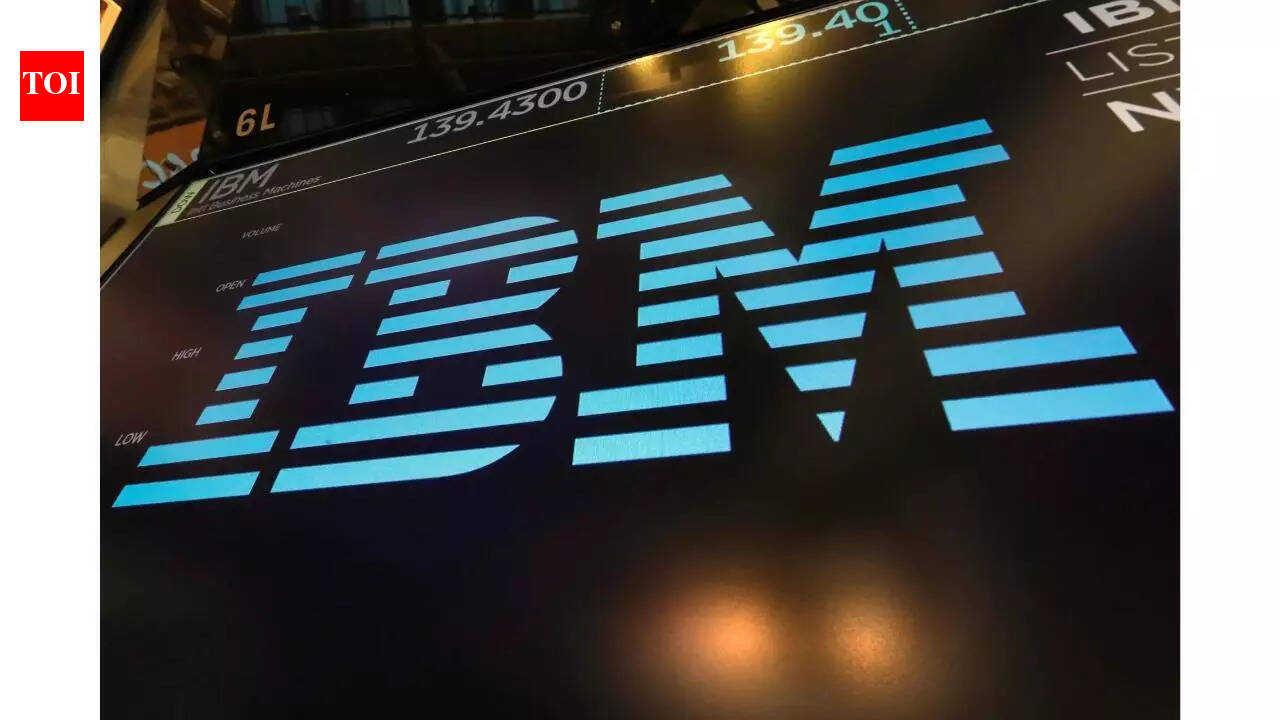

IBM shares suffered their worst single-day drop in over 25 years on Monday, February 23 after AI startup Anthropic announced that its Claude Code tool can automate the modernisation of COBOL—the decades-old programming language that sits at the heart of IBM’s mainframe business. The stock fell 13.2% to close at $223.35, wiping roughly $40 billion off IBM’s market value and dragging it down more than 24% year to date.The selloff was triggered by a blog post from Anthropic claiming that Claude Code could handle the exploration and analysis work that makes COBOL modernisation so expensive and time-consuming for enterprises. The company argued that AI tools can now compress what used to be multi-year, consultant-heavy migration projects into a matter of quarters.For IBM, which earns recurring revenue from mainframe hardware refresh cycles, software licences and COBOL-related services, the implication was hard to ignore: if AI can do what armies of consultants once did, a significant chunk of the company’s business model faces disruption.
What exactly is COBOL, and why does it still matter?
COBOL stands for Common Business-Oriented Language. It was created in 1959—the same year Alaska became a US state—partly drawing on work by computing pioneer Grace Hopper. The language was built for one job: processing business data. Payroll, transactions, administrative records.Sixty-six years later, it still does that job. Every day. An estimated 95% of ATM transactions in the US still rely on COBOL. It supports 80% of in-person credit card swipes. Hundreds of billions of lines of the language are in active production every day, powering critical systems at banks, airlines and government agencies worldwide.The COBOL Working Group of the Open Mainframe Project estimated in 2021 that roughly 250 billion lines of COBOL are still in use at businesses globally. And most of this code runs on IBM mainframes—the massive, customer-owned servers optimised for large-scale transaction processing.
The problem: Fewer people speak COBOL every year
The catch with COBOL is not that it doesn’t work—it works extremely well for what it was built to do. The problem is that the pool of developers who understand it has been shrinking for years. Most computer science graduates today are trained on Python, Java and cloud-native architectures. Taking a job maintaining COBOL systems is widely seen as career-limiting rather than career-building.This has created an expensive talent bottleneck. Organisations are competing for a shrinking number of specialists who can keep these systems running, while struggling to attract younger developers. During the COVID-19 pandemic, several US states found themselves scrambling for COBOL programmers when unemployment systems—many still running on legacy code—buckled under sudden demand.Banks have tried multi-year migration projects to move off COBOL, and some of these efforts have ended with widespread service disruptions and regulatory fines. The IRS only recently announced a transition from COBOL to Java. For most organisations, understanding the legacy code has historically cost more than rewriting it—which is precisely why so much of it is still around.
What Anthropic actually said—and why markets panicked
In its blog post on Monday, Anthropic framed the announcement as a direct solution to this bottleneck. The company said Claude Code can map dependencies across thousands of lines of COBOL, document workflows and flag risks that would take human analysts months to surface. It also released what it calls “The Code Modernisation Playbook,” laying out a phased approach where AI agents read through COBOL programs and JCL scripts, extract business logic, generate code translations to Java or Python and create test suites—all within weeks rather than years.Anthropic’s broader pitch is that legacy code modernisation stalled because comprehension was the real expense, not the rewriting itself. AI, the company argues, flips that equation by making the analysis cheap and fast.Markets took the message seriously. IBM’s 13.2% drop was its steepest daily decline since October 2000. According to Bloomberg data, the stock is now down 26% in February alone—putting it on track for its worst monthly decline since at least 1968. The selloff also dragged down cybersecurity stocks after Anthropic unveiled a separate security scanning capability built into Claude Code on Friday.
IBM’s mainframe business is the real target
IBM isn’t just any company that happens to use COBOL. It owns the mainframe platform the language runs on. The company earns revenue from hardware, software licences and performance upgrades tied to COBOL workloads. Its modernisation strategy has been to connect COBOL to modern tech—exposing COBOL programs as APIs, integrating them with cloud apps and running them alongside Java and AI workloads—rather than to eliminate the language entirely.If an external AI tool can handle the heavy lifting of understanding, documenting and migrating COBOL systems, it threatens a core part of what IBM sells. It’s not that COBOL will disappear overnight. But the consulting-heavy, multi-year modernisation model that has sustained IBM and a roster of large IT services firms—including companies like Infosys, TCS and Wipro—could shrink significantly.Indian IT benchmarks felt the ripple too. The Nifty IT index dropped nearly 4% on Tuesday, February 24 as fears of AI-driven disruption to legacy IT services spread.
IBM isn’t alone—AI disruption fears are wrecking havoc on the entire software industry
IBM’s Monday crash is part of a much wider rout. On Friday, cybersecurity heavyweights like CrowdStrike and Datadog slumped after Anthropic unveiled a separate security scanning feature in Claude Code. A major software ETF has now shed 27% this year—its steepest quarterly decline since the 2008 financial crisis. The pattern is becoming predictable: an AI company drops a new capability, and investors dump the legacy names that capability threatens.The fear driving all of this has a name—”vibe coding.” The idea that AI can now write functional software from plain-English prompts has led investors to question the long-term pricing power of companies selling tools and services that developers might soon replace themselves. It’s not just IBM. Consulting firms, IT services giants and enterprise software vendors are all being repriced on the assumption that AI shrinks the addressable market for their products.Whether Anthropic’s COBOL claims hold up at enterprise scale—where decades of undocumented business logic, regulatory requirements and organisational inertia complicate every migration—remains an open question. But Wall Street isn’t waiting to find out. The market has decided that the era of expensive, multi-year legacy modernisation projects is ending. The only debate left is how fast.

